
Panizzolo : Aluminum recycling: driving sustainability and growth
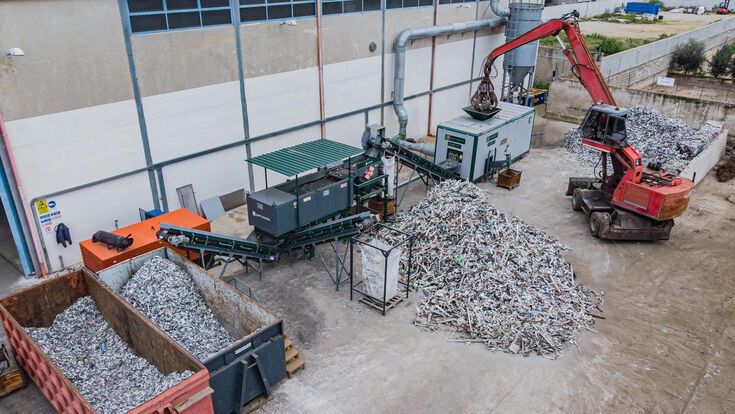
Few materials are as strategically positioned for the low-carbon transition as aluminium. Its strength, versatility and, above all, its ability to be recycled endlessly without losing performance make it central to the circular economy. As energy costs rise and sustainability targets tighten, high-quality aluminium recycling is no longer a supportive measure: it is a strategic priority shaping competitiveness and long-term industrial growth.
The power of aluminium recycling
Recycling aluminium requires up to 95% less energy compared to the production of primary aluminium from bauxite. This significant energy reduction translates directly into lower emissions: estimates indicate that approximately 20 million tonnes of aluminium are recovered annually through recycling, avoiding nearly 300 million tonnes of CO₂ emissions globally. This is not just a sustainability metric; it is an economic factor. Reduced energy demand means lower operating costs, shielding companies from fluctuations in the energy market and from the volatility inherent in the extraction and transport of raw materials. At a time when ESG compliance shapes purchasing decisions, investment flows and international partnerships, companies that integrate efficient recycling processes are positioned to strengthen their long-term competitiveness.
Technology driving the circular shift
The growing focus on recycled aluminium is accelerating demand for advanced processing technologies. Modern scrap streams are complex: they vary in size, composition, contamination level and mechanical resistance. To maximise the recovery rate and the value of secondary aluminium, plants must be engineered with precision, flexibility and reliability. Panizzolo Recycling Systems positions itself within this context by designing and manufacturing complete recycling plants that cover the entire workflow, from initial shredding to final refining. The company’s engineering approach is built on three fundamental pillars.
1. Processing flexibility
Aluminium scrap is far from uniform: it includes demolition-derived profiles, automotive components, mixed material packages and industrial production waste. To manage these variations, Panizzolo plants integrate patented technologies, such as the interchangeable cradle, that allow rapid adaptation to different materials without compromising productivity. This flexibility enables companies to respond swiftly to market opportunities and changing availability of scrap streams.
2. Modularity and scalability
Companies rarely remain static. Production volumes change, new scrap streams become available, and market opportunities evolve. A modern aluminium recycling plant must therefore be designed to grow over time. Panizzolo adopts a modular engineering philosophy, allowing companies to begin with a targeted investment and subsequently add new grinding, separation or refining stages. This approach ensures long-term scalability while supporting strategic planning.
3. High output and quality standards
Productivity remains essential for companies handling large volumes. Panizzolo’s Mega hammer mills, for instance, can process up to 2.2 times the material compared with standard market alternatives, ensuring continuity even under heavy workloads.
Equally important is the purity of the final output. Through a combination of grinding, screening, magnetic separation, eddy current separation and density-based refining, the systems produce clean aluminium fractions suited for direct remelting. This enhances the commercial value of each tonne processed and opens access to high-value segments of the metals market.
Panizzolo and EGA: a milestone for aluminium recycling in the UAE
The drive toward more sustainable production is reshaping strategies across the aluminium industry, with leading players increasingly investing in technologies that combine performance, efficiency and lower environmental impact. It is within this context that the partnership between Panizzolo and Emirates Global Aluminium (EGA), one of the world’s foremost aluminium producers, takes on strategic significance. EGA is currently constructing what will become the largest aluminium recycling facility in the United Arab Emirates, designed to process 170,000 tonnes of scrap per year. This landmark investment represents a central pillar of the company’s decarbonisation strategy and underscores the region’s accelerating commitment to a fully circular industrial model. At the heart of the initiative is Panizzolo’s advanced technology: from the optimisation of material flow to the integration of machinery and the overall coordination of the treatment cycle. The result will be a highly efficient recycling process capable of producing high-quality, low-carbon aluminium, which EGA will market under its RevivAL brand.
The importance of this milestone is highlighted by EGA’s CEO, Abdulnasser Bin Kalban:
“Recycling is a major growth opportunity for our industry and for EGA. With the construction of this plant, we have taken decisive steps to develop a global recycling business. The facility will allow us to expand our low-emission metal portfolio for local and international customers, representing a new milestone for the ‘Make it in the Emirates’ programme.”
This project underscores how innovation and sustainability can work hand in hand to reshape industrial processes. The EGA–Panizzolo partnership is a clear example of how major investments in recycling technologies can generate concrete environmental benefits while strengthening production capacity. As global markets increasingly demand low-carbon materials, aluminium recycling will play an essential role in supporting a more stable, efficient and future-ready industry.
Would you like to know more about Panizzolo solutions? Visit https://www.panizzolo.com/en/