
Black plastics : Breaking the Black Plastic Barrier: PICVISA’s Advances in AI-Driven Detection and Sorting
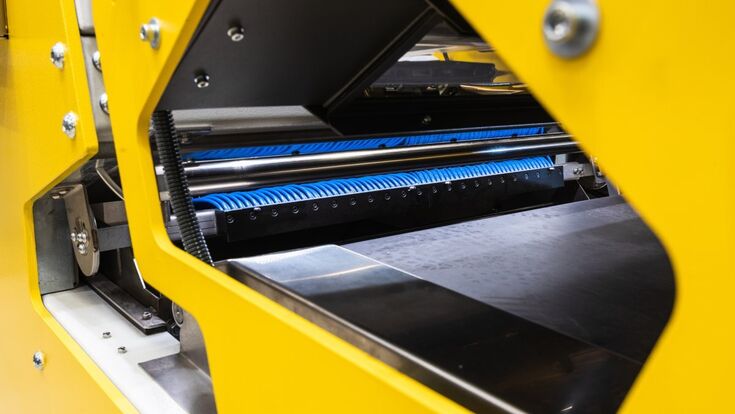
Now, new developments in sensor technology and artificial intelligence are opening the door to a step change in recoverability. Spanish optical sorting specialist PICVISA is among the companies pushing the boundaries of what is possible, developing advanced detection capabilities that allow black plastics to be identified, classified and separated with much greater accuracy in industrial sorting lines.
These advances combine hyperspectral imaging in the mid-wave infrared (MWIR) range with artificial intelligence and sensor fusion techniques. Together, they offer recyclers a powerful tool to unlock value from a material stream that has historically been difficult to process.
Why black plastics are so difficult to recycle
Most automated plastic sorting systems used in material recovery facilities rely on near-infrared (NIR) spectroscopy. In NIR sorting, infrared light is projected onto materials on a conveyor belt, and sensors measure the reflected wavelengths. Different polymers reflect infrared light in distinctive ways, enabling systems to distinguish PET, PE, PP and other plastics.
However, the presence of carbon black pigments, widely used to color plastics, fundamentally disrupts this process. Carbon black absorbs most of the infrared light emitted by NIR sensors rather than reflecting it. As a result, the spectral signal required to identify the polymer is extremely weak or absent.
This means that black plastics frequently appear “invisible” to conventional sorting systems. Instead of being sorted by polymer type, they are typically rejected as residue or directed to lower-value streams.
Given the growing demand for recycled polymers and the increasing regulatory pressure to improve recycling rates, solving this challenge has become a priority for the industry.
Moving beyond NIR: the role of hyperspectral imaging
To address this problem, PICVISA has been working with hyperspectral imaging (HSI) technologies that operate beyond the traditional NIR spectrum.
HSI systems capture hundreds of narrow spectral bands instead of only a few. Each material produces a unique spectral signature – often described as a “spectral fingerprint.” By analyzing this signature with advanced algorithms, it becomes possible to identify materials that would otherwise appear identical to conventional cameras.
PICVISA’s research focuses on mid-wave infrared (MWIR) wavelengths, typically between 3 and 5 micrometers. In this region of the spectrum, the molecular structure of polymers generates distinct absorption patterns that remain detectable even when the plastic is colored with carbon black.
Detecting polymers hidden by carbon black
Tests performed during the development phase demonstrate that MWIR hyperspectral imaging can successfully classify a wide range of common polymers even when they are black or very dark.
Materials successfully identified include:
- Polyethylene (PE)
- Polypropylene (PP)
- Polystyrene (PS)
- Polycarbonate (PC)
- Polyamide (PA)
- Polyoxymethylene (POM)
- Polybutylene terephthalate (PBT)
By analyzing spectral responses in specific wavelength ranges, classification algorithms can distinguish between these polymers despite their visual similarity.
The key lies in analyzing absorption features associated with molecular bonds within the polymer structure. These features remain detectable in the MWIR region even when surface coloration prevents reflection in shorter wavelengths.
According to the development work, classification accuracy improves further when spectral preprocessing techniques are applied, such as smoothing, detrending and normalization.

Sorting technical plastics from complex waste streams
Another major challenge in plastic recycling lies in separating technical plastics, which often contain additives, fillers or copolymers. These materials are common in electronics and automotive applications.
The MWIR hyperspectral approach also shows strong potential in this area.
In development tests, PICVISA researchers were able to differentiate between a variety of engineering plastics and blends, including:
- ABS / PC copolymers
- PC / PBT blends
- ASA (acrylic styrene acrylonitrile)
- Modified polypropylene compounds
- Thermoplastic elastomers (TPE)
These plastics are particularly valuable due to their mechanical performance and market value, but they are notoriously difficult to sort using conventional systems.
Accurate identification enables recyclers to recover them as separate fractions instead of sending them to mixed plastic streams.
Detecting flame-retardant plastics
Beyond polymer identification, another critical application of the technology lies in the detection of flame-retardant additives, particularly brominated compounds.
These additives are common in plastics used in electronics and electrical equipment. However, certain brominated flame retardants are restricted under environmental regulations, making it essential for recyclers to separate them from other materials.
By combining hyperspectral imaging with additional sensor technologies such as X-ray fluorescence, sorting systems can identify plastics containing bromine or chlorine.
This enables recyclers to:
- Separate restricted materials from recyclable streams
- Improve regulatory compliance
- Increase the purity of recovered plastics
Such sensor fusion approaches represent a major step forward for high-value recycling streams such as WEEE (waste electrical and electronic equipment).
From laboratory testing to industrial implementation
While hyperspectral imaging has been studied in laboratories for years, implementing it in high-throughput industrial sorting lines presents several challenges.
Industrial systems must process several tons of material per hour while maintaining consistent classification accuracy.
PICVISA’s development work focuses on integrating hyperspectral sensors into full-scale optical sorting systems. This includes optimizing illumination, calibration and real-time processing algorithms to ensure stable operation in demanding recycling environments.
The integration also requires advanced data processing. Hyperspectral cameras generate enormous amounts of data, and sorting decisions must be made in milliseconds as materials move along conveyor belts.
Artificial intelligence and machine learning models play a critical role in translating spectral data into actionable sorting commands.
Implications for the circular economy
Improving the sorting of black plastics could have a significant impact on global recycling rates.
Black plastics are widely used in packaging trays, food containers, consumer electronics and automotive parts. Despite their prevalence, many recycling facilities currently treat them as residual waste due to the limitations of NIR technology.
By enabling accurate identification and separation, MWIR hyperspectral systems could transform these materials into viable recycling streams.
This would help recyclers:
- Increase recovery rates
- Improve polymer purity
- Reduce landfill and incineration volumes
- Create higher-value recycled materials
As regulations increasingly require manufacturers to incorporate recycled plastics into new products, technologies capable of recovering previously “unsortable” materials will become increasingly important.
A new frontier for optical sorting
The development of MWIR hyperspectral sorting represents a significant evolution in sensor-based recycling technologies.
By combining advanced spectroscopy, artificial intelligence and industrial automation, systems like those being developed by PICVISA demonstrate how technological innovation can address long-standing challenges in materials recovery.
While further scaling and optimization will continue, the progress achieved so far suggests that the long-standing problem of black plastic sorting may finally have a viable solution.
For recyclers seeking to maximize resource recovery and meet increasingly ambitious circular economy targets, that solution cannot come soon enough.