
Innovation and Power in Waste Treatment : FOR REC Presents the MR2000 and New Frontiers in Photovoltaic Recycling at IFAT Munich
In this rapidly evolving scenario, FOR REC, a benchmark in the design and manufacture of machinery for municipal solid waste and industrial waste treatment, confirms its role as a leading technological partner, capable of anticipating market needs with robust, versatile, and high‑efficiency solutions.
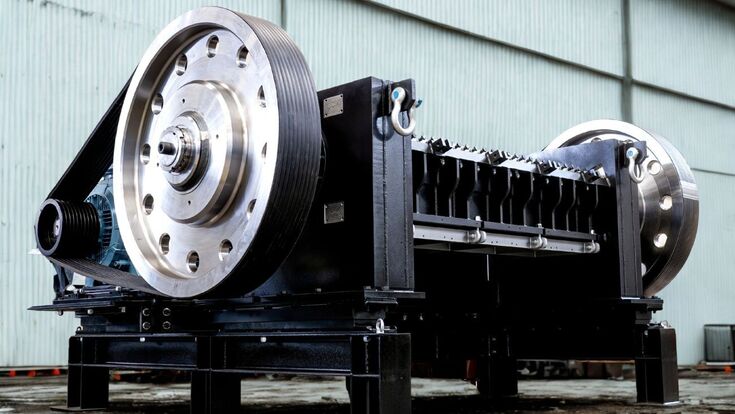
From May 4 to 7, 2026, FOR REC will renew its presence at IFAT Munich, the world’s leading trade fair for environmental technologies. At the Bavarian exhibition center (Hall B6 – Stand 311), the company will showcase its flagship technologies, focusing on two key pillars of its offering: the power of its enhanced single‑shaft grinders (MR2000) and its innovative lines for end‑of‑life photovoltaic panel recycling.
MR2000: Power and Precision Engineering
When processing tough materials with high specific weight or highly abrasive components, such as end‑of‑life tyres, cables and electric motors, plant robustness becomes the critical success factor. FOR REC’s MR series was developed precisely to meet these demanding operational requirements.
The MR2000 single‑shaft shredder represents the pinnacle of this category. With an impressive weight of 24,000 kg and a 1,920‑mm‑long rotor, this machine concentrates power and advanced engineering solutions designed to maximize productivity. Its key technical features include:
- Intelligent wear management: a special wear‑resistant rotor coating and easily replaceable cutting inserts ensure operational continuity even with the most demanding materials.
- Mechanical reliability: bearings positioned outside the cutting chamber prevent contamination from dust and debris, while automatic lubrication systems and transmission protection minimize downtime.
- Process efficiency: the interchangeable screening grid allows precise control of output particle size, optimizing subsequent separation stages.
The MR2000 perfectly embodies FOR REC’s engineering philosophy: machines designed to operate at low rotor speeds, a technical choice that preserves the quality of recoverable materials while drastically reducing component wear.
The New Global Challenge: the “Tsunami” of End of Life Photovoltaic Panels
While the MR2000 answers today’s heavy‑duty industrial recycling challenges, FOR REC is already looking ahead to one of the most significant waste streams of the near future: end‑of‑life photovoltaic panels. Estimates indicate that 78 million tonnes of photovoltaic waste will need treatment worldwide by 2050.
How does this challenge fit into FOR REC’s long‑standing strategy? We asked Marco Zoccarato, CEO of FOR REC.
“Photovoltaic panel recycling is a natural extension of our long experience in WEEE treatment,” explains Zoccarato. “The emergence of photovoltaics as a new waste stream further reinforces the need for technologies capable of delivering high performance and high‑quality material recovery.”
FOR REC’s photovoltaic recycling lines are designed to process up to 4 tonnes per hour, adapting to any type of panel, intact or damaged, flat or curved. However, the transition from traditional WEEE to solar panels required a targeted R&D effort.
The introduction of materials such as silicon, EVA and especially glass pushed the company toward a genuine technological leap. According to Zoccarato, the work carried out by the R&D team made it possible to integrate new separation systems, representing a significant breakthrough in FOR REC’s processing plants.
One of the critical challenges in photovoltaic recycling is extreme wear, since panels contain up to 70% glass, an extremely abrasive material. Here again, FOR REC’s low‑speed processing philosophy makes the difference: operating at reduced speeds not only preserves material integrity but also significantly limits wear on rotors, blades, and shredding chambers—resulting in longer equipment life and lower operating costs.
Towards a Profitable Circular Economy
Whether dealing with the shredding of tough industrial materials or the precise separation of silicon and glass from solar panels, the ultimate goal remains the same:
to achieve a real balance by turning the wave of end‑of‑life panels into an industrial opportunity, rather than a waste management problem.
For professionals operating in the circular economy, the appointment is set at IFAT Munich 2026, from May 4 to 7—an unmissable opportunity to experience first‑hand the FOR REC technologies shaping the future of recycling.
The FOR REC technical team looks forward to welcoming visitors at Stand B6‑311.
In the meantime, contact us today to schedule a meeting at the exhibition and discover FOR REC solutions first‑hand.