
Waste-to-Energy : VYNCKE Builds Waste-to-Energy Cogeneration Plant in Opole
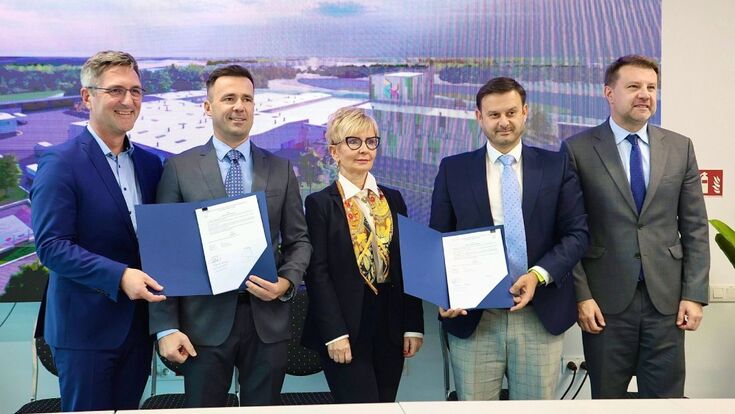
A new Waste-to-Energy reference in Poland
VYNCKE is reinforcing its presence in Poland with a new waste-to-energy cogeneration project in Opole. Delivered in consortium with local EPC partner Elemont S.A., the plant will form part of the city’s Green Transformation Center, an integrated municipal initiative that connects waste treatment with local energy production. Commissioning is scheduled for December 2028. The installation will process around 17,800 tonnes of waste per year from a catchment area of approximately 130,000 residents, converting non-recyclable fractions into useful energy. In this way, the project will help Opole reduce landfill, recover value from residual waste and strengthen its circular economy ambitions through a practical, local energy solution.
At the heart of the project is an RDF-fired cogeneration plant that transforms (household) waste streams which can no longer be reused or recycled into heat and electricity. All thermal energy produced in the hot water boiler will be transferred to an Organic Rankine Cycle system, where it will be converted into electricity and usable heat. The recovered heat will be supplied to Opole’s district heating network, while the electricity generated will mainly cover the plant’s own consumption. This configuration allows the city to recover maximum value from its waste while reducing dependence on fossil-based energy. It also shows how waste management and energy supply can be combined in one integrated approach, creating a direct link between municipal services and the local energy transition.
Full-scope delivery for Opole’s green transition
A key strength of the Opole project lies in its integrated delivery model. VYNCKE and Elemont will be responsible for the full design-and-build scope, including engineering, permitting, construction and commissioning. The project covers the complete energy island, from the hot water boiler and ORC system to the flue gas cleaning installation and the full fuel handling system with crane. By delivering the entire installation as one coordinated solution, the consortium can reduce interface risks and ensure that all components are engineered to work together efficiently and reliably. For complex waste-to-energy applications, that kind of end-to-end responsibility is essential to achieving strong performance over the long term.
Environmental compliance is equally central to the project. The installation is engineered in line with the Waste Incineration Directive and includes key features such as a minimum flue gas residence time of two seconds and continuous emissions monitoring. The flue gas treatment system combines dry sorption with advanced cleaning technologies to keep emissions well within regulatory limits, while the combustion system is designed to handle the variable nature of RDF and maintain stable operation under changing fuel conditions. The plant is designed for high energy recovery, in compliance with the latest European standards and best available technology for efficient waste-to-energy conversion. Beyond its technical performance, the project will also contribute to Opole’s wider decarbonisation strategy. According to project data, the installation is expected to replace approximately 24,000 tonnes of coal per year, showing how municipalities can address residual waste and fossil fuel dependency at the same time.
Building on a growing Polish track record
The Opole project marks an important milestone for VYNCKE in the Polish market, as it is the company’s first public-sector project in the country to be delivered in consortium with a local partner, following a competitive public tender. This approach combines VYNCKE’s international waste-to-energy expertise with Elemont’s strong local execution capabilities, resulting in a delivery model that is technically robust, locally grounded and well aligned with the customer’s needs. At the same time, this project builds on VYNCKE’s existing references in Poland, where the company has already delivered several turnkey energy projects across industrial sectors.
For example, at IKEA Industry VYNCKE has delivered four references, with two installations in Lubawa, alongside further projects in Babimost and Zbaszynek. Across these sites, production residues such as MDF dust, HDF residues and particle board trimmings are converted into useful thermal energy for industrial operations, supporting building heating, process heat and wider site energy needs. In Suwalki, VYNCKE also delivered a complete CHP installation for Padma Art, fired with MDF dust and designed to supply superheated steam for the process, hot water to the driers and electricity to support factory operations. With these many references under its belt, VYNCKE already built a solid base of industrial waste-to-energy references in Poland, combining challenging waste fuels with integrated energy recovery and high-performance plant delivery. The project in Opole will be the company’s 13th reference in the country.
What makes Opole especially significant is its municipal scale and public-sector context. While earlier Polish references focused on industrial waste streams, this new project extends into municipal waste-to-energy and demonstrates that the same core principles (reliable combustion, efficient energy recovery and strict emissions control) can be successfully applied across different sectors and fuel types. With Opole, VYNCKE adds a new municipal reference to its Polish track record and once again shows how residual waste can be transformed into local value.
For more information about VYNCKE’s energy solutions, go to https://www.vyncke.com or visit IFAT Munich, where we will be present at Messe Munich from 4 – 7 May 2026, in Hall A4, booth 241