
Stainless steel, heavy metals and more : TOMRA expands its Dynamic LIBS application range
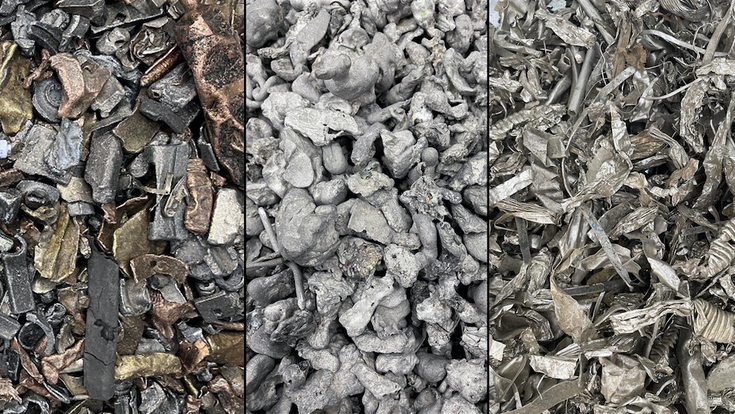
AUTOSORT™ PULSE supports applications such as heavy metal sorting (left), IBA upgrading (middle) and stainless steel grade separation (right).
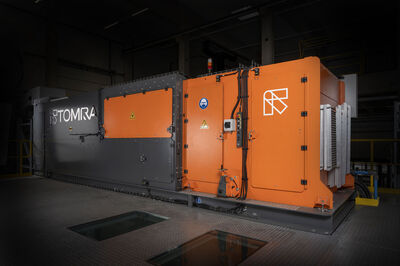
- © TOMRASince its launch in 2023, TOMRA’s AUTOSORT™ PULSE has set the standard for industrial-scale aluminium alloy separation. Using Dynamic LIBS (Laser Induced Breakdown Spectroscopy), the system identifies materials by their elemental composition, enabling precise sorting tasks such as separating aluminium into different alloys, including the 5xxx and 6xxx classes.
Building on this proven performance in aluminium, TOMRA has expanded the system’s range of applications to include additional material streams where precise sorting can create new value.
One system, multiple applications
The expanded application range of the AUTOSORT™ PULSE system opens up new opportunities for recyclers. Rather than being limited to a single application, operators can now use one machine for multiple sorting tasks, eliminating the need for additional hardware investments.
The key enabler is TOMRA's Dynamic LIBS technology. Its dynamic laser setup enables the AUTOSORT™ PULSE to analyse the elemental composition of each object and adapt to different scrap conditions. By repeatedly targeting the same point on the material, the laser can effectively drill through coatings, paint, oxidation and dust to identify the underlying composition, giving it an advantage over conventional LIBS or XRF solutions. This is particularly relevant for heavy metals and IBA-derived streams, where surface conditions often make separation more challenging.
Heavy metals: adding value through precise sorting
The system can now identify and separate valuable fractions such as copper, brass, zinc and stainless steel from mixed heavy metal streams. It can also distinguish between different material characteristics, such as separating zinc sheets from Zamak and identifying coated and non-coated materials.
One company already utilising these capabilities is Kaplan Pirinç Çubuk A.Ş. in Turkey. The brass smelter invested in the AUTOSORT™ PULSE specifically to sort brass into different grades for its European and non-European customers.
"Most of our brass input is coated and we need to identify specific elemental compositions,” says Safa Tayyip Topçuoğlu, Owner of Kaplan Pirinç Çubuk A.Ş. “After seeing the great test results we achieved with TOMRA, we knew the AUTOSORT™ PULSE was exactly what we needed. With its Dynamic LIBS technology, we can look deeper into the material and precisely target the elements that we want. This helps us get more value out of our scrap and reduce the amount of expensive alloying material we would otherwise need to add. The result is high-value brass at a lower cost, which gives us a real competitive advantage.”
Stainless steel, incinerator bottom ash and magnesium
For stainless steel applications, AUTOSORT™ PULSE can separate different grades, including 316, 304 and 201 from mixed stainless steel streams, enabling recyclers to create more specific and higher-value output fractions from material they already process.
The system can also be applied to incinerator bottom ash (IBA), the mineral residue left after municipal waste incineration. After initial processing, IBA can yield complex metal streams such as mixed aluminum and mixed heavy metals. AUTOSORT™ PULSE enables further separation of these fractions, including low- and high-silicon 6xxx series aluminum alloys, as well as copper and brass from mixed heavy metal streams. This turns material that was once considered difficult to upgrade into valuable metal fractions and supports a higher-quality output from challenging input.
Another new application is magnesium separation from floated super-light fractions. By reliably distinguishing magnesium from other light metals, AUTOSORT™ PULSE helps recyclers achieve cleaner output fractions and improve material quality.
Turning flexibility into resilience
Material availability can change quickly, and metal markets are often difficult to predict. Prices and margins can shift significantly, and recyclers need the flexibility to focus on the material streams with the highest demand and value. With AUTOSORT™ PULSE, operators can switch between streams and adapt sorting whenever they need to make the most of every operational hour and capture value where it matters most.
To support this, TOMRA trains customers' teams to adapt and fine-tune sorting programs themselves. Operators can react quickly when material streams change, test new input materials before committing to larger purchases and keep production stable even when market conditions shift.
"AUTOSORT™ PULSE has proven itself in aluminum alloy separation, and we have continued to develop what the technology can enable," said Tom Jansen, VP, Head of Segments at TOMRA Recycling. "Today, our customers can use one system across several material streams, from stainless steel to IBA, heavy metals and more. What changes is the application, not the technology. That flexibility turns a single investment into real operational and economic value."
