
Metal sorting : Advanced alloy sorting drives efficiency gains in aluminium recycling
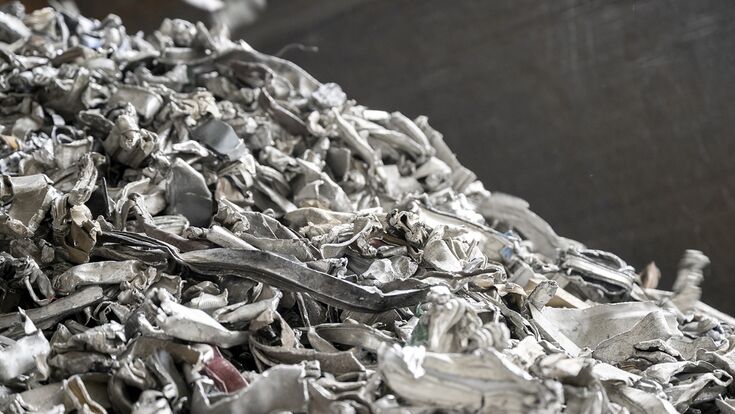
Superior sorting quality the system identifies 1xxx to 8xxx series aluminium alloys with purity rates exceeding 99
- © SteinertSecondary smelters depend on consistent quality and reliable supply. For the aluminium recycling sector, meeting those demands increasingly comes down to the capability of the sorting technology deployed on site. STEMIN S.p.A., one of Italy’s leading aluminium recyclers, is a case in point. Operating a facility near Bergamo, STEMIN processes around 180,000 tonnes of aluminium annually, representing roughly 17–18% of the Italian secondary market.
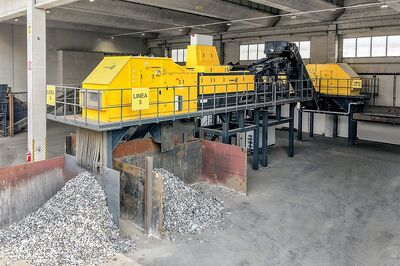
For more than a decade, STEMIN has developed a close working relationship with sorting specialist STEINERT, steadily building out its process chain with sensor-based systems. Today, the plant operates five STEINERT separation lines covering eddy current separation, sensor-based light/heavy separation, and alloy sorting via STEINERT’s PLASMAX LIBS-based sorting system. Together, these systems transform mixed aluminium scrap into precisely defined fractions suitable for secondary smelters.
Operational performance through technological investment
For Olivo Foglieni, President of STEMIN, the link between technology and performance is unambiguous. “Technology is absolutely fundamental to achieving environmental objectives – this means lower energy consumption, significantly higher hourly throughput, and reduced production downtime.”
STEINERT has reinforced this focus on uptime with a 20,000 operating hours warranty on its X-ray sources — introduced in 2020 — underscoring the longevity of the components at the heart of the sorting system.
State-of-the-art alloy classification in practice
Mixed aluminium streams at STEMIN contain plastics, various light and heavy metals, and multiple alloy types. These undergo several pre-treatment stages before entering the STEINERT PLASMAX unit, where a LIBS sensor analyses each particle and separates it into homogeneous fractions based on alloy composition.
The system distinguishes aluminium alloys across the 1xxx to 8xxx series, operating at throughputs of up to 11 tonnes per hour. Up to three fractions can be produced simultaneously, enabling recyclers to deliver alloy-specific feedstock directly to smelters. According to STEMIN, the process achieves purity levels exceeding 99% whilst maintaining stable throughput and plant availability.
For Foglieni, the long-standing collaboration itself is a key success factor: “Two companies with different expertise and perspectives – united, they succeed across the board.”
Expanding the scope of secondary metal recovery
STEINERT continues to develop its technology beyond current installations. A new upgrade for the STEINERT PLASMAX extends the system’s capability to smaller grain sizes, opening further opportunities for secondary aluminium processors. Companies can evaluate performance through industrial-scale trials at the STEINERT Test Center in Cologne before committing to investment decisions.
The Test Center plays a significant role in STEMIN’s procurement process. As Foglieni explains: “This is extremely important for us: being able to verify what can and cannot be recovered from our specific material — not in kilograms, but potentially in tonnes. The machines, the technicians, and the range of experimentation possibilities were impressive. That is precisely why, on many occasions before making a purchase, we carried out multiple tests at their Test Center in Germany.” His technicians, he notes, returned “with tremendous appreciation.”
High-velocity service as a driver of plant productivity
Sorting capability alone does not guarantee productivity. At STEMIN, Foglieni’s decision to invest in STEINERT technology was driven equally by the need for a robust system where “downtime simply isn’t an issue.” His confidence is rooted in the “quality and professionalism” of STEINERT’s service department. "Today, all our systems are connected remotely. Within 30 to 40 minutes, even when it is not possible to have a technician on site, we are still able to resolve the issue. The most serious issue we have ever encountered was resolved within two hours. This level of expertise has been a decisive factor on many occasions in choosing to invest in STEINERT technology.“
This rapid-response capability means STEMIN is “never left on their own” and transforms the relationship from a straightforward vendor–customer transaction into a collaborative partnership focused on maximising plant availability.
A decade of non-ferrous separation: one defining word
Ten years, five sorting lines, and a track record in high-purity aluminium alloy sorting: when asked to summarise the collaboration in a single word, Foglieni’s answer is unequivocal. “If I had to describe STEINERT in a single word, it would be reliability.”
For an industry in which secondary smelters tolerate little margin for error in material quality or supply continuity, that is precisely the word that counts.
