
Biowaste : Anaerobic digestion powers Minnesota's circular economy ambitions
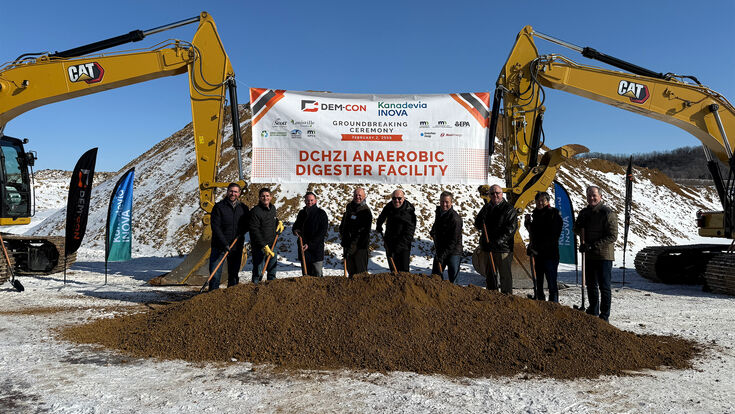
Kanadevia Inova, a global green-tech leader formerly known as Hitachi Zosen Inova, has broken ground on the Louisville Township Renewable Gas Project — a pioneering large-scale anaerobic digestion facility in Louisville Township, Minnesota. The project, developed in partnership with Dem-Con Companies LLC under the banner of DCHZI BioEnergy, marks one of the most advanced organic waste-to-renewable gas ventures in the region.
Once operational — with the site set to begin receiving organics for processing in 2027 — the facility will handle up to 75,000 tonnes of organic materials per year, converting them into approximately 200,000 MMBtu of renewable natural gas (RNG) annually. The project will also generate around 8,000 tonnes of biochar each year, a carbon-sequestering by-product with significant applications in agriculture, industry and environmental remediation.
“This cutting-edge facility will convert the organic fraction of municipal waste from surrounding counties into renewable energy through anaerobic digestion, biogas upgrading, and advanced gasification. In addition to biomethane, it will be the first facility of its kind to produce biochar, a carbon-sequestering byproduct that reduces the plant’s carbon intensity and creates valuable applications for agriculture and industry," says Heath Jones, Regional President North America, Kanadevia Inova.
Supporting Minnesota's sustainability agenda
The project has its roots in policy goals set by the State of Minnesota and local municipalities, aimed at reducing greenhouse gas (GHG) emissions, diverting a significant proportion of landfill waste and producing renewable energy. It is a direct response to the well-documented problem of organic waste ending up in landfill, where it decomposes and emits methane and CO₂ — two powerful greenhouse gases.
National average household waste is composed of 24% food waste — more than any other single material. By diverting this fraction from disposal and processing it through the DCHZI BioEnergy facility, the project will reduce landfill volumes and generate enough energy to power approximately 2,700 US homes year-round on average.
The feedstock will include both source-separated organics (SSO) collected in compostable bags and organic material recovered from the biodegradable fraction of municipal solid waste (MSW). Primary feedstock supply will be provided by Ramsey/Washington Recycling & Energy (R&E), a public joint powers organisation serving Ramsey and Washington counties.
A first-of-its-kind approach to bioenergy recovery
At the heart of the project lies a novel integration of high-solids anaerobic digestion (HSAD) with gasification technology — a combination that addresses one of the most persistent challenges in MSW management: impure organic waste streams.
In the HSAD process, bacteria break down organic material in a giant airtight tank without oxygen, producing biogas composed of approximately 60% methane and 40% carbon dioxide. This biogas then enters a purification process that removes the CO₂ and other impurities to produce pipeline-quality natural gas. Whilst anaerobic digestion is an effective solution for organic material, compostable bags and residual contaminants cannot be fully treated through digestion alone. Kanadevia Inova resolves this by following HSAD with gasification, enabling the complete conversion of residual digestate into biochar.
The produced RNG will be integrated into the regional energy system through offtake agreements with CenterPoint Energy, Inc. and Xcel Energy, Inc., made possible under the Minnesota Natural Gas Innovation Act.
Biochar: A carbon-negative by-product with wide-ranging benefits
The production of biochar represents a significant differentiator for the Louisville Township project. A renewable product usable for remediation projects, filtration or as a soil amendment to retain moisture and nutrients, biochar also sequesters carbon from the environment — directly contributing to a reduction in the facility’s overall carbon intensity.
Of particular note for the waste management sector, both the gasification process and the use of biochar in soil remediation have shown promise in reducing perfluoroalkyl and polyfluoroalkyl substances (PFAS) — a class of toxic chemicals notoriously difficult to manage and often referred to as “forever chemicals.”
Beyond biochar, the overall process offers multiple operational advantages: considerable waste volume reduction, nutrient stabilisation to mitigate pollution, effective odour control and a marked reduction in pathogens present in organic waste materials.
A collaborative model for decarbonisation
The project brings together a broad coalition of public and private stakeholders. Dem-Con Companies, LLC, a third-generation, Minnesota-based waste and recycling company, provides decades of regional expertise alongside Kanadevia Inova’s advanced technology. Funding has been provided by the Minnesota Environment and Natural Resources Trust Fund, as recommended by the Legislative-Citizen Commission on Minnesota Resources (LCCMR), with additional support from a grant from the Minnesota Department of Commerce. Ongoing operational funding for R&E’s access to the facility will be supported through the State Competitiveness Fund Matching Funds programme.
“The Kanadevia Inova/Dem-Con facility underscores Kanadevia Inova’s long-standing commitment to deliver cleaner energy solutions and support customers on their decarbonization journeys. It also marks the development of Kanadevia Inova’s first renewable gas biochar facility, further strengthening its leadership in innovative waste-to-energy technologies. The groundbreaking of the Kanadevia Inova/Dem-Con facility marks a significant step toward a more sustainable and resilient waste and energy infrastructure in North America. Kanadevia Inova extends its sincere thanks to all partners, stakeholders, and employees whose dedication and collaboration have brought this project to life," says Fabio Dinale, Executive Vice President, Head of Business Development, Kanadevia Inova.
