
E-Waste : Reframing e-waste: From risk to resource in the global supply chain
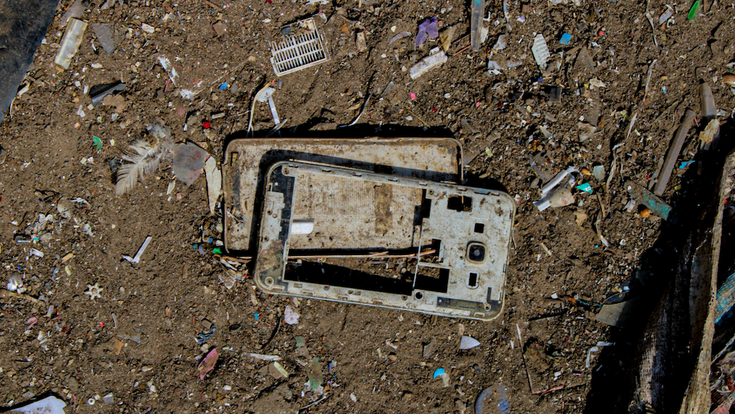
E-waste isn’t just an environmental challenge; it’s a missed financial opportunity. The organisations and countries that invest in better ways to capture, classify, and process electronic waste are creating value. Done well, these systems can unlock new business opportunities, attract investment, and strengthen sustainable economic development.
Through our work supporting the operational, compliant movement of hazardous waste in more than 100 countries, my team and I have seen friction points first-hand and the opportunities that emerge when systems work effectively.
Yet despite growing regulatory attention, efforts to manage the volumes of discarded electronics, particularly in Southeast Asia, one of the biggest recipients of the world’s e-waste, are still often focused on disposal. How do we stop illegal dumping? How do we clean up contaminated sites? How do we prevent non-compliance? All key questions, but they keep authorities and businesses in reactive mode and overlook the economic value that structured, compliant resource recovery can unlock.
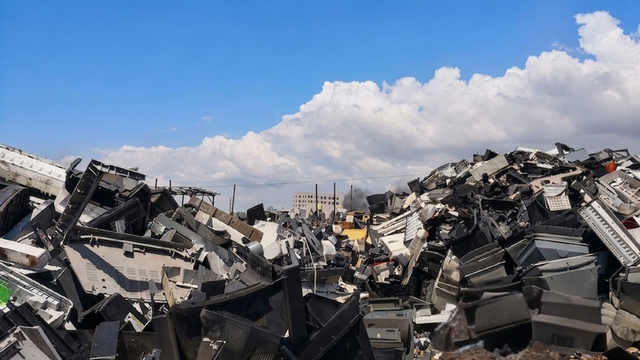
Despite growing regulatory attention, efforts to manage the volumes of discarded electronics, particularly in Southeast Asia, one of the biggest recipients of the world’s e-waste, are still often focused on disposal.
- © BlackForest SolutionsSystems can lag
Countries worldwide are increasingly taking greater ownership of managing e-waste and strengthening frameworks to curb illegal dumping and uncontrolled imports. Recent measures such as Malaysia’s e-waste import ban, Thailand’s expansion of its prohibited import list to 463 categories, together with the Basel Convention’s Prior Informed Consent (PIC) procedure for hazardous and other wastes, demonstrate the direction of travel across Southeast Asia and elsewhere.
At the same time, the region generates over four million tonnes annually, with limited formal recycling systems. Much of this material, including hazardous parts, is still handled informally or accumulates in warehouses, highlighting the gap between policy and operational reality. The challenge now is what comes next. Regulation without systems, infrastructure, and a clear approach to enforcement only solves half the problem.
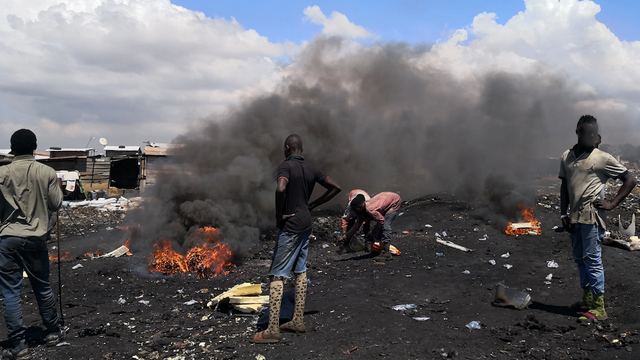
Southeast Asia generates over four million tonnes of e-waste annually, with limited formal recycling systems, and much of this material, including hazardous parts, is handled informally or accumulates in warehouses.
- © BlackForest SolutionsUnlocking existing value
E-waste recovery offers clear economic gains alongside critical environmental protection. A World Economic Forum report estimates that there is 100 times more gold in a tonne of mobile phones than in a tonne of gold ore, while EV batteries hold cobalt, lithium, nickel, and copper. The opportunity is clear, but only if systems are in place to properly capture, classify, and route materials.
Coordinated take-back is the missing link
Encouragingly, more structured models are emerging. For example, an EV battery recycling pilot project in Indonesia shows how local operations, international technology, certification standards, and training can be aligned.
Supported by the German Federal Ministry for the Environment, Climate Action, Nature Conservation and Nuclear Safety (BMUKN) and the German-Indonesian Chamber of Industry and Commerce (EKONID), this is the kind of joined-up thinking that's needed. Not simply restricting imports but also investing in local capacity to manage waste responsibly and unlock its economic potential.
In practice, effective take-back systems connect waste generation to environmentally sound treatment - often across borders. Not every country has the capacity to process every waste stream domestically, so compliant, documented movement is essential. That’s why we develop and manage global take-back schemes for materials, including waste electronic components, partnering with local organisations, and supporting the development of local infrastructure where it does not yet exist.
Resolving classification ambiguity
E-waste sits in a grey zone: a used laptop might be a functioning product, a repairable item, or hazardous waste, depending on who classifies it and which jurisdiction applies. That ambiguity is where non-compliance thrives. Shipments get mislabelled as 'copper concentrate' or 'second-hand goods' and sail through ports where customs simply do not have the capacity to inspect every container. These are not hypothetical challenges. We have seen these issues up close through our auditing work with recyclers and our on-the-ground operations at ports across the world.
A further gap is documentation and process infrastructure. Even when waste is correctly classified, the notification paperwork often does not hold up under scrutiny. The waste codes do not match the actual content, the receiving facility's acceptance criteria do not align with what arrives, or the routing does not comply with international regulations governing the transport of dangerous goods, including certain types of e-waste and waste batteries.
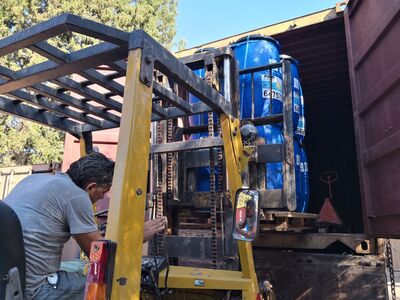
And here is a point that most people outside the industry do not realise - there is no global digital system for Basel notifications. In many cases, we are still working with physical paper documents sent by post or, at best, with intermittent email communications, where tracking progress and obtaining timely responses can be challenging. For a regulatory framework governing the movement of hazardous waste across borders, that is a remarkable infrastructure gap.
The displacement effect
Another underappreciated challenge is the displacement effect. When Malaysia shut the door to e-waste imports in February, those waste flows did not stop; they redirected. We have seen this pattern repeatedly - when one country tightens enforcement, illegal e-waste trade frequently shifts to jurisdictions that lack dedicated legal frameworks. That’s why regional coordination matters as much as national action.
Building blocks for a sustainable future
Three elements need to happen in parallel. First, countries need to build domestic processing infrastructure. This takes time and investment, but it also creates real value: local knowledge, local jobs, and entire value chains that did not exist before.
Next, systems need to be in place to ensure the ‘non-valuable’ and hazardous waste streams are managed. The toxic components and the material that no one wants to buy.
This is exactly where Extended Producer Responsibility (EPR) comes in. Increasingly adopted across Southeast Asia, it serves two key purposes. It puts financial responsibility where it belongs: with the companies that profit from selling the products that eventually become waste. Secondly, if designed and enforced properly, it ensures that the costs of collecting, processing, and treating the non-valuable and hazardous parts are covered and tracked.
Finally, you need the kind of take-back systems I mentioned earlier - that make it easy to collect, recover, and responsibly manage end-of-life products.
A clear path forward
The regulatory direction is clear. EPR policies, tighter waste export controls under the revised EU Waste Shipment Regulation, and increased recovery under the Critical Raw Materials Act, including setting minimum recycled content requirements for permanent magnets from December 2031. Together, these measures are accelerating the shift towards circularity and creating clear economic incentives to recover and reuse valuable materials.
At the same time, Southeast Asia is shifting from being a recipient of foreign waste to managing its own fast-growing domestic volumes, requiring a new policy approach and infrastructure. The recurring risk of illegal waste being displaced to other countries, without coordinated enforcement systems in place, must also be managed.
Internationally, resource competition is increasing. As a result, discarded electronics are becoming a supply chain issue, not just a compliance one. For multinational operators, the message is clear: those who build structured recovery systems now will secure environmental gains, compliance, and access to valuable materials.
In cooperation with Black Forrest Solutions.