
Glass recycling : STEINERT MSort is developing a cost-effective solution for HR glass separation
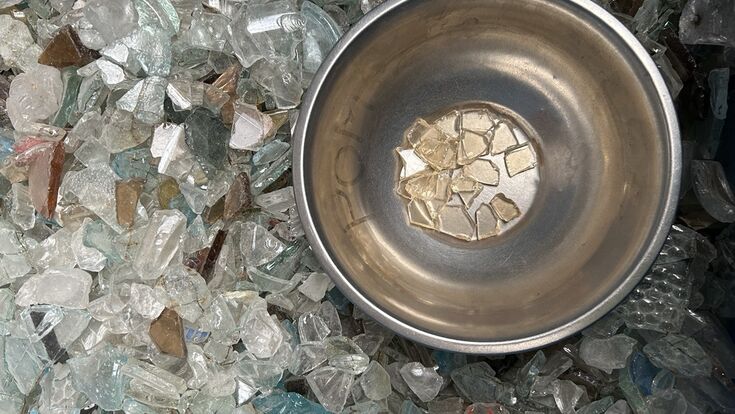
Container glass with HR glass removed.
- © STEINERTLukas Armatys, the managing director of STEINERT MSort in Wedel, is proud of his team. The product development team has solved a problem that requires much more expensive technology than other manufacturers. "In addition to the usual impurities such as CSP and metal, we can now detect and remove heat-resistant glass and plastics in a single step, in combination with colour sorting. As this new product is available as an upgrade for all existing sorting systems, purchasing this sorting solution is much more cost-effective than the options of competitors. And there's no need for complex modification work either," says Armatys. This is very good news for all glass recyclers, no matter whether they work with flat glass or container glass. This is because there is no need for complicated and costly work involved in removing the old and installing the new sorting systems; the new sorting solutions are simply added to the existing machine via an upgrade.

Removing impurities from HR (heat-resistant) glass
Recyclers in the waste glass sector aim to create the cleanest possible closed loop for producing new bottles and glasses. Glass melters therefore require a suitable cullet flow for remelting packaging glass. While the thermal stability of glass is important for its intended use, it causes problems during the melting process. HR glass differs from standard container glass in terms of its chemical composition and melting behaviour, and therefore has to be removed. However, if an impurity has characteristics similar to those used to detect the target product (such as flint glass), solving this sorting problem becomes challenging. Nevertheless, developers have managed to detect both plastics and HR glass (both of which resemble flint glass) using simple and cost-effective sensor technology. The engineers used wavelengths outside the visible spectrum to identify the differences. To achieve this, they tested and analysed countless pieces of glass. This is because there are many types of HR glass that do not belong in the standard packaging glass stream. These include microwave, oven and cookware glass, as well as similar specialist glass, such as that used for ceramic hobs and protective fireplace screens.
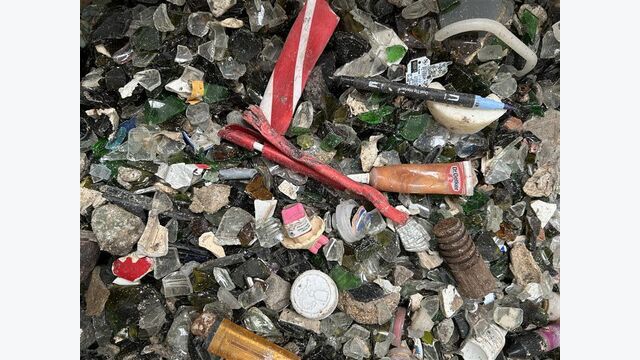
All types of plastics must be removed so that a closed loop can be established to produce new bottles and glasses.
- © STEINERTMSort AX has been operating reliably for months
This new development has already proven its worth with a long-standing glass recycling customer over a considerable period of time. In this case, the 14-year-old sorting system is now operating with the new development. The latest tests show that MSort AX can detect and remove HR glass with 99% accuracy. This is efficient for the customer as the system did not need to be modified; just a few days were required for the upgrade, and the results are excellent
Sorting tests are available at the Test Center in Wedel.