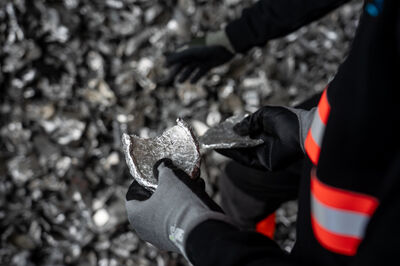
Metal Reycling : Cusiana and TOMRA Recycling redefine aluminium recycling
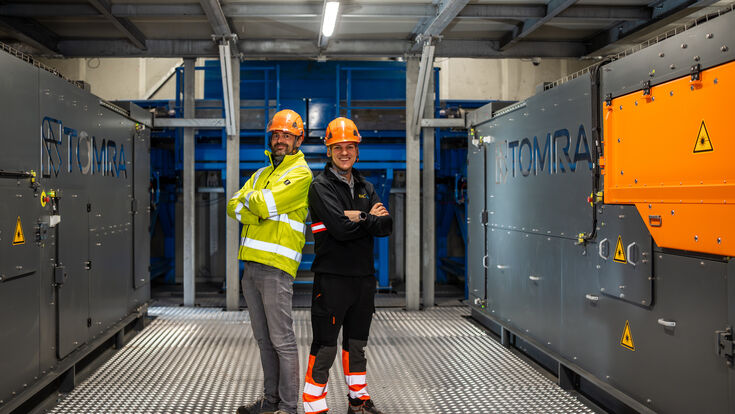
The close collaboration between Cusiana and TOMRA laid the foundation for a new level of precision in aluminum recycling.
- © TOMRARaffineria Metalli Cusiana S.p.A. (Cusiana), a leading Italian secondary aluminium refiner that supplies multinational companies in the automotive, construction, and furniture sectors across Europe, has formed a strategic partnership with TOMRA Recycling. Together, they are redefining aluminium recycling by using advanced multi-sensor sorting technology. Together, they have developed a multi-stage sorting line that enables Cusiana to move beyond traditional ingot production. This allows the company to create branded, near-carbon-free aluminium ingots and specific high-purity alloys, maximising profit while delivering significant environmental benefits.
Cusiana's business model was historically based solely on melting and producing aluminium ingots, but the company has transformed its model over the last few years. Without advanced pre-sorting of the scrap, melting could not meet the strict elemental specifications now required by aerospace and automotive customers, such as maximum limits on silicon or iron. This strategic shift enables Cusiana to derive significantly greater value from its raw materials, reducing its dependency on commodity markets and bolstering its long-term competitiveness.
Today, the scrap recovery side of the business accounts for 50% of total revenue, making it a key growth area. With a 100,000-tonne-per-annum plant in Verbania, Italy that operates 24/5, Cusiana’s goal is to increase profitability by producing material of a quality that was previously unattainable from scrap. Cusiana’s process is powered entirely by renewable energy sources, dramatically reducing energy consumption and enabling the production of near-carbon-free aluminium. This enables the production of its branded 'Recall' ingots, giving high-profile customers who require high-quality materials and a low-carbon footprint a competitive advantage.
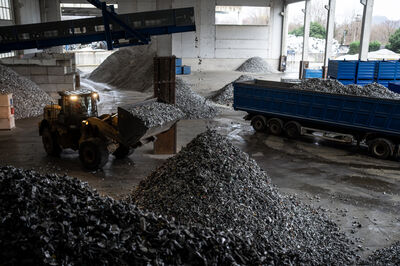
Multi-stage sorting configuration
The key challenge for Cusiana was to move beyond simply removing contaminants to achieving the ultra-high purity and alloy-specific separation required for high-quality remelting. To address this challenge, Cusiana and TOMRA Recycling developed a sophisticated, fully automated sorting line combining multiple technologies in a three-phase process.
- Phase one: pre-processing: The process begins with the pre-shredding of raw materials, such as mixed aluminium sheet, profiles and extrusions. The material is then run through a hammer mill, where magnets and screeners remove ferrous metals and separate the material into multiple fractions.
- Phase two: contaminant and heavy-metal removal. This phase is divided into two sub-steps. First, two X-TRACT™ units remove contaminants such as copper and brass. Secondly, aluminium containing heavy metals, such as certain cast alloys and the 2000 and 7000 series alloys, is separated by two further X-TRACT™ units.
- Phase three: high-purity alloy sorting. In the final critical phase, two AUTOSORT™ PULSE units perform alloy-specific sorting to further increase aluminium purity. Using Dynamic LIBS (laser-induced breakdown spectroscopy), the system precisely reduces elements such as silicon (Si), iron (Fe) and manganese (Mn) to meet strict alloy specifications. The line operates at a high input rate, with a stable production throughput of seven tonnes per hour feeding into each AUTOSORT™ PULSE unit.
- In addition to this process, a FINDER™ unit recovers valuable metal fines from the residual output of the eddy current separators, thereby maximising overall metal yield and resource efficiency.
Given the level of precision required throughout the sorting process, operational reliability and consistent performance are essential. Cusiana therefore uses the TOMRA Care service package to maintain high uptime and stable operation. Ongoing support and optimisation ensure that the systems consistently deliver the required sorting accuracy under continuous operating conditions.
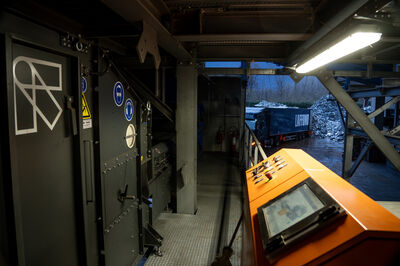
Quantifiable outcomes and market differentiation
To achieve its goal of creating specific, high-quality aluminium alloys, Cusiana must complete the final sorting step with the AUTOSORT™ PULSE. Traditional sorting methods cannot differentiate between subtle elemental compositions, but the AUTOSORT™ PULSE provides the necessary precision. This investment has transformed Cusiana's business model by creating two valuable output streams. Firstly, they produce their branded 'Recall' ingots, which offer customers a guaranteed solution with 100% recycled content. Secondly, the ultra-high purity achieved by the AUTOSORT™ PULSE enables Cusiana to sell premium, alloy-specific scrap directly to manufacturers without downgrading it. This enables the company to bypass the melting furnace for these streams, significantly reducing the time and high energy costs associated with ingot production.
The company is now in a unique position in the European market. By integrating Dynamic LIBS precision, Cusiana can achieve specific alloy quality levels, enabling its scrap and ingots to be used directly by leading aluminium manufacturers. This directly supports the sustainability agendas and profitability goals of its customers.
This project further consolidates Cusiana's position as one of Europe's most advanced secondary aluminium refiners, demonstrating how technology, strategy and sustainability can converge to create long-term industrial value.
Fausto Forni, Plant Manager at Cusiana, comments: 'The strategic, collaborative nature of our partnership with TOMRA was the cornerstone of this transformation. TOMRA’s experts ensured precise on-site calibration, constantly refining the sorting line to deliver the exact output required for our specific scrap streams. The multi-stage, multi-sensor line enables us to produce high-quality, alloy-true secondary aluminium ingots, which is vital for securing new business. The precision provided by the AUTOSORT™ PULSE enables us to meet the extremely strict elemental specifications required by our customers. Looking ahead, we see further potential to unlock additional business opportunities with the AUTOSORT™ PULSE.”
Fabrizio Gasparin, Sales Manager Italy at TOMRA Recycling, adds: ‘Cusiana’s evolution in recent years demonstrates the vital role of multi-sensor technology in achieving true material circularity. By combining XRT for contaminant removal and Dynamic LIBS for precision alloy separation, they are proving that high-volume recyclers can become high-value alloy producers. This transition is crucial for a less carbon-intensive aluminium supply chain. Cusiana's plant now serves as a reference site for other TOMRA customers looking to make this shift.'