
Waste to Energy : 100 years of grate-based waste management: A brief history – and MARTIN’s evolution

The prototype of MARTIN's reverse acting grate.
- © MARTIN GmbH1925. 100 years ago, the first plants for incinerating the increasing amounts of waste had been built. Back then, the driving factor behind this development was the newly gained awareness of the need to handle the rising amounts of waste in order to significantly reduce their size and prevent the spread of disease. Initial facilities, such as the one built in Hamburg in 1892, focused on precisely these tasks.
Industrialisation and the machines needed to fuel it led to a shift in focus, however. Steam engines require an energy source and along with coal, wood and peat, waste proved to be a valuable resource.
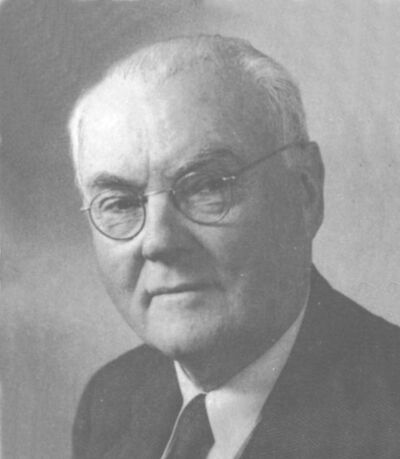
A certain Josef Martin, who was born in the German town of Erfweiler in 1883, had been involved in this evolution from the very beginning. As a young engineer, the skilled technician with an artistic talent was introduced to waste incineration. And already while still employed, he began to recognise potential for improvement and developed what would become his first patented invention: the cascade grate. This type of grate addressed low-grade fuel such as waste that is highly slagging. After years of gaining experience and making gradual progress, however, Josef Martin realised that he needed to start from scratch. And his response was as innovative as it was radical. Since his company’s shareholders no longer wanted to support his drive to develop new grates, he built his own company to design and fully exploit his technical ideas. These ideas spawned a true innovation. Initially called the counter-current grate, the now famous reverse-acting grate revolutionised the combustion of solid fuels and proved to be successful from the get-go – already securing orders from the company’s home city of Munich and even abroad in its founding year of 1925.
It took some modifications to individual components and relocating the point of discharge to the end of the grate before it became evident that the new technology was a fully functional product and that perfect operation was now possible. Yet with Josef Martin Feuerungsbau GmbH, as the company was initially called, flexibility did not end there. The variety of different grate models designed and implemented in the early years already showed how the equipment could be consistently adjusted to meet practical requirements. The first large grate had a run width of almost 5 m, while the first small grate featured as few as four steps and a total width of only 720 mm.
While in the company’s fledgling years the type of fuel combusted on the grate was mainly coal, the post-war period brought about a notable change as oil increasingly replaced coal, even in civilian use. This was when Josef Martin returned to his old competences and drew on his experience with waste incineration to demonstrate his company’s ability for innovation in a field that would gain ever-increasing importance. The economic miracle following the war’s period of scarcity and hardship introduced a new age of abundance and with it the downside of dramatically growing waste volumes and ever-rising piles of rubbish. But the revolutionary and scalable reverse-acting grate put Martin in a perfect position to meet the demands of the future.
It was during this time that the company really excelled and established its tradition of innovation. A change in society’s and hence industry’s focus on environmental issues and the recovery of energy led to constantly evolving specifications. The transformation even found its way into the company’s name, which changed to MARTIN GmbH für Umwelt- und Energietechnik to reflect the new focus on the environment and on power engineering.
Evolution became part of the company’s DNA, not least in the form of a proprietary research and development department that brought many a new idea to fruition. It is therefore not surprising that MARTIN can refer to an extensive list of innovations. And so today, together with the complete group of MARTIN subsidiaries, the enterprise covers the entire process engineering infrastructure for the thermal treatment of waste.

With a view to grate systems, the range extends from less complex structures designed for markets requiring simpler configurations, even including a horizontal design, through highly refined equipment with individually controlled drive zones, and culminating in the all-new MARTIN.grate presented as recently as 2025. These implementations mean that the MARTIN portfolio offers solutions that can be perfectly adjusted to the widest possible heating value range the industry faces throughout the entire world – from Asian waste with a relatively high moisture content to the high calorific fuels found, for instance, when treating industrial waste from Central Europe or arising in North America.
But MARTIN is by no means merely limited to pure grate technology. True to the MARTIN Group’s motto “chute to stack” and in line with modern requirements, the individual members of the group in conjunction with the parent company offer and supply process automation systems as well as technologies for reducing emissions to a minimum. Ancillary units complete the comprehensive package to maximise availability – think Shock Pulse Generators, which redefine the way boilers are freed of fouling and deposits and set a new benchmark for cleaning standards. But that’s not all – digital products in the field of data and AI applications from the company’s MARTIN.digital range, such as the Waste Flow Analysis tool for monitoring and evaluating purposes, are complemented by carbon capture equipment to make waste-to-energy plants future-ready globally.
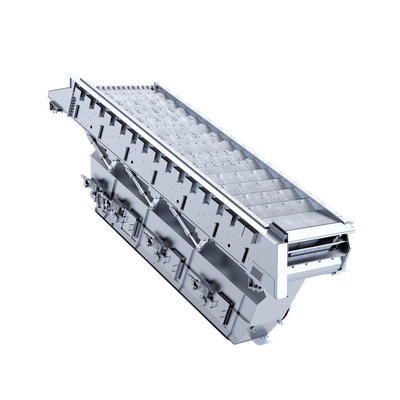
The group’s combined corporate efforts therefore result in present-day facilities for converting refuse into energy with as many as six grate runs and an accumulated width of 15.8 m as implemented at the Belgrade site. The plants can generate electricity as well as feed process and district heating networks and feature an exhaustive palette offering any progressive technology necessary for modern demands. In any configuration, plants are equipped with grate systems ranging approx. from 1,500 mm up to 2,750 mm in grate run width and can boast a throughput of up to more than 1,000 t/d per line – truly staggering. Consequently, these are facilities ready for today and for the foreseeable, sustainable future. It is thus clearly obvious that MARTIN not only stays abreast of changes and developments but is always at least one step ahead of them to create something today for the benefit of future generations.
In cooperation with MARTIN GmbH.