
Advanced waste sorting : AI and deep learning are reshaping the future of recycling
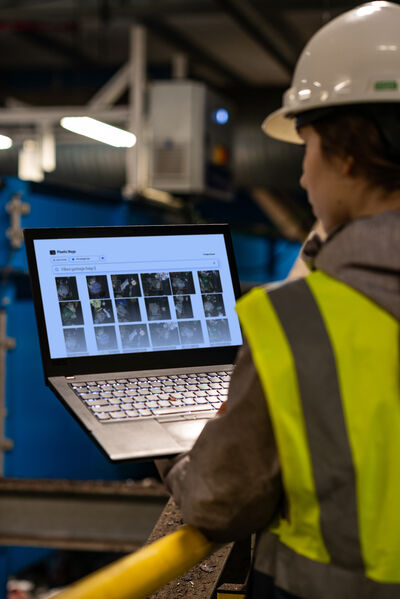
At the heart of TOMRA's announcements is a breakthrough platform developed by PolyPerception, in which TOMRA has now acquired a 51% majority stake. The platform represents a significant evolution of PolyPerception's existing Waste Analyzer — an AI-powered analytics solution designed to improve sorting performance through end-to-end material tracking.
What sets the new platform apart from conventional digital tools is its natural language interface. Plant operators can interrogate live data in plain English, posing questions such as 'How did changing the settings on the recovery line affect our purity?' and receiving immediate answers accompanied by detailed data breakdowns. The technical barrier between complex spreadsheets and day-to-day operational decision-making is, in effect, dissolved.
Crucially, the platform goes beyond passive observation. Unlike traditional tools that are limited to reading and reporting data, this system also possesses what its developers describe as 'writing' capabilities — enabling it to act as an agent within the plant. It can create custom quality reports and set operational alerts in seconds, drawing on deep domain knowledge of the recycling process.
"With the introduction of our new agent-based platform, recycling plants now gain a new cognitive layer," says Nicolas Braem, CEO and Co-Founder of PolyPerception. "Data is no longer just reported – it is interpreted, explained and transformed into relevant insights in a few seconds. Operators can interact naturally with their plant, ask questions, explore material behaviour and receive clear, actionable answers in real time."
Open systems and advanced search capabilities
The platform is built around full data transparency, allowing recyclers to integrate plant data directly into their existing management systems. Managers can query waste statistics or purity levels through their own dashboards without needing to log into a separate system — a long-overdue step towards interoperability in an industry that has historically operated in siloed environments.
Two new search methods further strengthen the platform's ability to respond to changing material streams. The first, a similarity search function, allows operators to right-click on a problematic object — an electronic vape, for instance — and instantly identify every visually similar item in the stream. This has immediate practical value for spotting fire hazards such as batteries, without the need to train an entirely new AI model.
The second is a text and brand search function, enabling users to search for specific brands or object types — filled refuse bags or nappies, for example — to monitor in real time exactly what is passing through the facility. Both features address a genuine operational need: the ability to respond rapidly and precisely as the composition of incoming streams continues to evolve.
"AI has always been part of TOMRA's DNA, but we are now entering an entirely new phase," says Lars Enge, EVP and Head of TOMRA Recycling. "With our acquisition of a majority stake in PolyPerception, we are moving beyond AI as a sorting tool to AI as a central intelligence for the recycling plant. By combining our advanced sorting systems and digital solutions with PolyPerception's AI platform we are creating an end-to-end solution that doesn't just optimise machines but fundamentally redefines how plants operate."
Neural networks break through the sorting bottleneck
Alongside the PolyPerception platform, TOMRA is introducing three new deep learning applications for its GAINnext™ ecosystem — each targeting a persistent industry challenge where conventional sensor-based sorting has reached its limits.
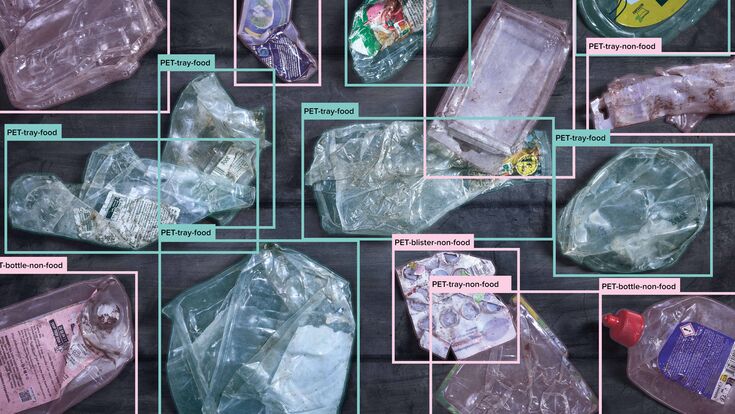
The first addresses food-grade PET tray sorting, a growing priority as tray material emerges as a critical feedstock alongside bottles. By training GAINnext™ on thousands of images, the system can now distinguish between takeaway or supermarket trays and consumer or medical packaging, based on shape and intended use. The result is a purity level exceeding 95% — a figure that transforms PET tray sorting from a technical obstacle into a commercially viable proposition.
In the metals sector, TOMRA is launching a high-precision application targeting what the industry terms 'copper meatballs' — complex copper-steel composites such as motor armatures that present significant challenges in sorting. The GAINnext™ system identifies these materials automatically, even in oxidised or dirty streams, helping recyclers upgrade rebar-grade scrap to premium furnace feedstock. This development is particularly timely as the steel sector takes its first steps towards decarbonisation.
The third application brings a high-throughput solution for used beverage can (UBC) aluminium recovery from packaging streams to the European market, following a successful rollout in North America. The system offers up to 33 times more throughput than manual sorting, delivering purity levels of 98% or higher. By instantly detecting and ejecting non-UBC materials, it provides a more efficient, automated route for aluminium can-to-can recycling.
A turning point for intelligent resource recovery
Taken together, these announcements represent more than an incremental product update. They point towards a new operational model for the sector — one in which data, intelligence and physical sorting action are continuously and seamlessly connected.
"These launches signal a true technology turning point for the industry," Enge concludes. "Deep learning is no longer just enhancing individual processes or tackling increasingly complex sorting challenges – it is linking insights directly to action across the plant. We are moving beyond high-speed detection toward a new era of intelligent, connected sorting, where complex challenges are solved and data is understood, contextualised and communicated directly to the operator. Once again, TOMRA is at the forefront of innovation, translating today's most advanced AI into real, measurable value for customers."
TOMRA Recycling, which has installed more than 11,900 sorting systems across over 100 countries, was the first company to introduce deep learning-based AI technologies to the recycling industry. With its majority stake in PolyPerception now secured, the company appears well positioned to define what the next generation of intelligent, connected sorting looks like in practice.
