
Recycling : Built for WEEE. Ready for the solar wave
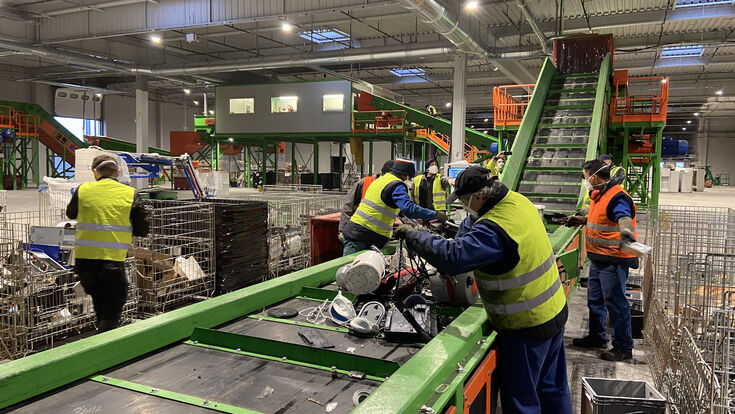
What do a broken fridge and a decommissioned solar panel have in common? More than you might think. And a lot more than the waste industry was prepared for. As WEEE volumes keep climbing and end-of-life photovoltaic panels begin arriving in earnest, Italian specialist FOR REC has quietly been building the machinery and know-how to handle both. “Every project takes shape through a thorough dialogue with the customer, where we analyse needs, waste volumes, available space and the overall business plan,” says FOR REC CEO Marco Zoccarato. So even though they believe in dedicated lines for each waste stream as the optimal choice, there are situations where this is not feasible — like their hybrid lines to process refrigerators and other WEEE on the same equipment for a client in the French overseas territories.
Solar panels – the next tsunami
Alongside traditional WEEE a new waste stream is coming – and fast: photovoltaic panels. By 2050, the global volume of decommissioned photovoltaic panels could reach 78 million tons. A veritable tsunami. The good news: it is possible to recycle 90 per cent of a module’s weight. If done right. A panel is a complex multilayer of glass, metals, polymers and silicon — and the challenge lies in separating them efficiently and cleanly. “After years of installing plants around the world, we have developed deep expertise in the separation, recovery and valorisation of complex materials,” says Zoccarato.

Built on WEEE know-how — then pushed further
FOR REC’s entry into photovoltaic recycling was not a leap in the dark. Expertise in shredding, material preparation and separation transfers directly from WEEE. But solar panels demanded more. Their multilayer structure required a dedicated R&D effort: laboratory analyses, comparative tests and dedicated trials to understand the behaviour of each material fraction. “This process led us to integrate specialised separators and new technical solutions specifically designed for this waste stream,” says Zoccarato. The result: cleaner output fractions, less contamination and lower operational costs.
The low-speed equation: quality meets durability
In WEEE recycling, running machines at low RPM is primarily about material quality. It allows devices to be opened without destroying recoverable components. In photovoltaic recycling, a second equally critical factor enters the picture: wear control. With up to 70% glass content, panels are extremely abrasive. Low-speed processing significantly limits wear on rotors, blades and shredding chambers, extending equipment life and lowering operating costs. “It is precisely this combination of material preservation and wear control that makes our process unique,” says Zoccarato, “and enables our customers to achieve reliable and sustainable results.”
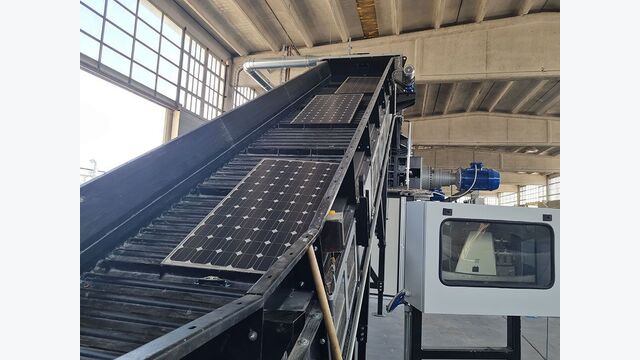
Alongside WEEE another waste stream is hitting recycling facilities: photovoltaic panels. FOR REC has invested in finding new technical solutions specifically for this waste stream.
- © FOR RECThe real challenge: making it pay
Technology alone, however, will not be enough. Zoccarato is frank about where the industry stands. “The real challenge will be achieving material-purity levels that make recycling truly sustainable from both an economic and industrial perspective.” Glass is the sticking point. It dominates the weight of a photovoltaic panel, and the traditional glass industry cannot absorb the volumes that are coming. Alternative markets will be essential: ceramics, cement production, asphalt and other energy-intensive sectors are viable options today — but they too will face limits as volumes scale up.
“It is clear that the industry will need to continue investing in technology, research and new end markets,” says Zoccarato. “Only through this will it be possible to achieve a real balance between environmental and economic sustainability, transforming the wave of end-of-life panels into an industrial opportunity rather than a waste-management problem.”