
Recycling : From ashes to innovation: How a French recycler rebuilt after a fire
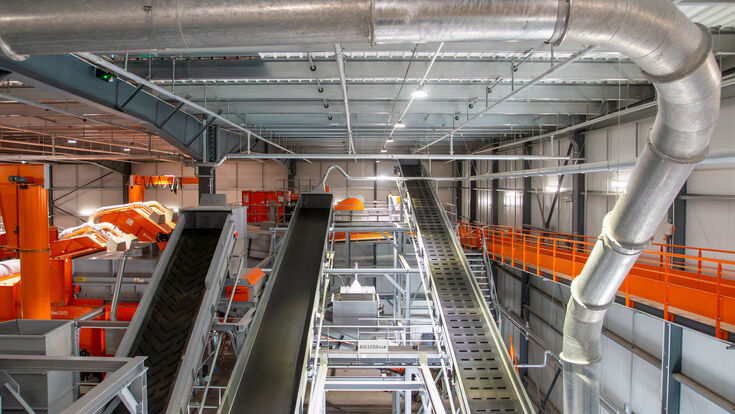
One thing every waste facility operator fears is a fire: the all-consuming flames destroying expensive equipment, putting the workforce in danger and causing environmental damage. A nightmare that became reality for Excoffier Recyclage about two years ago, when their sorting centre in Chêne-en-Semine caught fire due to an incorrectly disposed of battery.
One can only imagine the despair, and probably anger too, that the operators must have felt. Fortunately, as the plant was not in operation when the fire broke out on a Sunday, no one was hurt. The incident is all the more disappointing given that the plant had only commenced operation a few months earlier. After the initial shock, Excoffier decided to rebuild the facility as soon as possible, turning to the same company that had built it the first time around: Bollegraaf.
“We are very proud that Excoffier again put their trust in us,” says Director of Global Sales Charles Daridon. The previous sorting line had already exceeded expectations, delivering higher performance and cleaner output than anticipated. When the French recycling expert decided to rebuild, they didn’t want a simple replacement. They wanted the same, but better.

High-efficiency, adaptable sorting
The contents of the yellow bins of 1 million inhabitants, which equate to 46,000 tonnes a year, have to be handled in the facility in Chêne-en-Semine. Since 2023, most packaging, from cans, plastic bottles and yoghurt pots to food and drink cartons as well as paper and cardboard, are pre-sorted into the yellow bin in France. In addition, Excoffier wants to sort hard plastics in the same line. To meet all the requirements, Bollegraaf is building a highly adaptable, extremely efficient and smart sorting line that will process 18.5 tonnes per hour (from the initial 15 tph).
The sorting line integrates various machines from Bollegraaf and Lubo, such as the Elliptical (to sort 2D and 3D materials), ONP StarScreen, AWS, Film Grabber (to deal with the main challenge of film and other stringy materials), Optical Sorting Hoods (that can quickly be adjusted to switch from single stream to hard plastic waste stream) and a Bollegraaf baler. This installation will also have the first redesigned Bollegraaf bunkers.
Utilising AI to detect hazardous materials
There is a general focus on fire safety. “We added Greyparrot Analyzers to provide continuous monitoring to detect hazardous batteries early,” says Daridon. “Originally, the three parts of the facility – pit floor, sorting plant, storage – were linked to each other. Now the three halls have retractable conveyor belts and fire doors in between. The doors are sealed when the plant is not in operation or in case there is a fire,” explains Daridon. “The purpose of this is to contain the fire and minimise damage. Excoffier also added more sprinklers and cameras.”
These comprehensive upgrades – from hazard detection to fire containment systems – transform the facility into more than just a replacement. The rebuilt sorting facility in the French Alps now serves as Bollegraaf's flagship project, showcasing the crème de la crème of the company's equipment in real-life action.
In cooperation with Bollegraaf.