
Waste-to-Energy : German flagship project sets new standards in bottom ash recycling
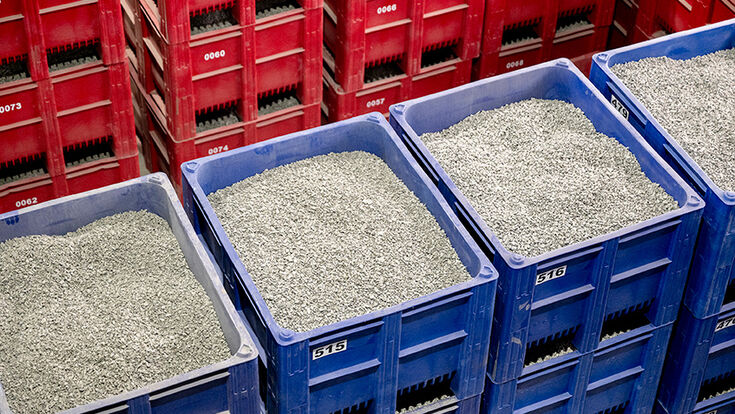
From 1.5 million tonnes of bottom ash, MDSU produces high-purity light and heavy metal concentrates.
- © STEINERTGermany's waste-to-energy sector has reached a significant milestone with the commissioning of MDSU's (Mitteldeutsche Schlackenunion) groundbreaking facility in Magdeburg at the end of 2024. The plant represents a paradigm shift in how the industry approaches what was once considered mere waste – transforming incinerator bottom ash into valuable metal resources through cutting-edge sorting technology.
Resource conservation begins where others see only remnants. Approximately 20-30% of incinerated material remains as bottom ash, also known as municipal solid waste incineration (MSWI) slag. This material contains significant quantities of valuable metals such as aluminium, copper, brass, and stainless steel. MDSU's investment in state-of-the-art facilities with X-ray technology is now setting new industry standards.
Germany's premier non-ferrous recovery operation
The Magdeburg facility has already established itself as Germany's largest operation of its kind, processing around 60,000 tonnes of non-ferrous metals annually with a total capacity of 90,000 tonnes. According to Managing Director André Hartl, MDSU's primary objective is "to extract the maximum from the slag."
Despite being operational for only a few weeks at the time of reporting, the facility's results speak volumes about its potential. The recovered metal achieves exceptional purity in both quality and quantity, made possible through precise adaptation of the technology to MDSU's specific requirements. Central to this success story is the close collaboration with STEINERT from Cologne, whose sorting systems form an integral component of the Magdeburg facility.
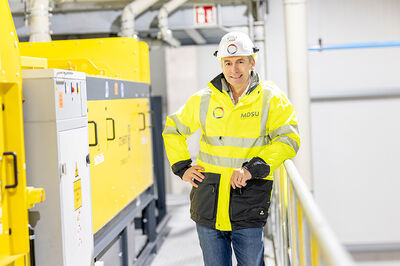
Advanced X-ray technology maximizes resource recovery
The facility employs a sophisticated multi-stage sorting process that exemplifies modern circular economy principles. Initially, non-ferrous metals are separated from mineral carrier material using eight powerful STEINERT Eddy current separators, creating a ZORBA fraction with high metal yield that forms the foundation for downstream fine sorting.
The process continues with precision separation using a STEINERT XSS T EVO 5.0, an advanced sorting system employing X-ray transmission technology (XRT). Unlike optical systems, XRT recognizes the material's interior structure, enabling reliable separation of light metals such as aluminium or magnesium from heavier fractions like copper, brass, or zinc based on their atomic density.
In the final sorting stage, the recovered non-ferrous heavy metal concentrate undergoes grade separation using a STEINERT CHUTEC – a chute sorting system based on X-ray fluorescence (XRF) technology. While XRT focuses on material density analysis, XRF analyzes the elemental composition of individual particles. This technology proves particularly suitable for finest grain sizes down to just 5 mm, transforming complex heavy metal mixtures into cleanly separated fractions such as copper, brass, zinc, or stainless steel – concentrated and pure enough for direct return to industrial material cycles.
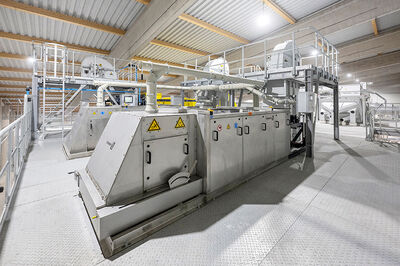
Proven partnership drives innovation
The collaboration between MDSU and STEINERT builds on a established foundation of trust and technical expertise. "We have been convinced of STEINERT technology for years," emphasizes Hartl. "That's why we rely on it in all our operations and will continue to do so in the future."
The STEINERT Test Center in Cologne played a crucial early role in the project's development. "Our engineering team tested our concept system on-site. We brought large quantities of our material to Cologne and tested it at real scale. Thanks to these insights, we were able to configure the system perfectly for our needs. It is exactly as it now stands here in Magdeburg," Hartl explains.
Bottom ash processing presents demanding challenges for sorting systems, with residual moisture and corrosive materials requiring robust solutions. STEINERT has developed specific adaptations for these applications, including fully stainless-steel casings on MDSU's eddy separators to protect against chemically induced wear from moist materials.
Another specialized innovation is STEINERT Splitcontrol, an add-on for eddy current separators that analyzes the flight trajectory of sorted material in real-time and automatically regulates belt speed when necessary. This system compensates for variable material properties, achieving consistently optimal metal recovery with minimal manual intervention for trajectory correction.
The MDSU facility represents a significant step forward in demonstrating how waste-to-energy operations can fully embrace circular economy principles, transforming what was once considered waste into valuable resources through innovative technology partnerships and precision engineering.
