
Inspiring the next generation : ISWA’s Sustainable Futures Challenge debuts across three continents
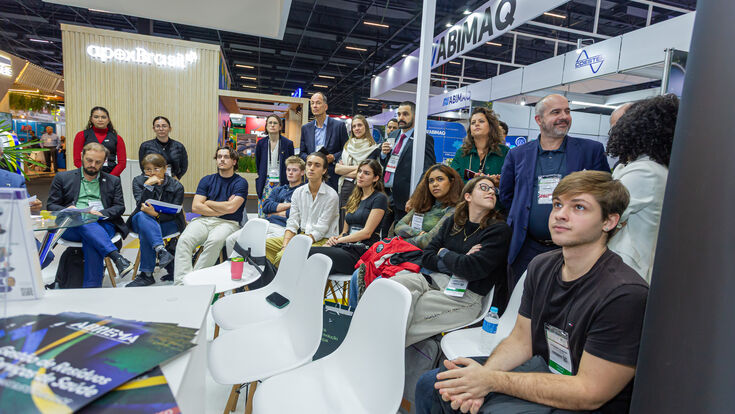
In 2024, the International Solid Waste Association (ISWA) launched an ambitious new initiative, the Sustainable Futures Challenge, first launched at IFAT Brazil, IFAT Africa and IFAT India. The pilot programme is designed to bring together university students and young professionals (YPGs) to collaborate on innovative waste management solutions while bridging the gap between education, industry and policy.
At its core, the Sustainable Futures Challenge embodies ISWA’s vision for cross-generational exchange – providing a space for emerging leaders to engage directly with seasoned professionals, share ideas and co-create actionable pathways towards sustainable waste management. As ISWA Managing Director Marc Tijhuis explained: “It’s about creating real dialogue – where students and young professionals learn from each other, and together, help shape the future of our sector.”
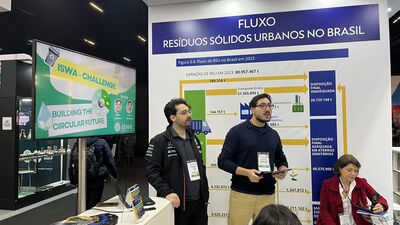
The pilot began modestly in São Paulo, Brazil, where ISWA partnered with Fundação Getulio Vargas (FGV) and ABREMA to host the first-ever Sustainable Futures Challenge. Nine students and three YPGs took part, developing behaviour-change strategies for improved waste management using economic incentives and educational outreach. Over three intensive days – both on campus and on the IFAT show floor – students brainstormed, refined and finally pitched their solutions to a live audience. Despite inevitable first-edition hiccups, the results were impressive. A team of two students took first place, earning the opportunity to attend the ISWA World Congress in Buenos Aires as a reward. Most notably, FGV committed to continuing collaboration with the class to further develop the winning proposal – clear evidence that these ideas hold genuine promise for implementation.
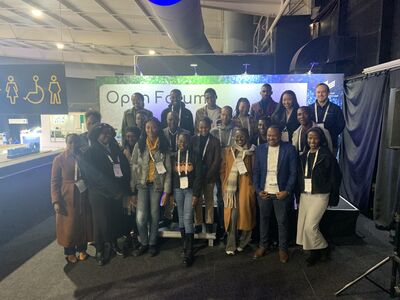
Following Brazil’s success, the challenge expanded rapidly. At IFAT Africa, interest surged – more than 200 students applied, and 30 were selected to take part in the two-day competition. Working in teams, participants addressed pressing waste challenges while being mentored by experts from academia and industry. As Prof. Innocent Musonda from CARINBE (South Africa) reflected: “The cohort found the inaugural Sustainable Futures Challenge hugely motivating, and several have already started sketching project ideas inspired by the sessions.” As part of their prize, the South Africa winners completed a focused six-session course, “Effective Data Management for Solid Waste Management in South Africa”, led by Lusimanadio Simao. The programme introduced the country’s waste management context and regulatory landscape and then the fundamentals of data governance, practical data collection and analysis methods, as well as the use of evidence to drive operational and policy decisions. Participants worked through hands-on exercises on building a fit-for-purpose data architecture and integrating it with existing municipal systems. Simao’s motivation was clear: to open doors for young people with fresh perspectives and to tackle one of the sector’s most persistent bottlenecks – reliable data for accurate decision-making. The team left with the ability to design and implement systems and to apply data intelligently to improve service outcomes in South African municipalities.
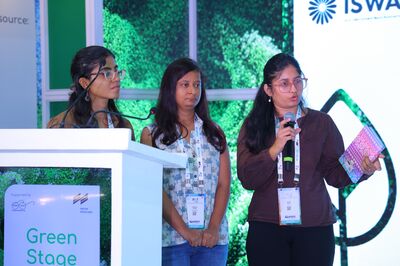
In India, more than 50 students registered for the ten-day online edition, culminating in a live pitching session during IFAT India. The virtual format allowed participants from across the country to engage, demonstrating the flexibility of the challenge concept and its potential to scale in diverse contexts. Student groups at IFAT India pitched their innovative solutions on the Orange Stage at the exhibition, where winners were awarded participation for one year at the Empretec HiEERA Youth Entrepreneurship Programme (an initiative of the Empretec India Foundation).
Each regional challenge followed a similar structure: teams of students and YPGs worked collaboratively on one major waste management task, selected from themes such as closing dumpsites, textile waste recycling or the solid-water nexus: exploring ways to prevent microplastic pollution and water contamination from solid waste.
Challenges combined theoretical and practical elements, requiring participants to apply systems thinking, technical knowledge and teamwork. Evaluation criteria ranged from policy understanding and feasibility to presentation skills and creativity. Juries comprised experts representing ISWA, academia and national waste management associations, ensuring both rigour and relevance.
The initiative’s success depended on a broad coalition:
- ISWA’s General Secretariat provided global coordination, templates, branding and guidance.
- National Members and Regional Chapters adapted the challenges to local contexts and sourced speakers, jury members and prizes.
- YPGs infused a youth-led perspective, aligning the challenge with regional realities.
- Universities mentored students, supported logistics and ensured academic integration.
This shared ownership model proved critical, creating a sense of continuity and commitment that will carry the initiative forward.
While the Sustainable Futures Challenge is still in its pilot phase, its early results are striking. Universities are incorporating the projects into their coursework; industry experts are offering mentorship; and young participants are emerging with renewed confidence and practical insights. The initiative also succeeded in drawing attention to waste management as a dynamic, innovation-driven field – one where fresh thinking is not just welcomed but essential. As feedback from all three regions confirmed, students felt empowered to turn abstract sustainability principles into concrete, actionable ideas.
With such strong engagement in its first year, ISWA plans to expand the Sustainable Futures Challenge into a regular feature of IFAT exhibitions and other global events. Future editions may explore new thematic areas such as circular economy in textiles, waste-energy integration and inclusive waste governance – always maintaining the focus on collaboration, learning and real-world impact.
For ISWA, the message is clear: nurturing young talent is not a side activity, but a strategic priority. By investing in the next generation, the association continues to drive its mission forward – building capacity, empowering professionals and shaping a more sustainable and equitable future for all.
