K 2025 : Lindner presents the fourth-generation Micromat
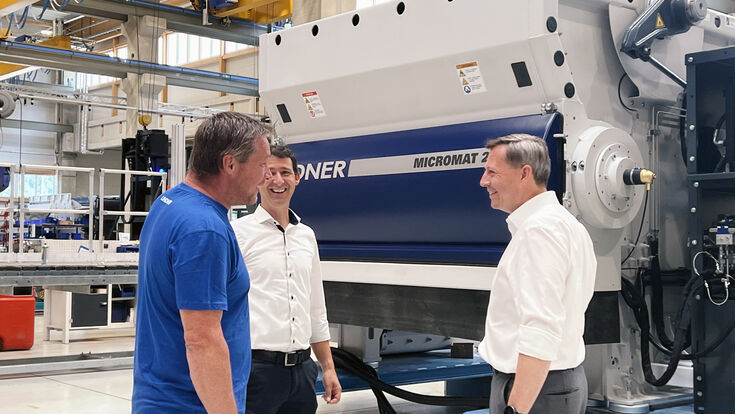
Lindner’s Micromat series is established globally as a reliable solution for shredding plastics. The fourth-generation Micromat has built on the proven strengths of Series III, with added upgrades that improve both maintenance and productivity. A new drive concept is at the heart of the new series, boasting efficiency above 97 % and a flexibly configurable knife system.
- © Lindner RecyclingtechEnergy efficiency meets ultimate material diversity. At the core of the new Lindner Micromat series is a new, energy-efficient drive concept operating at 97% efficiency. Also new is the adjustable rotor concept, which enables quick switching between pointed and step knives for ultimate material flexibility. Other features include simple adjustment of the cutting gap, a new coupling concept, effective counter knife cooling, intuitive menu navigation and patented automatic belt tensioning.
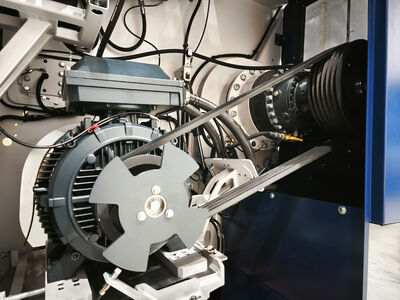
The fourth generation of this stationary single-shaft shredder boasts an impressive energy-efficient, maintenance-free drive concept. At its core is a state-of-the-art synchronous reluctance motor that achieves an energy efficiency class of IE6 and offers remarkable efficiency of over 97%. Compared to a torque motor, the reluctance motor does not use any rare earth metals, and its considerably lower energy losses in winding and bearing make it particularly durable and robust.
Thanks to the new coupling function, the drive system is completely maintenance-free. The drive belts are automatically tensioned to ensure they are always at the optimum point. If a foreign body is detected in the machine, pressure is released from the hydraulic cylinder to protect the drive unit. Another advantage is that: Changing the belt is quick and easy, and can be performed by the customer on site without the need for external service personnel. Our proprietary belt running-in system ensures the belt is optimally tensioned after replacement. It's a smart system that saves time and money.
Material flexibility and ease of servicing
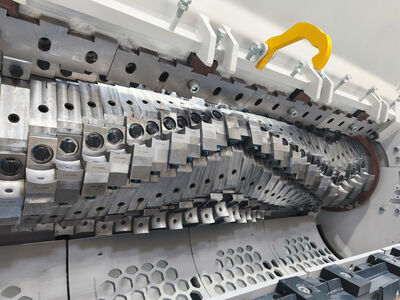
The new multicut rotor is another highlight and combines maximum flexibility in handling diverse material flows with low maintenance effort. The cutting system was specifically developed for customers who shred a wide range of input materials. Each of the four knife systems is suitable for different plastics applications:
• Step knives arranged in a row – for films and rigid plastics
• Step knives that are offset with elevations – for plastic panels and lumps
• Pointed knives in a row and offset – for films, fibres and woven plastics such as Big Bags
The flexibly configured knife system makes it possible to quickly and easily change pointed and step knives without having to replace the entire rotor. By using screws and no welding, the process is complete in about five hours. This function makes the Micromat IV particularly adaptable to various material requirements and once again, emphasises its customer-friendly maintenance. “The new cutting system with a row of step knives has already proven itself many times over in customer tests. Applications with films in particular have shown the system to achieve up to 40 % more throughput,” says Product Manager Christoph Gaschnig.
Top quality
To ensure that the stationary single-shaft shredder runs reliably at its optimum operating point, you will need to adjust the cutting gap between the rotor blades and the counter knives. You can now adjust the cutting gap or replace the counter knives from the outside, without opening the maintenance flap or shutting down the machine. This is quick, convenient and saves time. In addition to improvements in its core features, the Micromat IV offers further product enhancements, including effective counter-knife cooling and an optimised, simplified control concept with intuitive menu navigation.
The new Micromat series combines customary Lindner quality with groundbreaking energy efficiency and ease of servicing, and is available in four models with different torques and performance levels that are specifically designed for the requirements of the respective input materials.