
Metal Recycling : Recovery doubled, maintenance halved
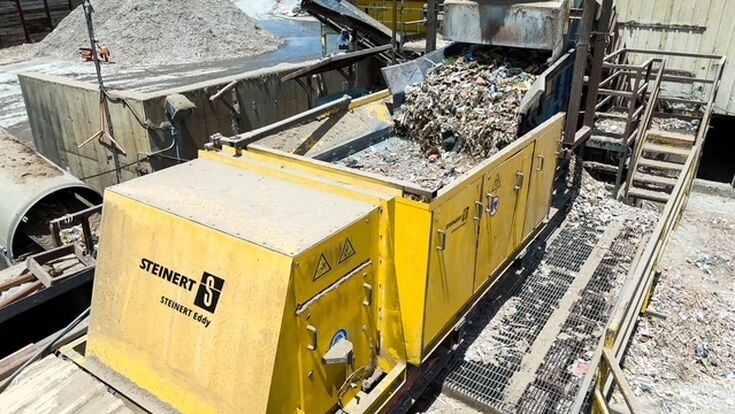
STEINERT EddyC® eddy current separator extracts non-ferrous metals such as aluminium and copper from construction and demolition waste.
- © STEINERT GmbHThe US company, which has five locations in Maine, New Hampshire and Massachusetts, processes around 650,000 tonnes of construction and demolition waste each year. Founded around 30 years ago as a family business, it has become one of the region's largest C&D recyclers. However, valuable non-ferrous metals ended up in landfill for years.
Money straight to landfill
ReSource Waste had already been using eddy current separators before switching to STEINERT. However, the recovery rate was lower than expected, the machines frequently broke down and the delivery time for spare parts was long. If a machine broke down, the separation process had to be bypassed. The non-ferrous metals went directly into the residual waste stream. Instead of generating revenue, ReSource Waste had to pay for its disposal.
'In the beginning, we opted for the cheaper option,' recalls Gilbert Sano, Director of Projects and Maintenance at ReSource Waste Services. 'But as we have grown, we have realised that cheap is not the answer.'
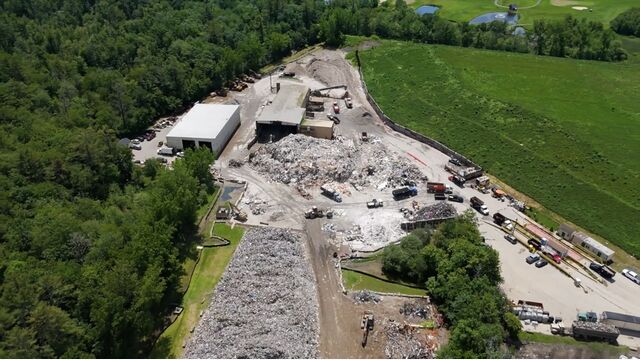
C&D recycling yard at ReSource Waste Services in New England: construction and demolition waste delivered for downstream recovery of non-ferrous metals.
- © STEINERT GmbHMeasurable from day one
In 2018, ReSource Waste installed its first STEINERT eddy current separator, and the difference was immediately apparent. 'When we integrated the machine into our operations, the effect on recovery was immediately apparent,' says David DeVito, VP of Operations at ReSource Waste Services. Across all locations, the proportion of non-ferrous material recovered relative to the total input material rose from 0.4 to over 1.4 percent. With an annual throughput of 650,000 tonnes, this increase is significant.
The investment also paid off financially faster than expected. The calculated amortisation period was 18 months, but it was actually around 15 months. 'When you consider the service life and recovery, the investment pays for itself so quickly that the decision is an easy one,' says DeVito.
No major maintenance in nine years
Gilbert Sano had prepared himself to be able to repair the new machines quickly, in order to minimise downtime. 'That wasn't necessary. I have a STEINERT machine that I haven't had to perform any major maintenance on for nine years," he says.
This is crucial in the C&D sector, where turnover is directly linked to uptime. It is practically impossible to sort small non-ferrous fragments by hand as the material moves too quickly and the parts are too small. Every hour of downtime means lost revenue and higher disposal costs.
Six machines, five locations
The decision to purchase further machines was easy after the first one was installed. Today, ReSource Waste operates six STEINERT eddy current separators at all five sites, each of which is the right size for the required throughput. 'After purchasing the first STEINERT eddy current separator, the decision to purchase the next five was an obvious one,' says Sano.
Over the years, the business relationship has developed into a genuine partnership. 'We can pick up the phone at any time and have an open conversation,' says DeVito. 'We learn from each other.' Initial concerns about working with a German manufacturer from afar have also proven unfounded. STEINERT's US spare parts warehouse in Kentucky and the on-site service have proven reliable.
Sano has a clear message for C&D recyclers who still rely on manual sorting or low-performance technology: 'If you don't use STEINERT, you'll lose money. Our machines can separate materials that were previously thought to be impossible to separate.'