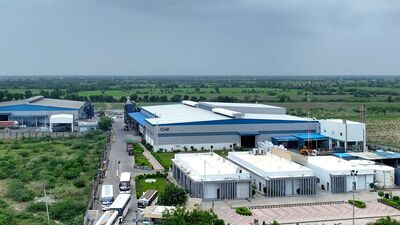
Scrap metals : Sorting technology transforms non-ferrous recycling in India
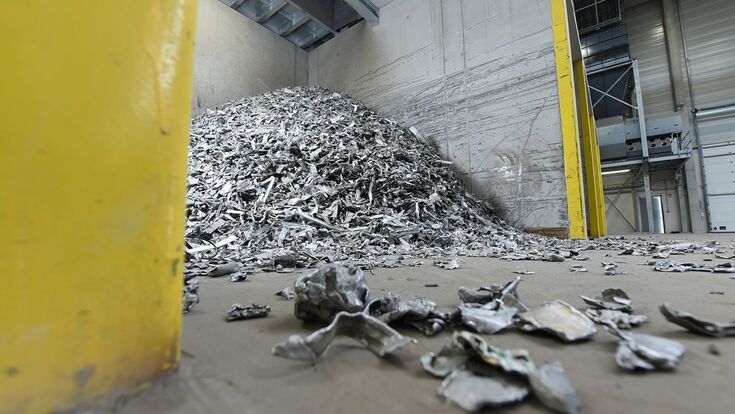
CMR Green processes aluminium scrap and stainless steel and transforms it into clean, high-quality secondary alloys – saving up to 95% emissions compared to primary production.
- © STEINERTIndia's metal recycling sector is experiencing a technological revolution, with CMR Green Technologies leading the charge. As the nation's largest non-ferrous scrap recycler, the company processes an impressive 600,000 tonnes of scrap annually across twelve facilities in six Indian states, primarily producing aluminium and zinc alloys for the automotive, construction and consumer goods sectors.
The scale of operations alone is remarkable, but what truly distinguishes CMR Green is its commitment to combining volume with quality. In a market where sorting precision directly impacts profitability, the company has invested heavily in advanced sensor-based sorting systems to ensure consistent output that meets international standards.
Overcoming operational challenges in demanding conditions
Operating in India presents unique challenges for recycling facilities: high temperatures, dust, heterogeneous material streams and fluctuating input quality all test the limits of processing equipment. For non-ferrous recyclers worldwide facing similar conditions, CMR Green's approach offers valuable insights.
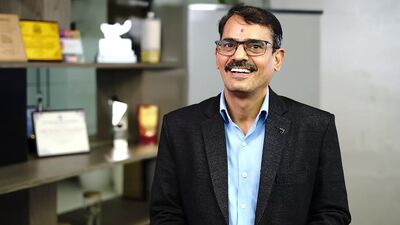
"Innovation is the core of CMR Green Technology," explains Ved Prakash Gupta, Vice President Projects, who oversees new facilities and technology rollouts across India. The company's strategy focuses on three central goals: maximising metal recovery, reducing emissions and guaranteeing consistent quality for customers worldwide.
Strategic partnership drives recovery rates
CMR Green's collaboration with STEINERT, a German specialist in sensor sorting and magnetic separation technology, has proven instrumental in achieving these objectives. The partnership has delivered tangible results in both product purity and operational stability.
"With STEINERT's induction sorters, X-ray sorters and eddy current separators, we are able to produce consistent quality products in Indian conditions – and that has added real value to our revenues," Gupta explains.
The processing workflow demonstrates the power of integrated sorting technology: eddy current separators efficiently recover non-ferrous metals, X-ray transmission (XRT) technology separates aluminium by density, and induction sorting systems enrich stainless steel or copper cables. This combination ensures high purity and recovery rates whilst reducing both manual labour and energy consumption.
Technology validation through hands-on testing
Before committing to significant capital investment, CMR Green's leadership took a methodical approach to technology selection. The project team visited STEINERT's Test Center in Germany to conduct material trials and assess system performance under real conditions.
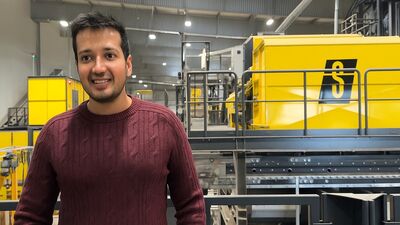
"Our team visited the STEINERT Test Center, and they were impressed by the facility," recalls Project Manager Pradeep Kumar, who is responsible for equipment and optimisation. "After the trials, we decided to buy the XRT machines."
Director Raghav Agarwal, who personally participated in the tests, adds: "The scale and efficiency of STEINERT's test center are really impressive. Their engineers went beyond expectations to help us understand the technology and its possibilities."
Operational benefits beyond sorting precision
Kumar highlights the broader operational advantages of advanced sorting technology: "The value created by STEINERT lies in providing advanced technologies that reduce manual sorting, minimise human error and increase productivity."
Beyond efficiency gains, automation and precision deliver important workplace benefits. In large-scale Indian recycling operations, improved safety and operational stability represent significant value—factors that become increasingly important as facilities scale up operations.
Environmental impact at industrial scale
India's recycling market continues to expand rapidly, driven by several key material streams. "We see end-of-life vehicles (ELV), construction waste and consumer electronics as key drivers for India's recycling industry," Gupta notes.
For CMR Green, sustainability represents more than a corporate target—it's embedded in the business model itself. By recycling aluminium and stainless steel into high-quality secondary alloys, the company achieves CO₂ savings of up to 95% compared to primary production.
"The better we sort, the more sustainable our business becomes," Gupta explains. "By recycling secondary metals, we're not only supporting India's industrial growth but also reducing its environmental footprint."
The circular economy in practice
The CMR Green case study demonstrates how technological excellence and environmental responsibility can reinforce each other in industrial operations. Investing in advanced sorting systems delivers benefits across multiple dimensions: operational efficiency, product quality, workplace safety and environmental performance.
As Director Raghav Agarwal summarises the partnership's impact: "STEINERT's technology gives us confidence in the path forward for India's circular economy. Precision, stability and efficiency - these are the qualities that help us grow sustainably."
With India's recycling sector poised for continued growth, the combination of proven sorting technology and local operational expertise positions companies like CMR Green to meet rising demand whilst advancing sustainability goals. The success achieved in challenging Indian conditions offers a blueprint for non-ferrous recyclers operating in similar environments worldwide.
STEINERT will exhibit at IMRC 2026, taking place from 20–22 January 2026 at the Novotel Jaipur Convention Center, Booth 1204.