
Digital Deposit Return Scheme : Digital infrastructure powers Ireland's DRS success
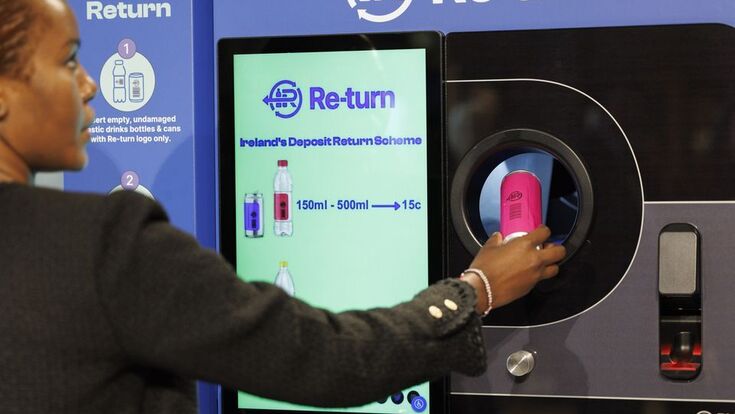
When Ireland launched its Deposit Return Scheme on 1 February 2024, it embarked on an ambitious environmental initiative that would test the limits of digital infrastructure. Two years later, the scheme stands as a testament to how sophisticated technology platforms can underpin circular economy initiatives at scale. With nearly 2.5 billion containers processed, Ireland's system has emerged as one of Europe's benchmark operations, powered by Sensoneo's comprehensive IT platform in partnership with scheme operator Re-turn.
The success story extends beyond impressive collection figures. What sets Ireland's approach apart is the seamless integration of digital systems that connect every stakeholder - from producers and retailers to reverse vending machine operators and logistics providers - within a unified data ecosystem. This technological backbone has proven essential for managing the complexity inherent in a nationwide deposit scheme.
Intelligent technology underpins national scale
The scale of operations is remarkable. Since launch, the scheme has achieved:
- 3,133 active collection points, serviced by 2,798 reverse vending machines (RVMs) and 960 manual return points.
- 12,197 registered products across PET plastic bottles and aluminium cans
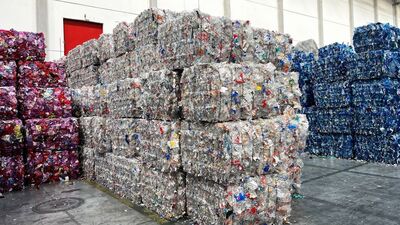
- 2.4 billion containers collected via RVMs (2,404,991,012), approaching the 2.5 billion mark.
- 330 Voluntary Return Point Operators, enabling organisations such as airports, offices, venues, museums, hotels, and community locations to collect containers and donate the deposit value to charitable causes.
Behind these numbers lies a sophisticated IT infrastructure processing billions of transactions whilst maintaining the real-time visibility and system integrity that public trust demands. The figures underscore both consumer engagement and the critical importance of reliable digital systems in modern waste management operations.
Digital solutions drive system integrity
The Irish model was digital from day one. Rather than retrofitting technology onto traditional collection methods, the scheme architects designed an integrated cloud-based platform that would serve as the operational nervous system. Sensoneo's solution brings together disparate stakeholders - retailers, producers, machine operators, logistics partners, and administrators - into a single, centrally orchestrated data environment.
This technological foundation delivers capabilities that would be impossible through manual systems: live performance monitoring across thousands of collection points, automated financial clearing and settlement, centralised management of product databases and barcodes, sophisticated fraud detection algorithms, and comprehensive reporting for both regulatory compliance and strategic planning. As the scheme rapidly expanded, this digital architecture proved its worth in maintaining operational stability and transparency - essential ingredients for sustained public confidence.
Extending access through advanced collection models
As operational experience accumulated, Re-turn identified opportunities to enhance accessibility. One notable development has been the programme's extension to Ireland's island communities, where traditional collection infrastructure faces unique challenges. The solution combines reverse vending machines with communal return points, tailored to suit local conditions and community dynamics.
Initial results from island deployments reveal strong community participation and offer valuable lessons for future expansion. From a technology perspective, these outlier cases demonstrate the platform's flexibility - its ability to accommodate diverse collection methodologies, whether automated or manual, whilst maintaining robust data flows even in locations with limited infrastructure. Such adaptability will prove crucial as the scheme evolves.
Strategic partnership enables long-term success
The collaboration between Re-turn and Sensoneo has been instrumental in the scheme's operational success. Building on a strong inaugural year, the partnership has positioned Ireland as a case study for nations preparing to implement or enhance their own deposit return systems.
"Sensoneo continue to be a flexible, valuable, and trusted partner working closely and collaboratively with us to develop and evolve the technology platform that underpins the operation of the scheme. The success that Sensoneo continue to experience across Europe confirms that this partnership and technology have been the correct strategic decision for Re-turn," Alan Pearson, CIO of Re-turn.
"The Irish DRS shows that high collection performance is not only about infrastructure on the ground, but about the digital systems behind it," said Martin Basila, CEO of Sensoneo. "Processing nearly 2.5 billion returned containers requires absolute reliability, accurate data, and seamless integration across all stakeholders. We are proud to support Re-turn and contribute to Ireland's transition towards a more circular, data-driven economy."
Sensoneo brings substantial international credentials to the partnership, currently operating IT systems for deposit return schemes across nine countries. This cross-border experience spans diverse regulatory frameworks, infrastructure configurations, and consumer behaviours. "Building on our proven success in delivering IT solutions for deposit return schemes and the expertise gained across diverse markets, Sensoneo has further strengthened its organisation to ensure exceptional long-term support for existing DRS partners, whilst remaining ideally positioned to address new regulatory, operational, and system-level challenges in other regions," added Martin Basila.
Towards a circular economy through data
Looking ahead, the scheme's transition from launch phase to mature operations will see data and digitalisation assume even greater importance. Advanced analytics will drive network optimisation, route efficiency improvements, enhanced user experiences, and quantifiable progress towards Ireland's circular economy and recycling commitments at both national and EU levels.
Ireland's experience over the past two years offers a compelling demonstration: when environmental ambition meets sophisticated technology infrastructure, circular economy goals can translate into practical systems that serve consumers, industry, and environmental objectives simultaneously.