Plastic Waste : Beyond the bin: What it takes to recycle flexible plastics
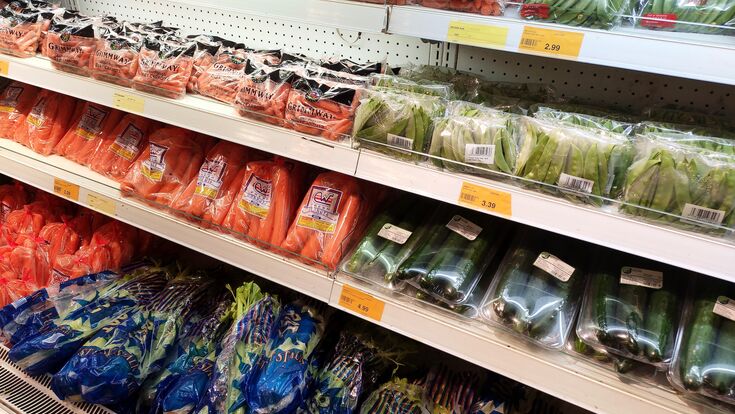
Flexible plastics are everywhere and are enabling everything from extended food shelf life to efficient e-commerce shipping.
- © Aisyaqilumar - stock.adobe.comWalk down any supermarket aisle and you'll see them everywhere: crisp packets, food pouches, candy wrappers, shrink wrap. Flexible plastic packaging has become the workhorse of modern commerce, quietly enabling everything from extended food shelf life to efficient e-commerce shipping. Yet this very ubiquity presents one of the waste management industry's most vexing challenges.
According to a new insight report from the Alliance to End Plastic Waste, flexible plastics now account for more than 50% of the total plastic packaging market—and that figure is only expected to grow. But here's the problem: while we've made significant progress recycling rigid plastics like bottles and containers, flexible packaging remains stubbornly difficult to process at scale.
Why flexibles are so challenging
The report identifies four core challenges that make flexible plastic packaging particularly problematic for recyclers:
Material complexity sits at the heart of the issue. Unlike a simple PET bottle, flexible packaging often involves multi-material, multi-layer constructions combining various polymers (PE, PP, PET, PA, EVOH) with inks, adhesives, and barrier coatings like aluminum. These combinations deliver incredible functional performance but create nightmares for both mechanical and chemical recycling.
The lightweight advantage becomes a processing liability. Films are deliberately thin and light—great for reducing material use and carbon footprint, but terrible for high-speed waste processing equipment. They fly around, ball up, stick to other waste, and particularly resist separation from paper and cardboard when wet.
Quality requirements present another hurdle. Modern film production requires extremely high-quality, consistent feedstock. When stretched into films just 20 microns thick—about a third of a human hair—even minor defects can compromise strength and appearance or cause costly production line breaks.
Economics don't add up—yet. Virgin resin benefits from massive scale and low-cost petrochemical feedstocks, while flexibles recycling remains small, fragmented, and costly. Recycled films struggle to compete, limiting investment and capacity growth.
Not all recycling technologies are equal
One of the report's valuable contributions is clarifying that different recycling approaches suit different circumstances. There's no silver bullet.
Basic mechanical recycling works well for creating construction products like plastic lumber, but these "durable product" markets are relatively small and low-value. They saturate quickly.
Advanced mechanical recycling and dissolution technologies can support closed-loop recycling—turning flexible packaging back into new film—but only with highly homogeneous feedstock. That requires additional sorting, logistics, and more capital- and energy-intensive processing.
Chemical recycling offers the clearest pathway back to virgin polymer quality, especially for food-contact applications. However, it faces higher production costs and ongoing regulatory uncertainties around mass balance attribution. As the technology matures to second- and third-generation designs, these gaps should narrow.
>>> Mechanical Recycling vs. Chemical Recycling: Rivals or Partners?
The critical role of secondary sorting
Perhaps the report's most actionable insight concerns the need for dedicated "Plastics Recovery Facilities" (PRFs) to bridge the gap between municipal Materials Recovery Facilities (MRFs) and recyclers.
Traditional MRFs focus on high-throughput recovery of high-value streams—often paper and cardboard. Flexibles, lacking adequate value, frequently don't warrant the attention needed for granular sorting. Yet recyclers need much more homogeneous feedstock than a mixed flexible bale can provide.
The Alliance proposes aggregating mixed plastic waste streams from multiple MRFs to feed large-scale PRF operations processing at least 100,000 tonnes per year. These facilities would deploy advanced sorting technologies—including digital watermarking and AI-based recognition—operating as businesses focused solely on providing the high-quality, cost-effective feedstock recyclers need.
This secondary sorting infrastructure could be the missing link that makes the entire system viable.
The enablers of systems change
Technology alone won't solve this challenge. The report identifies five critical enablers needed to make flexibles recycling investable:
- Collection and sorting infrastructure that can handle segregated streams
- End-market demand created through PCR content targets or eco-modulated EPR fees
- Derisking investment through stable policy frameworks and financial support
- Design for recyclability following harmonized guidelines like CEFLEX or APR protocols
- Eco-modulation that rewards recyclable and cost-efficient designs
As Jacob Duer, President and CEO at the Alliance says, “Delivering materials circularity for flexible plastics is complex but achievable. Solutions to improve the end-of-life management of plastic products already exist. Combined with industry action and regulatory momentum, there is a real opportunity to improve the rate and quality of flexible films recycling in an accelerated timeframe.”
Breaking the dependency cycle
The challenge is that these enablers are interdependent. Municipalities won't invest in segregated collection without downstream processing capacity. Recyclers won't scale without consistent feedstock and stable end-markets. Brands won't incorporate recycled content without reliable supply and competitive costs. Investors won't deploy capital without clear policy signals and viable business models.
The Alliance proposes breaking this cycle through three parallel initiatives:
- Market mapping to build deep understanding of system solutions and infrastructure requirements
- Demonstration projects to showcase practical and economic boundaries
- Stakeholder convening to engage the entire value chain in rapid solution adoption
The good news? The necessary technologies exist, regulatory momentum is building, and leading organisations are stepping up. What's needed now is simultaneous action across the system—showcasing solutions in the context of clear end-market opportunities, optimised system design, and the right economic drivers.
For waste managers, flexible plastics represent both a technical challenge and a business opportunity. The materials won't disappear from the waste stream, and regulatory pressure to recycle them effectively will only intensify. Those who invest now in understanding the system requirements—from collection models to sorting technologies to end-market development—will be better positioned as circular economy mandates take effect across Europe and North America.