
Waste-to-Energy : Forever no more: Advancing solutions to the PFAS challenge
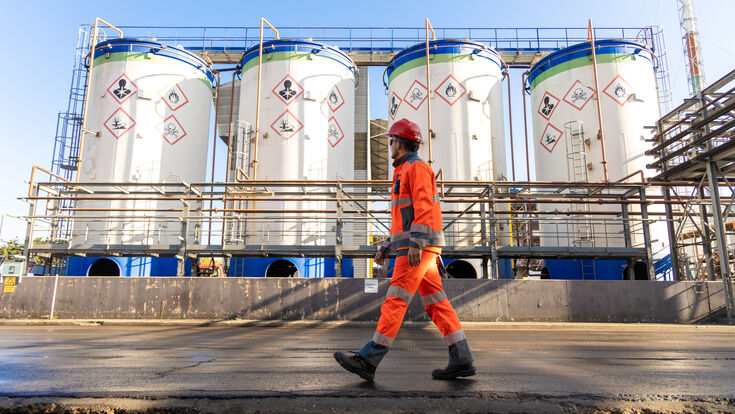
Veolia is investing over USD 300 million in North American infrastructure and deploying Drop® across 20 European facilities, targeting EUR 1 billion in micropollutants revenue by 2030.
- © Tous droits reservesThere’s a molecule lurking in everything from your morning coffee packaging to the firefighting foam at the local
airport. It’s in your waterproof jacket, your non-stick pan, even in remote Arctic lakes that have never seen human activity. Per- and polyfluoroalkyl substances – PFAS for short – are everywhere. And they’re not going anywhere.
That’s the problem with “forever chemicals”.
The carbon-fluorine bonds that make PFAS useful also make them virtually indestructible in the environment. The European Union estimates the societal costs of PFAS exposure at €52 to €84 billion annually, driven by health impacts ranging from reproductive harm to cancer. “PFAS is just another molecule that we manage,” says Bob Cappadona, President and CEO of Veolia Hazardous Waste North America. “It’s no different than any other chemical that we manage, as long as we use the same scientific approach.”

A holistic solution
When Cappadona and his team first met to discuss PFAS nearly a decade ago, they anticipated a brief conversation about regulatory preparedness. Instead, what followed was an hour-long deep dive into what PFAS really meant for Veolia.
“I think the game changer comes from the total end-to-end solution,” Cappadona says. “We’ve created aclosed-loop, zero-discharge system in order to manage the contaminant.”
That approach is now crystallised in BeyondPFAS, Veolia’s comprehensive offering launched in 2024. It combines expertise across water treatment, hazardous waste management and environmental services into four integrated steps: sampling and analysis, design and engineering, operation, and waste treatment.
“BeyondPFAS is a holistic offer suited to every customer’s specific needs, local legislation, and on-the-ground realities, from contaminant detection to disposal,” says Catherine Ricou, CEO of Veolia Hazardous Waste Europe. The process begins with a comprehensive assessment. When a customer contacts Veolia, the company evaluates whether the issue is a one-time event or a routine waste stream, the material type and the quantity. A detailed profile captures chemical characterisation and how the material is used. This is important because process conditions impact what arrives at treatment facilities.
“We want to evaluate the type of material to ensure that it’s going to the appropriate treatment,” Cappadona explains. This might mean filtering low-concentration PFAS using activated carbon, then incinerating the concentrated media. Or carefully managing highly concentrated firefighting foam to ensure safe feeding into thermal treatment systems.

Proven performance
In 2024, Veolia published comprehensive testing data on PFAS waste incineration at its Port Arthur, Texas, facility. The testing demonstrated that high-temperature incineration can destroy more than 99% of targeted PFAS, including up to 99.9999% of PFOS (Perfluorooctane Sulfonate) and PFHxS (perfluorohexane sulfonic acid). Working with US EPA (Environmental Protection Agency) guidance, Veolia tested three types of PFAS-laden materials under real operating conditions. In 41 of 45 solid residue samples, there were no detectable quantities of target PFAS. Air emissions demonstrated destruction efficiency greater than 99% for the majority of target PFAS. “We were able to demonstrate below the detection limit,” says Cappadona. “The effectiveness was at 99.9999%.”
The results caught the attention of both the Department of Defense and commercial customers seeking proven solutions. “Prior to the work we’ve done at Port Arthur, there wasn’t other research done to clearly document the science,” Cappadona notes.
European innovation
In June 2025, Veolia announced Drop®, a patented technology achieving up to 99.9999% destruction of targeted PFAS through catalyst-assisted thermal treatment at temperatures exceeding 900 degrees Celsius. The technology uses a catalyst during incineration to accelerate PFAS degradation, mineralising compounds and eliminating acidic gases to transform everything into non-toxic mineral substances.
“Thanks to our patented Drop® technology, we are proud to set a European benchmark,” says Ricou. “As a European and global leader in hazardous waste treatment, we are fully committed to continuing, as we always have, to innovate in this field, which is as complex as it is crucial for industry and health.”
Veolia is deploying Drop® across its 20 hazardous waste incineration lines in France, Germany, Spain, Poland, the United Kingdom, Switzerland and Hungary.
Veolia is making a quantum leap with the acquisition of Clean Earth, doubling its hazardous waste footprint to become the #2 US player. This transformative $3bn deal unlocks international growth, propelling global hazardous waste revenue to €5.2bn while offering clients an unmatched portfolio of cutting-edge technologies, including in PFAS. The transaction is aimed to close mid-2026, subject to the satisfaction of customary conditions to a transaction of this nature.
In addition, Veolia is investing heavily in infrastructure. At Gum Springs, Arkansas, the company is completing a $300 million expansion with a state-of-the-art thermal facility opening in 2026. The net-zero facility will handle 100,000 tons of hazardous waste annually.
PFAS management is a major focus of Veolia’s GreenUp 2024–2027 strategic programme, targeting €1 billion in micropollutants-related revenue by 2030. In North America, Veolia has implemented PFAS treatment at over 30 wastewater treatment sites, treating 8 million cubic meters of contaminated water. The company aims for over 100 PFAS treatment systems to be operational by 2029, serving 2 million additional Americans.
“We are continuously evaluating technologies, testing and piloting solutions to continue to keep the lead in highly performant treatments to get rid of PFAS,” says Ricou.
Regulatory leadership
Despite regulatory uncertainty, Veolia sees clear demand. “Even without distinct regulations, there was demand for the services we provide,” says Cappadona. “The EPA’s designation of CERCLA liability means companies know they have liability associated with managing PFAS.” For Veolia, PFAS exemplifies a larger mission as “the global champion of ecological transformation”. “By combining the skills of its three businesses worldwide, Veolia can act from the earliest stages of detecting pollutants to ensure their effective treatment and sustainable disposal,” says Ricou. As the industry confronts persistent pollutants, Veolia’s proven technologies offer a path forward – where “forever chemicals” might not be forever after all.
In cooperation with Veolia.