
Circular Economy : Waste management's post-growth reckoning: Why resilience must replace optimisation

The waste management sector is approaching a practical inflection point. For decades, planning and investment have assumed continuous economic growth, ever-cheaper energy, technology as a universal fix, and broadly stable international cooperation. Those assumptions are becoming less reliable. Global waste generation has risen from 600 million tonnes (1990) to 2.24 billion tonnes (2020), while recycling performance has plateaued, revenues have increasingly decoupled from environmental outcomes, and geopolitical friction is testing the trade, inputs, and financing that modern waste systems quietly depend on.
This is not “the end of waste management,” but the end of a comfortable operating model. The transition to post-growth conditions changes the design brief: from maximising efficiency under stable assumptions to ensuring continuity under instability. The question is whether waste management re-centres on basics - robust public service, maintainable assets, local capacity, and social legitimacy - or whether it becomes an increasingly complex system that performs well only when everything else goes right.
>>> Embracing circular waste management: a critical paradigm shift for a livable future
From “best case” to “good enough”
Western economies show signs of material saturation, often described through S-curve dynamics in biology and economics. Research by Eichengreen et al. suggests fast-growing economies systematically slow when reaching approximately $15,389 GDP per capita (PPP), commonly downshifting by at least two percentage points, and rarely returning to prior growth rates.
What matters for waste management is not only slower growth, but what “growth” now delivers. Half a century ago, growth commonly translated into broad-based wage gains and rising public investment capacity. Today, it more often concentrates gains through assets and rents, while public budgets face competing claims (healthcare, pensions, defence) and higher financing costs.
Waste generation in high-income countries is stabilising around 500 - 550 million tonnes annually and may begin an absolute decline by 2030 - 2035 in countries with sustained population contraction. The industry can no longer assume that volume growth will underwrite revenues or capital renewal. After 2030, deceleration, or negative growth, becomes more plausible in parts of the OECD, with direct implications: budgets tighten, expansion projects become harder to justify, and investment shifts toward maintaining ageing assets and managing legacy liabilities.
This is where resilience must be made explicit. Many Western systems have been engineered for optimisation: tight contracts, high automation, long supply chains, just-in-time logistics, and performance targets that assume stable inputs and stable demand for outputs. Under post-growth conditions, brittle optimization is a liability. A resilient system is not “best case efficient”; it is “good enough under stress,” with redundancy, maintainability, and the ability to operate when funding, staffing, energy, or markets are disrupted.
A resilient system is not “best case efficient”; it is “good enough under stress,” with redundancy, maintainability, and the ability to operate when funding, staffing, energy, or markets are disrupted.Antonis Mavropoulos
The Energy Surplus is moving to an end
McKinsey Energy Insights projects oil demand will peak in the late 2020s, natural gas in the 2030s, with coal in steady decline. The United States may become import-dependent again after 2035, while China (the largest oil and gas importer) is likely to follow Europe into long-term energy consumption decline. As one analyst notes, “politics are defined as the management of energy surplus”. Energy surplus is trending downward over the next 20–30 years. Waste policy and system design will therefore need to prioritise lower energy intensity, not as a moral preference but as an operating constraint.
This hits the operational core. Fuel typically represents 15–25% of collection expenses. A doubling of fuel prices, more plausible as cheap oil diminishes, can add 12–25% to total system costs, reshaping service economics and procurement decisions.
In the developed world, three shifts become more likely:
- relocalisation (long-haul transport of recyclables becomes uneconomic)
- waste-to-energy revival (municipalities prioritise local energy security even when it complicates circular-economy narratives), and
- service rationalisation (collection frequency reduced, rural service levels pressured).
Cost-push inflation of 5–8% annually beyond baseline growth could strain public budgets and contractors, with real risk of service quality degradation even as nominal revenues rise.
In the developing world, energy insecurity is already a constraint and may intensify. Where costs exceed willingness or ability to pay, formal collection may retract, with predictable health and environmental consequences. At the same time, declining energy surplus does not automatically demand “more innovation”. It usually demands more fit-for-purpose systems: labour-intensive sorting where labour is available, community composting where organics dominate, local biogas where feasible, and operational choices that match local realities rather than imported high-tech ideals.
Resilience here is not a slogan; it is a design discipline: fewer single points of failure, less dependence on imported spare parts and proprietary software, and more capacity to keep the service running when energy, cash flow, or supply chains break.
Technology Saturation
Research suggests technology’s relationship with wellbeing often follows an inverted U-shape. Daghagh Yazd et al.’s study of 27 European countries (2007–2020) found that high-technology factors can improve Human Development Index, but commercial ICT use shows no significant effect in developed countries due to saturation. Azam et al.’s work on developing nations (1990–2017) similarly found technology benefits where it closes basic infrastructure gaps, but those benefits fade at high development levels.
In saturated Western contexts, technology increasingly creates trade-offs. The largest brain development study (5,100+ youth, Yale/Columbia) found that higher screen time correlated with increased depression, anxiety, aggression, and bullying, with effects persisting two years and mediated by measurable brain changes. As the World Economic Forum concluded: “Technological advancement is driven by many interests, but humanity is not one of them.”
For waste management, the digitalisation wave (AI sorting, IoT sensors, route optimisation, blockchain tracking) is reaching diminishing returns. While pilots have shown 18–32% efficiency gains, full deployment carries high capital costs ($500,000–$5 million per facility), cybersecurity exposure, specialist maintenance burdens, and data governance liabilities. In other words, the system may become smarter and simultaneously less viable.
This is the clearest point where complexity must be confronted. Many contemporary waste systems are becoming highly coupled: more moving parts, more dependencies, more contracts, more data layers, more specialised equipment, and more assumptions about market stability. Complexity can raise peak performance, but it also amplifies failure cascades. When one link breaks (software, sensor networks, spare parts, market outlet), performance can fall sharply.
A pragmatic backlash toward simplification is likely: municipalities preferring robust, maintainable, “low-glamour” systems that maximise continuity over marginal optimisation. The smart waste market may plateau or decline in the West by 2030–2032 as lifecycle costs and operational fragility become clearer.
Developing nations face a relevant risk: inappropriate technology transfer. “Smart” solutions layered onto places where basic collection reliability is not yet secured can produce expensive failures and political backlash. A more resilient path is selective, socially embedded digital support in the form of tools that strengthen informal-sector integration (cooperatives using simple apps for routing and payments) without dismantling local livelihoods. In many settings, labour-intensive and community-rooted systems (door-to-door collection, decentralised composting, manual sorting cooperatives) outperform capital-intensive automation not only environmentally, but institutionally: they are easier to maintain, adapt, and govern.
The Era of War
Global military spending has doubled from $1.3 trillion (1990) to $2.7 trillion (2024), a 109% increase. The 2021–2024 period recorded 740,000 deaths, making it the most violent four-year span since the Cold War ended. With 61 active state-based conflicts in 2024, conflict is no longer a “tail risk”; it is part of the operating environment.
This has direct implications for waste management. International recycling markets depend on stable trade; wars, sanctions, and protectionism disrupt flows. The US–China tariff conflict shows the effect: China’s 125–145% retaliatory tariffs effectively closed one of the world’s largest recycling markets, fragmenting global recyclable trade worth $10+ billion annually. Resource nationalism increases pressure for domestic capacity, where international partnerships once sufficed. And military spending competes with civilian budgets, tightening the fiscal space for capital renewal and service upgrades.
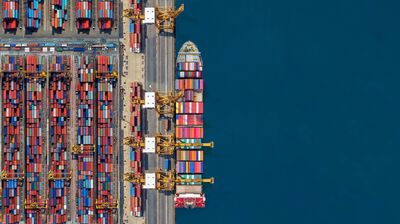
Western waste markets, therefore, face volatility and uncertainty. Localisation and resilience become strategic imperatives: less dependence on international supply chains, more domestic processing capacity, and contingency-ready operations that keep collection and basic treatment functioning during disruptions.
Developing regions are more exposed. Some experience active warfare or civil unrest where waste services cease or are fragmented. Non-combatant countries face refugee flows (180+ million displaced globally), illegal dumping across borders, and illicit “conflict waste” trade. Development finance weakens in unstable contexts, while war waste streams (unexploded ordnance, demolition and hazardous debris, medical waste) can exceed entire pre-war municipal volumes. Cleanup costs run into billions and persist for decades.
In such conditions, the central question is not whether a system is “state of the art,” but whether it can maintain basic public health functions: collection, safe containment and disposal, and emergency handling, under degraded conditions.
The industry-outcome decoupling
Perhaps the most telling signal of structural stress is the performance-versus-growth gap. The global waste management market has grown nearly 10-fold from $125 billion (1990) to $1,450 billion (2025), yet recycling rates peaked around 21–22% (2010–2015) and have since stagnated or declined to ~20%. This decoupling suggests profitability has increasingly come from managing rising volumes—disposal, landfilling, incineration—rather than from achieving circular outcomes at scale.
Several drivers are well known: China’s National Sword policy (2018) closed export markets, resulting in 95–99% import reductions; contamination averages ~25% and renders material unusable; virgin materials retain roughly a 50% price advantage over recyclates; and US–China tariffs further fragment remaining markets.
The paradox intensifies: global waste volumes are projected to grow by roughly 1 billion tonnes over the next decade (2.24 to 3.2+ billion tonnes), with the waste management market reaching $2.4–2.6 trillion by 2035. Yet the capacity to handle this growth properly lags severely, especially in developing regions where volumes may rise from 1.5 to 2.5+ billion tonnes. Revenues can rise while environmental and public health outcomes stagnate or worsen.
This is precisely why resilience must be treated as the primary performance metric, not a secondary attribute. A system that depends on perfect market outlets, high-grade separation behaviour, constant flows of imported consumables, and uninterrupted financing is not merely “complex” - it is fragile. The next phase demands systems that can degrade gracefully rather than fail suddenly.
Waste management as frontline civil protection
Western consumption saturation, waning energy surplus, technology’s diminishing returns, geopolitical fragmentation, and the industry–outcome decoupling do not point to a single catastrophe. They point to a long period of uncertainty where assumptions repeatedly fail.
In that environment, waste management must be framed first as social infrastructure—not merely an industrial service or a module of circular economy policy. It is also frontline civil protection: how societies prevent disease, preserve dignity, keep cities functional under stress, and reduce environmental harm when multiple systems are under pressure simultaneously.
For developed countries, priorities shift toward resilience, operational efficiency, and social cohesion. Systems must function during energy shocks, budget contractions, and supply chain disruptions. For developing countries, the imperatives differ but are equally urgent. Rapid urbanisation generates unprecedented volumes without matching infrastructure. The path forward is not “more complexity,” but more reliable basics: stable collection coverage, safe containment, low-energy treatment options, and integration of the informal sector in ways that improve safety and livelihoods rather than attempting to replace it with brittle automation.
The era of growth-dependent, optimisation-driven waste management is fading. What replaces it will not be defined by visionary targets alone, but by whether systems are built to endure: socially legitimate, operationally maintainable, and capable of protecting public health when the next disruption is not an exception, but the baseline.
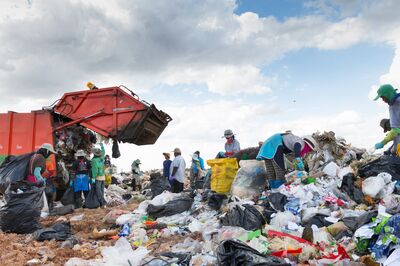
In a more volatile and constrained world, waste management should no longer be seen as a technical service or a supporting element of circular economy policy. It has evolved into foundational infrastructure embedded in the essential functions of modern society.Antonis Mavropoulos
Waste management as foundational infrastructure
In a more volatile and constrained world, waste management should no longer be seen as a technical service or a supporting element of circular economy policy. It has evolved into foundational infrastructure embedded in the essential functions of modern society. Historically rooted in sanitation and public health, waste management became central to environmental protection as waste generation grew by preventing soil, water and air pollution. As economies expanded beyond natural limits, they became integrated into economic efficiency through material recovery and cost control. Today, it is increasingly tied to strategic resource resilience, securing secondary raw materials and strengthening domestic processing capacity in a fragmented global landscape.
These roles are structural, not peripheral. Waste management underpins public health, environmental integrity, market stability and resource security. Its service must therefore be continuous. When systems function well, they remain largely invisible. When they fail, the consequences are immediate: public health is threatened, environmental damage intensifies, economic costs rise, and valuable resources are lost. This demands institutional reframing. The goal is no longer only higher recycling rates or technological sophistication, but societal continuity. Systems must operate under fiscal constraint, energy volatility and geopolitical disruption. The true benchmark of success is the ability to protect public health, safeguard the environment and maintain resource flows under stress.
In the coming decades, waste management will either consolidate its position as essential infrastructure, comparable to water and energy, or remain vulnerable to underinvestment and neglect. Recognised as foundational infrastructure, it can be designed to endure. Treated as peripheral, its fragility will surface when stability matters most.