
Organic waste : Mixed results: Europe's patchy progress on biowaste collection
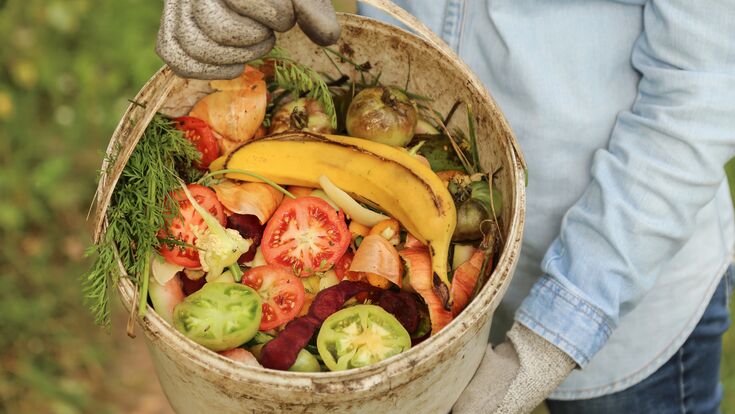
The EU has a bold plan: by 2035, it wants its members to reach a municipal solid waste (MSW) recycling rate of 65%. Since up to 50% of said solid waste is organic, this is where the greatest leverage lies. Knowing that, the European Commission in its Waste Framework Directive also demands a separate biowaste collection, mandatory since 2024. The next step will follow in 2027. From 1 January onwards, only separately collected and biologically treated biowaste can count towards recycling targets, thus MBT will be only considered as a pre-treatment option for mixed/unsorted MSW. The goal is to send a maximum of 10% of MSW to landfill.
Slow implementation
Nearly two years after the collection mandate took effect, implementation remains patchy across member states. “Several countries are lagging behind in establishing separate collection schemes for biowaste,” says Stefanie Siebert, Executive Director of the European Compost Network (ECN). “Some member states try to implement home composting to avoid setting up separate collection schemes for biowaste.” But that is a practice that cannot work in densely populated settlements, says Marco Ricci, Senior Expert at the Italian Composting and Biogas Association (CIC) and Vice-Chair of the ISWA Working Group on Biological Treatment of Waste.
The scale of the challenge becomes clear when examining the numbers. While 40% of the EU's 118–138 million tonnes of annual biowaste is currently recycled into compost and digestate, only 17% comes from separate collection – the only method that will count towards targets from 2027 onwards. “Countries need to increase separately collected biowaste from 17% to 35%, corresponding to an additional 40 million tonnes per annum,” Siebert explains. Member states need to drastically up their ante.
However, collection is only the first hurdle, as Dr. Gert Morscheck, professor emeritus of the University of Rostock, Germany, and independent consultant, points out: “If anyone is interested in this regulation, which is doubtful for some member states, the capacity for biological waste treatment must also be expanded.”
Morscheck remains critical about regulation-driven progress, arguing that “the impact of regulations is greatly overestimated. Treatment capacity expansion will continue to be very slow.” High costs for closed-system facilities create a significant barrier, particularly since residual waste treatment methods remain voluntary rather than mandatory. “Only then will the collection and recycling of organic waste demonstrate its ecological and, above all, cost advantages.”
These challenges are well documented. The EU-funded LIFE BIOBEST project, which studied biowaste management across multiple member states, identified similar barriers including regulatory gaps, misaligned economic incentives and insufficient stakeholder coordination. (see highlight box)
LIFEBIOBEST Project recommendations
The LIFE BIOBEST project identified key barriers to biowaste collection expansion and proposed solutions:
Core Action Areas:
- Close regulatory framework gaps
- Align economic incentives and funding
- Extend stakeholder networks across governance levels
- Improve technical know-how and validate best practices
- Increase public education and awareness
- Implement efficient, individualised collection models with user identification and performance monitoring
Priority Actions:
- Plan biowaste management deployment at local and regional levels
- Plan and fund treatment facilities
- Provide operational guidelines and recommendations
- Monitor implementation and results
Italy leads by example
Despite widespread challenges, Italy provides a compelling example of successful implementation. The country made separate biowaste collection mandatory in 2022, two years ahead of the EU deadline.
Marco Ricci reports impressive results: “As of 2024, the C.I.C estimates that over 92 per cent of the population is covered by food waste collection schemes.”
Italy's transformation began almost 15 years ago, with growing emphasis on recovering both compost and biomethane. “A major trend is the upgrading of existing biogas and composting plants to produce biomethane in addition to compost. This biomethane can be used directly as fuel or injected into the national gas grid, generating substantial additional revenue streams,” says Ricci. “Beyond gate fees and compost sales, facilities are increasingly benefitting from the sale of biomethane and even the purified CO₂ separated during the upgrading process, making this an exciting and rapidly expanding area of innovation.” This trend has increased the number of innovative equipment manufacturers becoming members of C.I.C. (For more on the topic read “Biowaste to biomethane: Italy is stepping up its game” in WMW 1/22 or on our website)
Italy has also pioneered the treatment of biodegradable and compostable packaging alongside biowaste. “The collection of certified compostable packaging (Note: according to UNI EN13432) alongside biowaste has already been standard practice for more than five years – and for more than a decade now if you consider shopping bags reused as caddy-liners, which are packaging according to Italian EPR schemes,” Ricci explains. “Italy also established the first extended producer responsibility (EPR) scheme for compostable plastics, known as Biorepack.”
The main technical challenge for composting and combined AD and composting plants lies in adapting treatment processes so that packaging is effectively integrated into the biological recycling cycle, Ricci continues. “This requires revising some pre-treatment and process steps to ensure that compostable packaging is fully included in the biological process, avoiding its loss along with the valuable organic waste it contains.”
The shift to closed systems
Meeting EU quality standards requires sophisticated treatment approaches. While both open windrow and in-vessel composting (IVC) produce high-quality compost, input materials and climate often dictate technology choices. “The quality of compost depends more on the quality and composition of the input material,” Siebert notes.
In Mediterranean climates, managing odour emissions from food waste composting presents special challenges, especially during pile turning in open systems. “As a result, many Italian facilities handling food waste as their primary feedstock have been adopting in-vessel or closed infrastructures for almost 15 years now. These systems allow better control of process parameters and odours and include subsequent air treatment systems to mitigate emissions,” Ricci explains. Italy's strict regulatory framework on odour control is driving this trend. Facilities treating high-proportion food waste typically cannot obtain permits without enclosed systems that ensure compliance with odour management and temperature requirements. “So, closed systems are the regulatory baseline rather than just an operational preference,” says Ricci. And adding an AD step before composting also serves to completely “enclose” the initial treatment of a putrescible mixture of organic waste.
This shift towards closed systems extends beyond Italy. “Emission control regulations have become more restrictive over the past decade,” Morscheck observes. “Composting household organic waste in Germany, for example, is now almost only possible in closed systems. Because the emissions from organic waste and its treatment can only be controlled and treated this way.” However, he advocates for continuing to treat garden waste in open processes where appropriate.
More separate collection
Ultimately, success depends on rapid implementation of separate collection systems. As Morscheck puts it: “If we fail to recognise the value of the separate collection of organic waste and compost recycling, there will be no progress whatsoever.”