
Sustainable waste management : Building capability for durable waste management systems
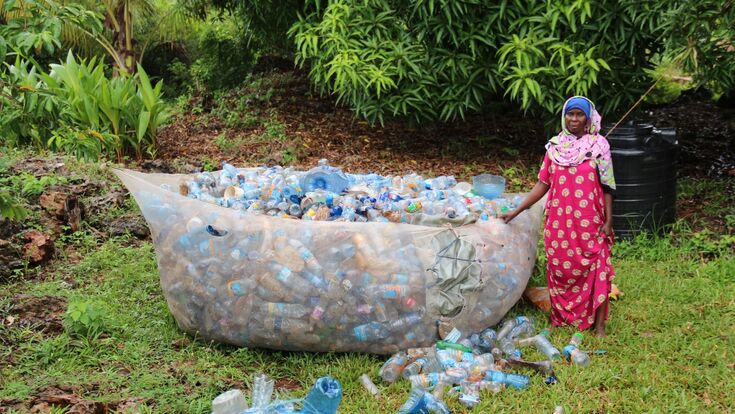
People in Kenya are using mosquito nets to collect PET bottles.
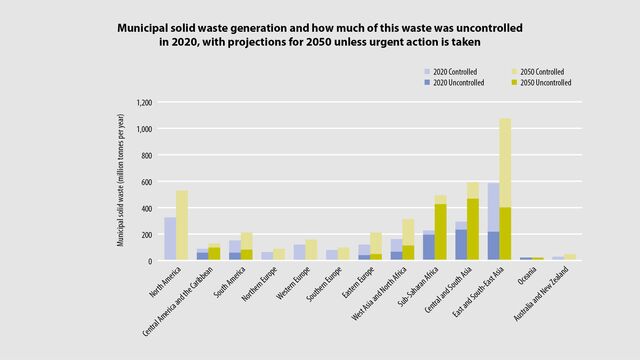
- © ShutterstockHere is what keeps me awake at night. According to the Global Waste Management Outlook 2024 — a report I had the privilege of leading — without urgent changes in the ways we produce, consume and dispose of materials, the negative impacts of municipal solid waste on the climate, biodiversity and human health will almost double by 2050. Not worsen incrementally. Double.
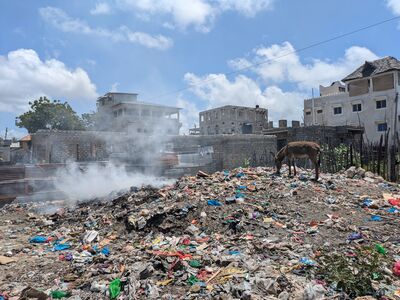
This is not an abstract projection. In 2020, approximately 2.24 billion tonnes of municipal solid waste were generated worldwide. By 2050, that figure is expected to reach 3.88 billion tonnes annually. Across the Global South — from Latin America and the Caribbean to Sub-Saharan Africa and East and South-East Asia — a significant proportion of this waste will continue to be openly dumped or burned unless something fundamentally changes. Between 400,000 and 1 million deaths each year are already linked to diseases associated with mismanaged waste.
What makes this particularly urgent is that we are not short of technical solutions or policy frameworks. Extended producer responsibility schemes are expanding. Climate finance is growing. Circular economy principles have moved from aspiration into mainstream policy. The GWMO modelling shows clearly that under a Circular Economy scenario, negative impacts could be dramatically reversed — significant reductions in greenhouse gas emissions, ecosystem damage and threats to human health are all within reach.
The gap between those two trajectories — doubling harm versus dramatically reversing it — is not primarily a gap in technology or financing. It is a gap in institutional and professional capability — and one that can be addressed.
An under-recognised constraint
Over the past two decades, the sector’s attention has rightly focused on expanding collection coverage, constructing disposal facilities and introducing new treatment technologies. More recently, policy instruments and circular economy frameworks have gained prominence. But a further evolution is now required: one that recognises institutional and human capability as foundational elements of system performance.
In many contexts, waste management initiatives encounter difficulties not because of flawed engineering, but because of the fragility of surrounding systems. Municipal budgets are constrained and politically contested. Enforcement capacity is limited. Informal workers — who often perform the majority of material recovery — remain outside formal planning processes. Data systems are incomplete, meaning long-term operational financing depends on optimistic projections rather than realistic assessments of willingness and ability to pay.
Under these conditions, performance depends heavily on the judgement, adaptability and local knowledge of those responsible for implementation. Short-term technical assistance, however well-intentioned, cannot substitute for embedded professional capability. Infrastructure can be financed and constructed within defined timeframes. The development of professional capability is slower and less visible, yet no less critical.
This is evident in practice. Across countries where I have worked, significant capital investment has gone into expanding collection coverage and constructing sorting facilities. Yet within a few years, performance has declined. Collection vehicles are delivered, but maintenance is not prioritised, and broken vehicles gradually accumulate in the yard. Fee collection rates miss projections. Staff responsible for planning and management move on, taking institutional knowledge with them. Informal recovery systems continue operating in parallel and sometimes in tension with formal services. Climate mitigation benefits are included in project proposals but not tracked in practice.
These failures do not stem from bad intentions or poor engineering. They stem from the strain placed on systems where institutional capacity and financial realism are not aligned with technical ambition.
What this looks like on the ground
I am currently working as Technical Waste Management Lead on a UNDP/UNITAR project — Strengthening national and municipal capacities for the sound management of uPOPs (Unintentional Persistent Organic Pollutants) in The Gambia. Outside the urban centre, this work has revealed a pattern that is both common and instructive.
Councils across peri-urban and rural areas face a real finance gap. Their instinctive response — and an understandable one — is to say: we need money for more trucks. More vehicles, more collection, more disposal. But that framing, pursued without a realistic assessment of revenue potential and operating costs, would simply increase long-term financial pressure.
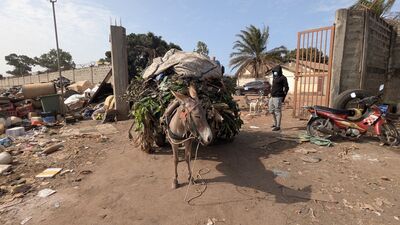
Because reliable waste data does not yet exist in these councils, and because scaling collection alone would not resolve the underlying financial fragility, the work has shifted towards a different question: how can recoverable materials be valorised in ways that support livelihoods and reduce the volume of waste requiring collection and disposal in the first place? By strengthening diversion at source and building on existing community recovery systems, it becomes possible to reduce open dumping and burning without creating a structural dependency on equipment and fuel budgets that councils cannot sustain.
This is not a second-best solution. In many cases, it represents waste management that is designed around institutional reality rather than imported assumptions.
Climate finance mechanisms require reliable baseline information. Where waste data is incomplete, preparing credible proposals becomes difficult.Zoë Lenkiewicz
Climate finance and the capability gap
Access to climate finance is increasingly shaping waste sector reform, particularly in relation to methane mitigation and organic waste diversion. But in many lower-income and emerging economies, the ability to access and utilise such finance remains deeply uneven.
Two related challenges arise consistently. The first is data. Climate finance mechanisms require reliable baseline information, monitoring systems and the capacity to quantify emissions reductions. Where waste data is incomplete or inconsistent — and where municipal staff are already overstretched — preparing credible proposals becomes very difficult.
The second is structural misalignment. Many climate finance instruments have historically favoured large-scale infrastructure: engineered landfills with gas capture, centralised treatment facilities. These may be appropriate in some settings, but they are poorly suited to municipalities with modest budgets, poor road networks and incomplete collection coverage. Decentralised composting, small-scale material recovery and livelihood-integrated diversion models are often more financially and operationally realistic — but they do not fit neatly into capital-intensive financing templates.
The result is a risk that finance flows towards infrastructure that is technically eligible but institutionally fragile, while more contextually appropriate models struggle to attract support. Strengthening local professional capability — including data management, financial planning and an understanding of climate finance mechanisms — is therefore not peripheral to waste reform. It determines whether municipalities and enterprises can access funding on terms that reflect their operational realities.
Capability, in this sense, functions as economic infrastructure. Where it is strong, the range of viable options expands. Where it remains weak, access to capital alone does not guarantee sustainable outcomes.
Multiplying expertise across the Global South
If the constraint is uneven capability, the response must extend beyond isolated training workshops or short-term technical assistance missions. What is needed is a deliberate, sustained investment in distributed professional development — one that treats local expertise as an asset to be built and recognised, not a gap to be filled by external consultants.
The Global Waste Lab Academy has been developed with this intention. Its objective is to support the development of 10,000 waste management professionals across lower-income and emerging economies over the coming decade through accessible, practice-oriented learning.
The Academy is designed for environments where bandwidth, time and financial resources are limited. Content is primarily text-based, supported by practical exercises and downloadable tools rather than data-heavy video materials. Crucially, courses are co-created with experienced practitioners working in the Global South — people who are compensated for their time and knowledge, reinforcing their professional standing and contributing to the development of local consultancy capacity. This represents a deliberate shift away from models of short-term external expertise that leave limited long-term capacity behind.
For sponsors, the Academy presents an opportunity to generate cumulative, scalable impact. Once developed, a course can be accessed by successive cohorts of learners at minimal marginal cost. For waste management companies operating in emerging markets, stronger local professional capacity makes it easier to work constructively with regulators, retain local staff and deliver contracts reliably. For foundations and development partners, Academy support aligns with multiple Sustainable Development Goals — health, decent work, sustainable cities and climate action — and builds the institutional depth that makes other investments more durable.
Strengthening projects in practice
Alongside the Academy, the Global Waste Lab Studio works with organisations seeking to improve the resilience of live waste management initiatives. Where waste management systems are under stress, projects frequently encounter challenges that are not visible at design stage: optimistic revenue assumptions, governance arrangements that lack clarity, climate objectives that are not integrated into operational decision-making, and informal recovery systems operating in parallel with formal services.
The Studio’s approach follows three phases. The Seed phase centres on listening and co-design — understanding existing actors, constraints and assets before any solution is proposed. The System phase aligns technical options with institutional capacity and financial realism, rather than selecting approaches on technical merit alone. The Scale phase emphasises replication through peer learning and gradual strengthening, rather than rapid expansion that outpaces local capability.
For waste operators bidding in emerging markets, early diagnostic work on institutional readiness reduces the likelihood of underperformance and reputational risk. For development banks and programme designers, attention to governance and financial sustainability at inception significantly improves durability. For EPR schemes and corporate responsibility initiatives, strengthening local capacity enhances credibility and reduces long-term risk. The emphasis throughout is not on introducing new technologies, but on improving the conditions under which existing and proposed systems can function effectively.
Diagnosing resilience before problems emerge
To support more structured reflection on project foundations, the Project Resilience Scorecard is available at globalwastelab.com as a concise diagnostic tool informed by global research and field experience.
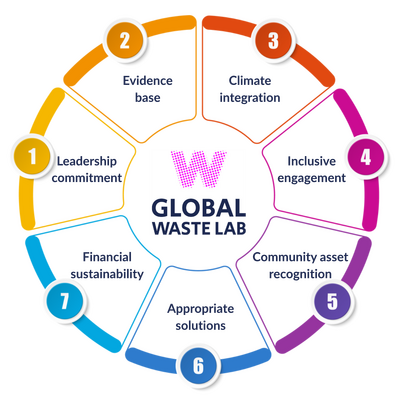
The Scorecard examines seven dimensions that frequently determine long-term outcomes: leadership commitment, financial sustainability, evidence use, appropriateness of technology, inclusive engagement, integration of climate considerations and recognition of community assets. It takes approximately 15 minutes to complete and is designed to surface potential vulnerabilities before they manifest as operational or reputational challenges.
For companies and municipalities, it can prompt a more honest conversation about readiness. For funders, it provides an additional lens for assessing proposals beyond technical compliance. In a sector often characterised by layered interdependencies and multiple competing stakeholders, simple frameworks that encourage systematic reflection have genuine practical value.
What is needed is a deliberate sustained investment in distributed professional development.Zoë Lenkiewicz
The choice in front of us
The modelling is clear. Under a business-as-usual trajectory, the harm done by waste to our climate, our health and our ecosystems will almost double by 2050. Under a circular economy scenario, those harms can be dramatically and measurably reversed.
The distance between those two futures is not primarily a question of technology or financing. It is a question of whether enough people, in enough places, have the knowledge, skills and institutional support to design systems that work — and to sustain them when external inputs recede.
The coming decade will be shaped by intensified climate commitments, expanding circular economy legislation and growing scrutiny of environmental performance. Capital is increasingly available. But the pace at which infrastructure and finance move may exceed the pace at which institutional capacity develops. When that happens, facilities struggle to operate at intended performance levels, and systems become structurally dependent on continued external support.
The Global South is not a uniform category. It encompasses rapidly industrialising economies and fragile states, sophisticated municipal systems facing acute fiscal constraints and communities where informal networks perform the majority of recovery work. Effective responses must be sensitive to that variation. Strengthening distributed expertise offers a means of navigating it: when professional capability grows within regions, adaptation becomes easier, local innovation increases and the distance between policy ambition and operational reality narrows.
For sector leaders, waste companies, municipalities and development partners, the question is no longer whether to invest in capability. It is how deliberately and systematically to do so. Supporting structured learning, strengthening live systems and integrating resilience diagnostics at design stage are practical steps towards aligning infrastructure ambition with institutional strength.
We share a planet. Durable waste management systems are built on technical designs and financial models, but they are sustained by people — practitioners who understand their context, who hold the trust of their communities, and who can adapt when conditions change. Recognising that as core infrastructure isn't just a shift in thinking. It may be the most consequential investment the sector makes in the years ahead.