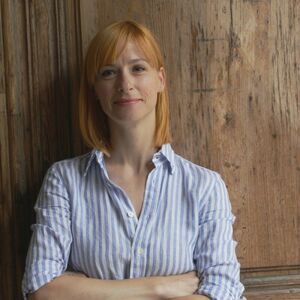
Women in Waste Management : From the Foreign Office to waste management: How Georgina Nitzsche and ISWA Women of Waste are helping change an industry
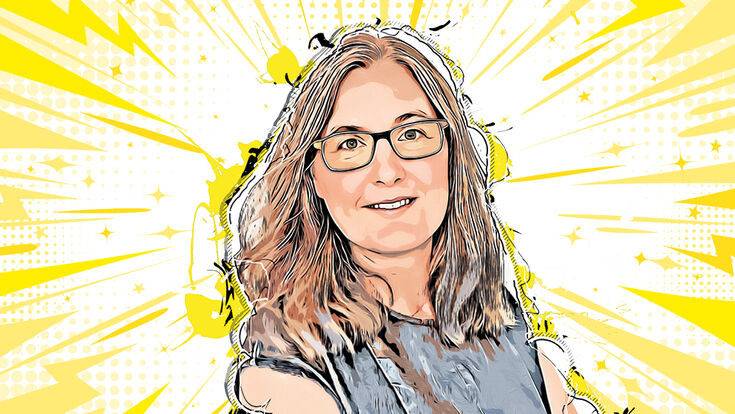
Everyone who’s ever been to an ISWA World Congress has surely come across Georgina Nitzsche. Her energetic presence and her optimism make her stand out in any crowd. But even though she is now a fixture in the waste management world, her path was definitely not predetermined. With a degree in classical studies and, later, journalism, the British native was seconded to the Foreign Office to work on development projects. Her work took her around the world, and during a posting to Bosnia and Herzegovina, she met her now-husband, a German working for the diplomatic service.
After studying for a Masters in Sustainable Development and two international moves with two children within three years, the globetrotting couple finally settled in Vienna. There, Georgina stumbled across a job advert for ISWA – and was instantly intrigued. “I was interested in the environmental side and the job tied in nicely with my experience in community-building,” she says. For four years, she was ISWA’s international partnerships and events manager. “I found, and still find, the topic fascinating. And I just love the people in the sector. Also, the work was more creative than before,” she says. What has definitely changed is the number of bin photos on her phone, she says with a laugh. “At the beginning, I was asked if I had any pictures of bins, which I hadn’t. I made a point to photograph bins all around the world and even recruited my husband to do the same.” Her favourite: “A bin from Bali. It’s carved and colourful.”
The gender aspect
It was at her first IFAT Munich expo back in May 2016, just two months after she had started her job, when she really became aware of the overwhelming majority of men in the sector. However, there are also many women working in the field, so she decided to make them more visible. “I took photos of women waste managers at the ISWA booth and published them in the ISWA newsletter,” Georgina explains. “It was my first gender activity; something simple, but I think we all really enjoyed it.”
Meanwhile, at another event entirely, Maria Chr. Tsakona and Gali Feldboy-Klinger, both international solid waste experts, were on a field trip in Portugal, discussing gender barriers in the industry. Both keen ISWA members at that time, they decided to take action, and in reaching out to the ISWA Secretariat, they were connected with Georgina. Their first meeting took place during the World Congress in Novi Sad in September 2016: “In the end, we decided to just start something together,” Georgina says. Women of Waste (WOW!) was thus born. A powerful name chosen by powerful women. Joined next by Frida Jones, a researcher, the new team “had zero budget, zero resources, four volunteers, four laptops and 100% passion,” Georgina remembers. But they soon found out that you can do a lot with that. Especially if you are able to tap into the ISWA network.
For their official launch at the ISWA’17 Baltimore WOW! curated session, they sourced speakers from delegates they knew were coming anyway and saved all costs. They used their new logo to make leaflets and branded ribbon, which you could tie on your wrist or bag. The idea was new and eye-catching. Their curated session was packed: “People stood in the aisle, men came too – it was amazing! People stayed behind, asking questions for up to 20 minutes,” Georgina says. “The launch post gained the highest number of ISWA social media responses ever. We had struck a chord.”
>>> “The waste management industry needs to find solutions to problems created by others”
People thought the waste sector was not affected by gender. I’m proud we were able to change that. ISWA has truly shown leadership in this area.Georgina Nitzsche
Visibility above all else
The main goal of WOW! has always been visibility. “When we started in 2016, Gali showed that you could type ‘engineer’ into Google and not one single picture of a woman would appear,” Georgina says. “Women were out there – engineers, business leaders, scientists, sorters, waste pickers, but just not very visible. We wanted to change that.” Visibility helps raise awareness about women’s achievements in the sector as well as the very real challenges many face. By bringing women together, spotlighting best practice or capacity building, WOW! aims to improve the working situation and support women: “When we get together, online or at an event, the energy is amazing!”
Later, with Gabriela Garces, a sustainability and resource management expert Georgina met at IFAT in 2106, now having joined the group, WOW! addressed the gender data gap in the waste sector and set out to close it. To date, WOW! has published two global surveys asking women about their working conditions and what they need to thrive. With the statistical expertise of Linda Godfrey, the first mapping results were presented at ISWA’18 in Kuala Lumpur and the second more in-depth survey in three languages followed in March 2023.
“People thought the waste sector was not affected by gender. I’m proud we were able to change that. ISWA has truly shown leadership in this area,” Georgina says.
Seeing your agenda discussed globally on such a high level is one of the highlights of our work.Georgina Nitzsche
The biggest success for WOW!? “Being out there for ten years,” Georgina says and chuckles. “Persistently showing up with compelling evidence and partnerships that work – that has been wonderful!” she beams. Stand-out moments include the launch of the UNEP IETC Gender and Waste Nexus policy brief and being invited to UN high-level meetings– in short, simply “to be taken seriously. And seeing your agenda discussed globally on such a high level comes in a close second,” she adds with a wink. WOW! is particularly grateful for the collaboration with GRID-Arendal, working together on the policy document A Seat at the Table, about the role of the informal recycling sector, launched at INC-1 for the upcoming plastic pollution treaty as well as the new Toolkit for Awareness and Capacity Building of Women in the Informal Recycling Sector.
A collaboration with Banyan Global on a USAID gender analysis report also brought Delila Khaled, a gender, environment and economic development expert, into the WOW! team.
Today, there are more and more events for and about women working in the waste sector. WOW! inspired similar activities in Canada, India, Uruguay, Mexico, Nigeria and even Western Samoa.
In its tenth year, change is coming for the ISWA Task Force. “ISWA is looking to embed gender aspects more permanently. But as the different regions have different needs, it will be interesting to see what will happen on a regional level,” Georgina says.
Fighting the good fight together
Including women, not just on a superficial level, makes business sense if nothing else. “Research in legacy sectors like oil, gas and tobacco shows that if women are integrated across all levels, companies show higher profits and are more resilient,” Georgina explains. “Waste doesn’t necessarily need swashbuckling cowboys. But you definitely need collaboration. And women tend to be very good at that.” She adds: “With a triple planetary crisis, it’s all hands on deck. And we have shown time and again how systems benefit from women’s talents and energies.”
WOW! has already achieved much, but there is still a lot to do. The women are ready.
About: Georgina Nitzsche is ISWA Women of Waste Coordinator, Senior Associate Women without Borders and Project Manager at OCEAiN.
Reach out to Women of Waste: ISWA Women on Waste Task Force is welcoming all women of the waste sector to connect and work together. Website; Email: [email protected]