ISWA president's message : "The circular economy is gaining ground"
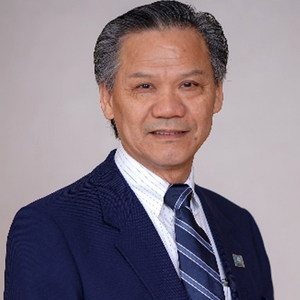
Reflecting on the past quarter of 2025 and the first term of my presidency, I feel immense pride in the progress we've made in waste management, the circular economy, climate action, and tech innovation. Our collective efforts continue to advance both our sector and the global sustainability agenda.
May was especially eventful. I participated in a 3-day ISWA Technical Tour hosted by the Delaware Solid Waste Authority (DSWA) and the Working Group on Landfill (WGL), joined by 20 members from 7 countries. We explored DSWA’s legacy, inspired by industry pioneer Mr. NC Vasuki—past ISWA President and former DSWA CEO—who, at 87, remains active as a global waste consultant. A key highlight was the visit to Cherry Island Landfill in Wilmington, Delaware, where a 20+ meter mechanically stabilized embankment (MSE) wall demonstrates vertical landfill expansion—an engineering solution I highly recommend witnessing firsthand.
Later in May, I visited ABREMA, our National Member in São Paulo, Brazil, to discuss closing approximately 3,000 open dumps along the coastline. I also toured two impressive landfills operated by SOLVI, one in Belém—set to close by February 2026 ahead of COP30—and an industrial waste landfill expanding with MSE wall technology.
This quarter, we saw notable innovation. Smart waste collection systems and SOLVI’s truck driver safety monitoring in São Paulo exemplify how IoT and AI can optimize operations, reduce emissions, and enhance safety. Blockchain is boosting transparency and efficiency in waste tracking and recycling, supporting responsible waste handling. Our industry generated over $140 billion in 2023, showing its vital economic role.
The link between waste and climate change is clearer than ever.
CE is growing
The circular economy is gaining ground. Reuse and repurposing initiatives—particularly in construction using recycled materials—are proving their value in cutting waste and promoting resource efficiency. The sector saw 7.5% growth in the past year and is expected to grow at a CAGR of 25.65% through 2031 (Circular Economy Report 2025, Startus-insights.com).
Progress in waste reduction is equally strong. Public awareness and education campaigns, along with extended producer responsibility (EPR) regulations, are changing habits and product design. EPR is expanding in the US and Global South, fostering more sustainable goods. Globally, recyclables prevent over 700 million tonnes of CO2 emissions annually (Waste and recycling statistics 2025, greyparrot.ai).
The link between waste and climate change is clearer than ever. This quarter, we’ve expanded landfill gas capture projects, promoted composting and anaerobic digestion, and helped generate biogas and soil-enhancing compost. With 2025’s first quarter being the second warmest on record (carbonbrief.org), our work is crucial.
Technological advancements continue to drive our industry forward. AI, robotics, and automation are reshaping sorting and recycling, improving both accuracy and safety. With global IT spending projected to reach $5.6 trillion in 2025 (Statista.com), it’s clear that innovation is powering our future.
Let’s stay committed to building a sustainable, resilient future. Let’s move forward with determination and optimism.
Looking ahead, we are preparing for INC-5.2 in Geneva (August), the ISWA World Congress in Buenos Aires (October), and COP30 in Belém (November).
Let’s stay committed to building a sustainable, resilient future. Let’s move forward with determination and optimism.