
Waste Wood : Advanced sorting drives 70% MDF recycling efficiency
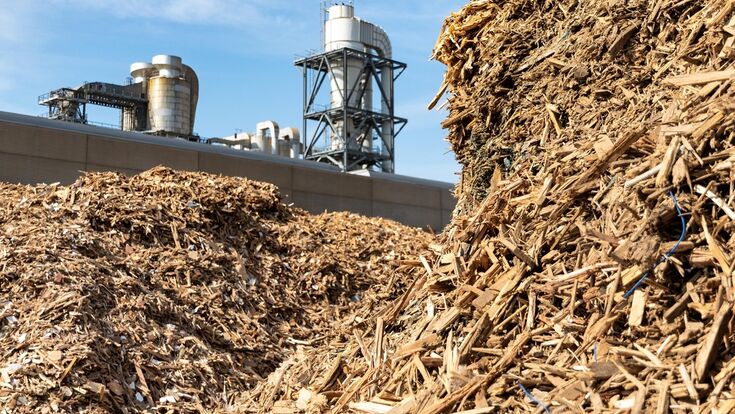
Collected waste wood awaiting sorting for sustainable MDF production at FANTONI.
- © STEINERT GmbHFor nearly 150 years, FANTONI S.p.A. has been a benchmark in engineered wood products, but their latest achievement represents a quantum leap in sustainable manufacturing. Four years after commissioning one of Europe's most advanced sorting facilities, the Italian company routinely produces premium MDF panels with up to 70% recycled material in their core layers—a stark contrast to the industry standard of 15-20% recycled content.
The facility processes approximately 450,000 tonnes of recycled wood annually, demonstrating that high-volume sustainable production is not only possible but profitable. This success story offers valuable insights for waste management professionals seeking to understand how advanced sorting technologies can transform challenging waste streams into valuable resources.
The contamination challenge in wood waste processing
Post-consumer wood waste presents significant challenges for recyclers. Unlike particleboard production, which can tolerate higher impurity levels, furniture-grade MDF requires exceptional purity standards. Any contamination—from nails and plastics to glass and stones—can compromise structural integrity, surface finish, and damage critical downstream equipment.
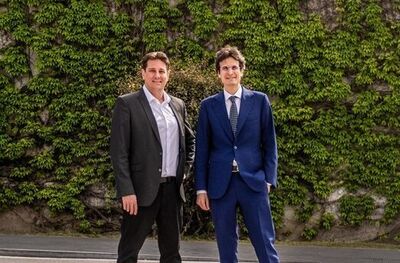
"We decided to take a different approach," explains Marco Fantoni, a member of FANTONI's board. "We designed the plant ourselves, with our own process engineering, and selected the best technological machines for each specific task." This engineer-led approach, backed by a €150 million investment, demanded a partner who could provide not just machines, but a robust, integrated, and reliable solution.
Multi-stage separation technology delivers results
FANTONI's success relies on a comprehensive multi-stage sorting process, with STEINERT serving as the sole sorting technology provider. This integrated approach eliminates the complexity of coordinating multiple suppliers while ensuring seamless operation across all sorting stages.
The system employs three distinct separation technologies:
Metal Extraction: The process begins with magnetic separation and eddy current technology to remove both ferrous and non-ferrous metals, protecting downstream machinery from damage.
Dense Material Removal: STEINERT XSS® T X-ray transmission sorters remove dense foreign materials like glass and stones. "The X-ray does an excellent job of extracting materials that could be dangerous for the process itself," notes Mr. Fantoni.
Wood Purification and Species Sorting: The final stage utilizes STEINERT UniSort systems enhanced with proprietary Hyperspectral Imaging (HSI) technology. This advanced spectral analysis identifies material composition at the molecular level, enabling precise separation of different wood types and reliable removal of contaminants, including difficult-to-detect black plastics
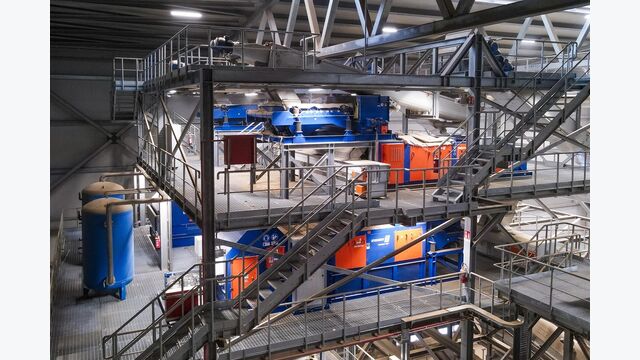
State-of-the-art sorting technology by STEINERT in operation at FANTONI for maximum purity in the recycling process.
- © STEINERT GmbHProven reliability in industrial operations
Four years of continuous operation have validated FANTONI's technology choices. The mechanical construction has proven remarkably robust, with minimal maintenance issues—a critical factor for any industrial recycling operation.
"After almost four years of continuous operation, I have to say that we were right about the concept we had," reflects Fantoni. "The fact that I'm not aware of recent maintenance problems speaks volumes about the system's reliability."
This long-term stability is particularly significant for waste management operators, where equipment downtime can severely impact processing capacity and profitability.
Overcoming technical hurdles through partnership
The collaboration between FANTONI and STEINERT extended beyond equipment supply to encompass comprehensive technical support. Extensive trials at STEINERT's Test Center in Cologne proved crucial in optimising the sorting process for different material flows.
"The relationship was very good. I must stress the importance of the tests we did at the Test Center, where your team illustrated the different technologies and what was most suitable for our needs," emphasises Marco Fantoni.
The partnership continued through the critical startup phase, where STEINERT teams worked on-site to optimise machine settings. "Startup was a very important moment where we had to prove efficiency in terms of cleanliness and learn how to optimise machine settings," Fantoni reflects. "Having your teams here for the necessary period was of utmost importance."
Circular Economy innovation: MDF-to-MDF recycling
Perhaps FANTONI's most significant breakthrough is pioneering a process that recycles end-of-life MDF panels themselves. "We can also use waste MDF again in the process, which is very important because recycling MDF itself is a known problem," explains Marco Fantoni.
This creates a truly circular production model where today's furniture becomes tomorrow's raw material—a concept that could revolutionize how the industry approaches end-of-life product management.
Market leadership through sustainable innovation
Today, FANTONI produces a three-layer MDF panel where virgin wood forms the flawless outer surfaces and recycled content comprises the core, processed on Europe's longest press at 65.5 meters. The company backs its environmental claims with scientific rigor, investing in Life Cycle Analysis (LCA) studies and Environmental Product Declarations (EPD).
"We have invested a lot in making LCA studies and EPD certification of the material to have recycled wood that is scientifically proven," Marco Fantoni explains.
The results speak for themselves: "With this technology and this project, we are now well ahead of the curve in using recycled wood for fibreboard production," states Marco Fantoni.
Setting the standard for sustainable manufacturing
FANTONI's facility demonstrates that achieving 70% recycled content in premium wood panels requires proven technology and engineering excellence. As regulatory requirements increasingly drive demand for recycled content, this approach offers a roadmap for the industry's sustainable future—proving that environmental responsibility and market leadership can advance together.
For waste management professionals, FANTONI's success illustrates how advanced sorting technologies can transform challenging waste streams into high-value resources, creating new revenue opportunities while addressing environmental challenges.
