
Artificial Intelligence : AI-based waste sorting boosts recycling efficiency
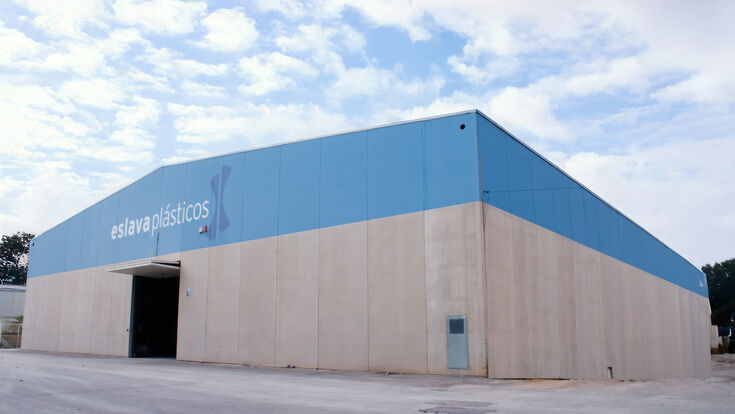
The waste management industry is witnessing a technological revolution as artificial intelligence reshapes traditional sorting methods. At the forefront of this transformation stands Eslava Plásticos, a family business that has evolved from its 1974 founding into one of Europe's premier multi-material recycling facilities, processing 45,000 tonnes of granulate annually.
Intelligent separation systems address complex challenges
Operating from its Quart de Poblet facility in Valencia, Eslava Plásticos has long faced the industry's persistent challenge: removing contaminants that emit identical infrared signals on conventional spectrometers. Traditional near-infrared optical sorters, while effective for standard applications, struggle with these complex separation tasks.
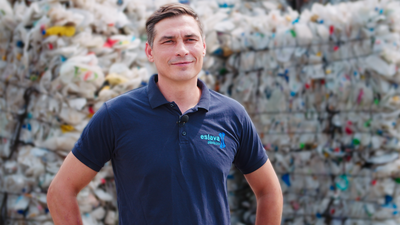
"We needed additional technologies to go further in our HDPE stream cleaning and improve the quality of our pellets and guarantee our end customer the highest level possible of purity," says Javier Ballesteros Magadán, plant Director of Eslava Plásticos.
Machine learning modules enhance processing performance
Through its 25-year partnership with French technology provider Pellenc ST, Eslava became the first recycler to deploy breakthrough AI-based sorting solutions. These innovative modules combine near-infrared/visible light technology with deep learning algorithms, creating neural networks trained on millions of images to identify unique object characteristics including shape, size, and visual differences.
The implementation includes two distinct AI modules: the CNS BRAIN™, an energy-efficient solution capable of separating silicon cartridges and nasal spray from polyethylene streams, and the AISORT™ computer vision system, which removes food packaging contaminants and items like flip-flops and diving fins from HDPE streams.
Automated solutions deliveroperational excellence
The results demonstrate the transformative power of AI-enhanced waste processing. The advanced sorting technologies have positioned Eslava's facility among the industry's most sophisticated operations, contributing to an increasingly circular economy model.
"Thanks to the artificial intelligence modules implemented by Pellenc ST, the quality of our final products has improved significantly without additional personnel costs, while increasing production throughputs," says the plant director.
Smart technology revolutionizes material recovery
This pioneering deployment showcases how artificial intelligence is addressing the waste management industry's most challenging separation tasks. By leveraging machine learning capabilities, recyclers can now achieve purity levels previously unattainable with conventional optical sorting technology.
The success at Eslava Plásticos represents a significant advancement in recycling infrastructure, demonstrating that AI-powered solutions can simultaneously improve product quality, maintain operational efficiency, and support the transition toward more sustainable waste management practices. As these technologies become more widely adopted, the industry moves closer to achieving optimal resource recovery and circular economy objectives.