
Thermal Recycling : Breaking the mould: How Xi'an's Waste-to-Energy plant rewrote the rulebook
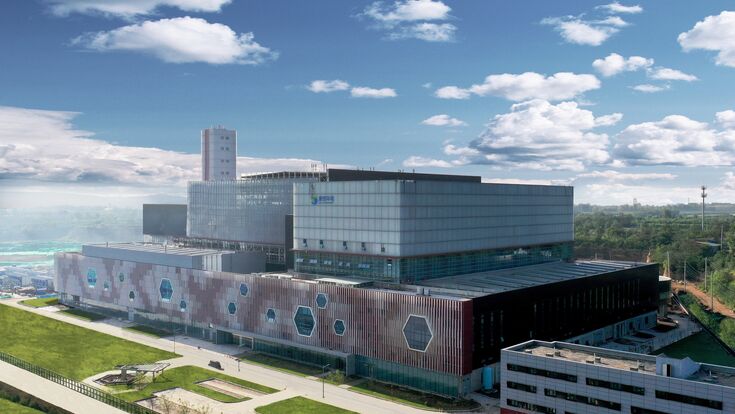
Instead of utilitarian concrete boxes that characterise most WtE plants, Xi'an Gaoling project presents an architectural statement. French firm AIA designed the building around honeycomb motifs referencing Xi'an's history as the ancient capital of thirteen dynasties and the transformative process of turning waste into energy.
- © SUS ENVIRONMENTWhen Xi'an Jingwei SUS Environmental Energy Co., a subsidiary of SUS ENVIRONMENT, began operating its waste-to-energy plant in January 2020, few could have predicted it would become one of the most visited industrial facilities in western China. By December 2023, over 7,400 people had toured the plant voluntarily – remarkable for an industry that typically struggles with public acceptance.
The Xi'an Gaoling Domestic Waste Harmless Treatment Incineration Cogeneration Project handles 2,250 tons of municipal solid waste daily, serving 2.62 million residents across five districts. But capacity figures don't explain why this project has captured international attention or why delegations now make pilgrimages to this corner of Shaanxi Province.
Design as Strategy: Rethinking Industrial Architecture
The facility's most radical departure begins with what visitors see first. Instead of utilitarian concrete boxes that characterise most WtE plants, Xi'an Gaoling project presents an architectural statement. French firm AIA designed the building around honeycomb motifs referencing Xi'an's history as the ancient capital of thirteen dynasties and the transformative process of turning waste into energy.
This "de-industrialised" approach represents strategic positioning rather than mere aesthetics. Traditional facilities try to minimise visual impact behind barriers and bland facades. Xi'an Gaoling project does the opposite, creating a structure residents point to with pride rather than tolerance.
The architectural gamble paid off. Local basketball teams use the facility's courts, and the plant's "Love Station" provides rest areas for workers and drivers. Public access and community integration, a typical case of transforming NIMBY into YIMBY.
>>> Europe's Waste-to-Energy sector embraces circular economy future

Beyond electricity: The economic case for integration
While the facility's architectural approach grabs attention, its "Eco+X" operational model delivers the substance behind the style. The project extends far beyond traditional waste-to-energy operations, supplying district heating to 3.4 million square meters – covering nearly 65% of Gaoling District's heating needs and serving 35,000 households.
The numbers tell a compelling story. During the 2024-2025 heating season, the integrated system reduced natural gas consumption by 16 million cubic meters, achieving a 93% reduction rate while cutting heating company costs by 55%. For municipal planners struggling with energy security and environmental targets, such performance metrics offer a powerful argument for integrated infrastructure approaches.
The facility's multi-stream processing capabilities add another layer of economic value. By March 2025, the plant had processed 80,000 tons of sludge, 20,000 tons of leachate and 30,000 tons of biogas residue while supplying 1.35 million GJ of heat. This diversified approach transforms the facility from a single-purpose waste processor into a comprehensive resource recovery hub.
Such integration isn't without challenges. Managing multiple waste streams requires sophisticated process controls and creates operational complexity that many facilities prefer to avoid. However, the Xi'an Gaoling project’s experience suggests the economic benefits can justify the additional complexity, particularly in urban environments where land constraints make co-location attractive.
Operational excellence through digital innovation
Recognition as China's first "WtE industry operational leader" reflects performance exceeding typical benchmarks. The emissions control system employs SNCR, semi-dry process, dry process, activated carbon injection, bag filtration and SCR technology. Emission levels exceed China’s national standard for pollution control on the municipal solid waste incineration (GB18485-2014) and the 2010/75/EU standard.
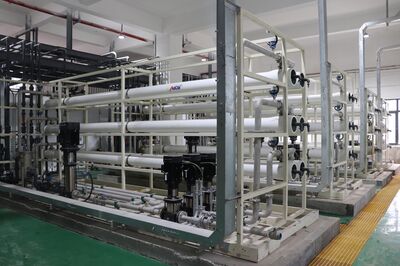
The plant achieved zero wastewater discharge through advanced treatment processes combining pretreatment, UASB, MBR, nanofiltration and reverse osmosis for leachate, plus separate industrial wastewater treatment systems.
Most ambitiously, the facility implements AI and digital twin technology – among the first commercial applications in the WtE sector. Built on a detailed LOD300 model, the system provides real-time digital replication of all processes. Early results show potential for predictive maintenance, enhanced staff training through simulation and intelligent decision support through machine learning models.

Community relations: Lessons in social licence
Perhaps most remarkably, the facility has achieved genuine community acceptance and enthusiasm. The project maintains open access during working hours, promotes educational visits and provides community amenities. More fundamentally, the integrated heating system provides direct benefits to local residents – transforming the facility from a necessary burden into a community asset.
Such community integration remains rare globally. Most WtE facilities focus primarily on minimising negative impacts rather than creating positive value for surrounding communities. Xi'an Gaoling project’s approach suggests alternative strategies may be both possible and profitable.
Global implications for an evolving industry
Located near the ancient Silk Road's starting point, the Xi'an Gaoling project has become a destination for international delegations seeking to understand evolving waste management practices. For the global WtE industry, the project demonstrates what's possible when facilities are conceived as comprehensive infrastructure rather than single-purpose processors.
However, replicating these results requires more than copying technology. Success stems from integrated planning that considers architectural design, community needs, operational excellence and technological innovation as interconnected elements. As cities worldwide grapple with growing waste streams and sophisticated public expectations, the Xi'an Gaoling project model provides a template worth studying – proof that waste-to-energy facilities need not accept minimal public acceptance as an inevitable constraint.
In cooperation with SUS ENVIRONMENT.