
Energy from Waste : Europe's Waste-to-Energy sector embraces circular economy future

While Europe grapples with ambitious climate targets and circular economy dreams, one sector is quietly proving that what goes up in smoke doesn't have to come back down as a problem. The recent CEWEP Waste-to-Energy Congress in Gdansk served up a compelling case for why incineration—yes, that much-maligned waste treatment method—might just be the unsung hero of Europe's green transition.
WtE as circular economy infrastructure
Paul De Bruycker, CEWEP's President, didn't mince words when he opened the congress: "In a truly circular economy, there is no place for pollution. Waste-to-Energy is not just a last resort - it's a cornerstone. With low emissions, energy recovery, and the extraction of vital secondary raw materials, WtE ensures we handle what others cannot. As we support recycling and protect public health, our sector is proving every day that circularity and climate responsibility go hand in hand. We may be hard to decarbonise, but we are working hard to lower our GHG emissions and even become carbon negative for the welfare of all."
That's quite the pivot from the traditional narrative. Instead of positioning waste-to-energy as the bottom-of-the-barrel option when recycling fails, De Bruycker is making the case for WtE as an integral part of the circular economy machinery. It's a bold reframing, and judging by the congress discussions, it's one that's gaining traction across Europe—albeit at frustratingly different speeds.
EU Member states show varied progress on waste management implementation
The implementation gap across EU member states provided some of the day's most revealing insights. Spain's situation, as outlined by Amalia Cerdá Lacaci from TIRME, perfectly illustrates the challenge: "In Spain, landfilling is declining too slowly. Waste management falls under regional authority, and progress is clearest where WtE plants are in place. The main hurdles remain: regional disparities, insufficient infrastructure, limited public engagement, and a lack of economic instruments. Yet, success stories like Mallorca - where over 64% of waste-sector GHG emissions have been cut through WtE, sorting, and anaerobic digestion—prove that targeted investment and coordinated action can deliver real impact."
Mallorca's 64% emissions reduction is the kind of number that should make every waste manager sit up and take notice. It's also a perfect example of why the EU's approach to waste policy is becoming increasingly nuanced. As Karolina D'Cunha from the European Commission put it during her fireside chat: "The European Commission is closely monitoring Member States' progress on landfill targets, using both carrots and sticks. That means that we offer recommendations where helpful, and take legal action where there are systemic failures. Where there's a good policy mix—landfill bans, taxes, and economic instruments—we see real results. These solutions must be tailored country by country. As we are preparing the Circular Economy Act, we're consulting on stronger restrictions and enforcement tools, including cap-and-trade systems. And while landfilling must be reduced, we also need to invest across the waste hierarchy. Waste-to-Energy remains essential for non-recyclable and problematic waste, as part of a balanced and responsible waste treatment strategy"
The message is clear: one-size-fits-all rarely fits anyone properly, especially in waste management.
Waste-to-Energy plays a vital role in district heating, offering one of the lowest heat prices per gigajoule over the past three years—even as overall heat prices doubled.Tomasz Surma, Veolia Poland
District heating benefits from cost-effective WtE energy
Perhaps one of the most compelling economic arguments came from Poland's district heating sector. Tomasz Surma from Veolia Poland delivered a masterclass in practical economics: "Waste-to-Energy plays a vital role in district heating, offering one of the lowest heat prices per gigajoule over the past three years—even as overall heat prices doubled. It not only reduces reliance on coal but also supports the diversification of heat sources for the future of district heating."
In an era where energy security and affordability dominate political discourse, WtE plants are quietly delivering both reliability and competitive pricing. While renewable energy sources grab headlines with their intermittency challenges, waste-to-energy facilities churn out consistent power and heat, rain or shine.
Carbon capture technology could make WtE facilities carbon-negative
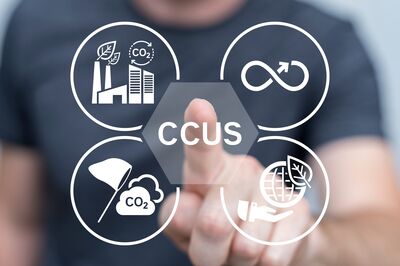
The congress's most forward-looking discussions centered on carbon capture, utilization, and storage (CCUS) technologies. Poland's Secretary of State for Climate and Environment, Krzysztof Bolesta, laid out an intriguing vision: "CCS and CCU will be very important technologies going forward to meet the energy transformation objectives. Through capturing CO2 from WtE processes we have an opportunity to create a totally new sector in Europe, which is negative emissions. It could help us to bring value to some sectors and would help us to fight climate change at a lower cost."
The prospect of waste-to-energy facilities becoming carbon-negative operations represents a potential game-changer. Instead of being viewed as a necessary evil in the waste hierarchy, WtE plants could become climate heroes, actively removing CO₂ from the atmosphere while solving waste problems. The panel of experts from Sweden, Norway, Germany, and Italy all emphasized the need for CO₂ infrastructure development, suggesting this isn't just theoretical anymore—it's an engineering challenge with real-world projects already underway.
Public communication strategies are critical for WtE project success
One of the congress's most practical sessions dealt with public communication—an area where the waste industry has historically struggled. The everyday communication challenges facing WtE projects can make or break developments, regardless of their technical merits or environmental benefits. The Gdansk plant's own communication journey, presented by spokesperson Marta Bańka, offered real-world insights into managing public perception in an industry that still battles NIMBY attitudes.
PFAS treatment challenges require industry harmonisation
The technical seminar on PFAS (per- and polyfluoroalkyl substances) highlighted one of the industry's emerging challenges. These "forever chemicals" are increasingly present in waste streams – as Julia Vogel from Germany's Environmental Protection Agency noted, they're showing up everywhere from sludge to municipal waste. And their treatment requires sophisticated approaches. The seminar reinforced that while WtE facilities are key tools for treating PFAS-containing waste, the industry needs better harmonisation, research, and regulatory clarity to handle these substances effectively.
Waste-to-Energy industry outlook: Essential role in EU Sustainability Goals
As congress managing director Ella Stengler noted in her closing remarks, the day's discussions confirmed WtE's multifaceted contribution to EU sustainability goals: providing reliable energy from residual waste, recovering valuable materials from bottom ash, and supporting landfill reduction targets.
The waste-to-energy sector isn't just adapting to Europe's circular economy transition—it's positioning itself as an essential enabler. With carbon capture technologies on the horizon, economic competitiveness already proven, and integration with district heating systems demonstrating real-world value, WtE is writing itself into Europe's sustainable future.
The Gdansk congress made one thing clear: this isn't your grandfather's incineration industry. This is a sector that's learned to speak the language of circular economy, climate action, and energy security all at once. And in a continent struggling to balance environmental ambitions with economic realities, that trilingual fluency might just be exactly what Europe ordered.
The next challenge? Convincing the rest of Europe to listen.