
Advanced technology : Digital transparency in waste management: Unlocking efficiency with LiDAR
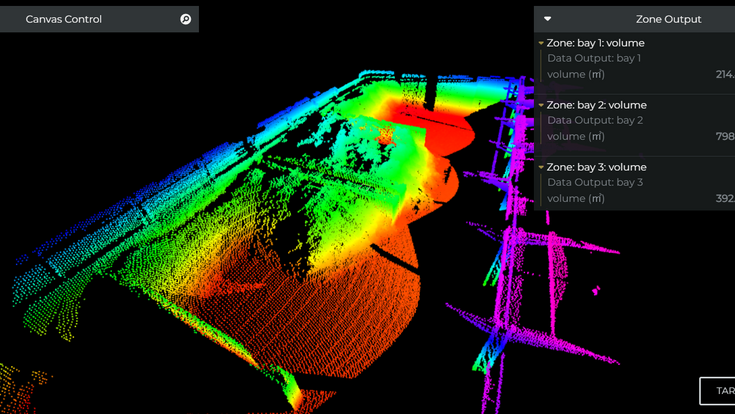
By replacing uncertainty with reliable, continuous measurements, LiDAR enables operators to unlock new levels of efficiency, safety, and compliance.
- © BlickfeldWaste management has always been a business of scale and complexity: fluctuating volumes, variable material streams, and strict regulatory requirements. For decades, many operators have relied on rough estimates, visual inspections and manual techniques like weighbridges to track their inventory and keep facilities running. These methods were never fully reliable but they were often the only option available. Now, with rising waste volumes, tighter regulations, and greater demands for safety and sustainability, more accurate and automated solutions are not just possible, they are essential.
A quiet revolution is underway, driven by precise material data. 3D LiDAR (Light Detection and Ranging), once considered a technology primarily associated with autonomous vehicles, is now reshaping how recycling and waste-to-energy plants operate. By replacing uncertainty with reliable, continuous measurements, LiDAR enables operators to unlock new levels of efficiency, safety, and compliance.
Leaving estimations behind
Visual checks, clipboards, and manual measurements still dominate in many facilities. These methods not only consume valuable labor time but also leave operators vulnerable to overfilled bunkers, unused capacity, and preventable safety incidents.
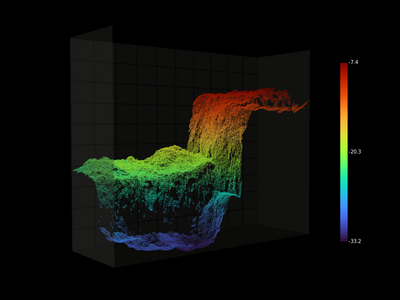
Mounted discreetly above storage areas, LiDAR sensors continuously scan the surface of stored material by emitting laser pulses and measuring the time it takes for the light to return. From hundreds of thousands of these reflections, the system creates a high-resolution 3D point cloud that captures the exact shape and distribution of the material. Advanced software then translates this geometry into real-time volume data, updated continuously as waste is added or removed.
This approach eliminates the uncertainty of manual weigh-ins or visual estimates, which capture only snapshots and are prone to error. Instead, operators receive a live, reliable data stream that reflects the true state of their storage areas. Because LiDAR measurements are unaffected by dust, low light, or glare, they remain accurate in the harshest environments - waste bunkers, silos, or incineration plants - where other optical systems often fail.
Operational impact across the value chain
The shift towards precise measurement delivers benefits far beyond storage monitoring. LiDAR technology supports more reliable, data-driven decisions that directly affect efficiency, safety, and compliance across the entire waste management value chain.
Dynamic logistics
Static schedules often result in trucks being dispatched inefficiently. With real-time visibility into actual fill levels, operators can switch to demand-driven planning. Trucks are only sent when needed, reducing unnecessary journeys, fuel use, and associated emissions. This shift not only lowers operating costs but also supports sustainability targets by cutting avoidable transport activity.
Smarter inventory control
Balancing incoming deliveries with processing capacities can be challenging for waste facilities. Inaccurate volume estimates often lead to either underutilized assets or sudden bottlenecks in material flow. Continuous 3D LiDAR measurements give operators a precise, always-updated overview of their inventories. With this transparency, facilities can align logistics, processing schedules, and storage use much more effectively - improving throughput while keeping operations predictable.
Regulatory compliance
Across Europe, carbon taxation and emissions reporting obligations require operators to document incineration volumes with growing accuracy. Traditional methods often fail to meet the standards for audits or automated reporting. LiDAR provides a verifiable data trail that regulators can trust. By ensuring accurate, consistent volume data, operators reduce the risk of fines or overpayment - while simplifying compliance workflows.
Safety assurance
Waste bunkers and silos present hidden risks when irregular piles or hazardous “cornices” develop unnoticed. Manual inspections often fail to detect these instabilities early enough, creating the potential for equipment damage or workplace accidents. With 3D LiDAR, operators benefit from continuous monitoring that automatically identifies critical formations. Alerts allow timely intervention, protecting both staff and machinery while reducing unplanned downtime.
Practical application: Cireco’s real-time volume monitoring
A concrete example comes from Cireco, a Scottish waste recovery company. Previously, the facility relied on vehicle scales and rough visual estimates to gauge material volumes, which often led to planning inaccuracies and underutilized storage space. By installing Blickfeld’s QbVolume – high performance 3D LiDAR sensors - Cireco now continuously generates high-resolution 3D data of all storage areas. This allows operators to calculate volumes in real time, optimize plant scheduling, and improve throughput planning. According to the company, the system has enhanced logistics efficiency, internal planning, and billing accuracy, demonstrating the tangible operational benefits of moving from estimation to precise, data-driven monitoring.
A strategic investment for resilience
The waste and recycling sector is not just managing material anymore - it is managing data. In this context, LiDAR has become a strategic enabler. It gives operators a single, trustworthy data layer that supports daily decision-making, long-term planning, and transparent reporting.
Unlike one-off measurement tools, LiDAR provides continuous real-time view of their material inventories. That capability makes facilities more resilient against volatile material streams, stricter oversight, and the constant pressure to increase efficiency while reducing environmental impact.
Looking ahead
Digital transformation in waste management is no longer a distant prospect; it is happening now. LiDAR technology can be a key component of this shift, offering a way to replace guesswork with certainty. For operators, the decision is less about adopting a new sensor and more about embracing a data-driven operating model that strengthens efficiency, safety, and sustainability.
In an industry where every ton counts - whether for revenue, compliance, or environmental responsibility – 3D LiDAR delivers more than measurements. It delivers clarity, control, and confidence for the future of waste management.
In cooperation with Blickfeld.