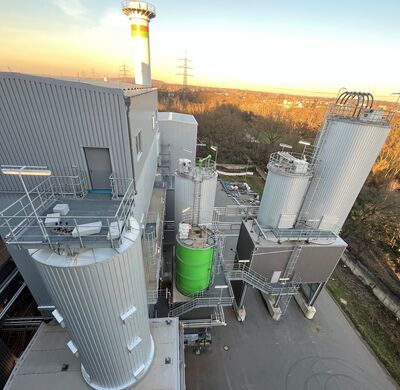
Energy from Waste : Dinslaken Wood Energy Centre: Sustainable heat from wood waste
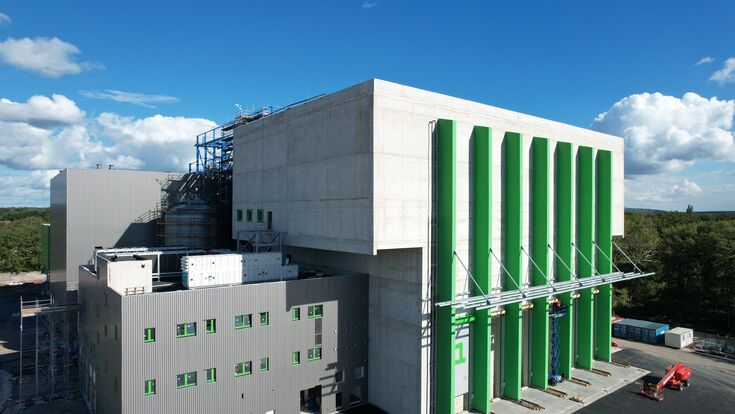
Dinslaken is a city in the Lower Rhine metropolitan region, which is one of the most densely populated areas in Germany. The people in this region can rely on Fernwärme Niederrhein GmbH (FN) and Fernwärmeverbund Niederrhein Duisburg/Dinslaken GmbH & Co. KG (FVN), associated companies of Stadtwerke Dinslaken GmbH, to keep them warm with an interconnected district heating network. Around 900 million kilowatt hours of heat energy are provided within the network each year, which has a length of over 700 kilometres. This makes FN one of the largest district heating suppliers in Germany.
Driven by the need to replace the local Walsum 9 coal-fired power station, which had reached the end of its life and was scheduled for decommissioning from 2021 onwards, as well as the strong desire to become more sustainable and focus on climate-friendly energy supply, the company decided to build the Dinslakener Holzenergiezentrum (DHE, Dinslaken Wood Energy Centre). By burning waste wood, the DHE uses biomass to generate electricity and heat, thereby reducing CO₂ emissions and replacing fossil fuels.
Doosan Lentjes, with its wide range of in-house incineration, steam generation and flue gas cleaning technologies, was closely involved in the detailed design discussions and was subsequently awarded the contract to deliver key components of the plant. The scope of supply included the fuel storage and transport (crane systems), the combustion and boiler systems, flue gas cleaning (Circoclean® & SCR), the stack and the EI&C systems.
- Customer: DHE (Dinslakener Holz-Energiezentrum)
- Plant location: Dinslaken, Germany
- Contract awarded in 2020
- Fuel: Waste wood (class I-III)
- Total plant capacity: 257,000 t/a
- Number of lines: 2
- Combustion heat output: 2 x 49.5 MWth
- Steam parameters: 405°C / 42 bar
- Calorific value (nom.): 14.4 MJ/kg
Handling a inhomogenous waste wood mix
Building a waste wood incineration plant is a highly individualised process that responds to complex and specific project requirements. The specialists at Doosan Lentjes are used to finding the best possible solutions for each client. In this case, the challenges were exceptional, as Philipp Stolzenburg, Director Sales & Proposals at Doosan Lentjes, explains: “One of the major challenges in designing the Dinslaken plant was handling the highly inhomogeneous waste wood fuel mix, which is characterised by varying particle sizes, foreign materials and a high proportion of fine particles.” The client additionally specified a compact layout along with stringent availability and reliability requirements. A conventional wood-firing system does not fulfil these requirements. The design of the DHE plant was therefore based on waste-to-energy technology. “To address these challenges, we have customised our existing sophisticated combustion system, optimised by means of advanced CFD simulations,” Gerald Pichler, Product Manager Waste-to-Energy at Doosan Lentjes, elaborates. “A key feature of this design is the controlled, staged combustion process using recirculation gas. As an initial step, recirculated flue gas is blended with combustion air to provide the grate with primary combustion gas that has a lower oxygen content. Furthermore, the system includes carefully positioned and dimensioned nozzles in the front and side walls of the combustion chamber and in the transition to the first boiler pass, ensuring precise control of the incineration temperatures. This design enables stable operation across a wide load range, reduces the risk of backfire, and ensures complete burn-out even with varying fuel compositions.”
Two combustion lines
The DHE is set to cover the base load of the heat demand within the integrated district heating network and balance out existing fluctuations from other heat suppliers. To ensure a reliable supply of district heating, Doosan Lentjes installed two combustion lines. “The two-line configuration offers redundancy and greater flexibility for plant operation with respect to district heating needs and scheduled maintenance work,” explains Philipp Stolzenburg.
The basic idea behind the design of the DHE was to use recovery options that make the best possible use of energy during operation, while reducing both primary energy use and CO₂ emissions. Simultaneously generating electricity and heat significantly increases energy utilisation efficiency.
To cover the demand for district heating in the daily load profile, a flexibly controllable heat extraction system is required. This was achieved by installing two parallel combustion lines, each equipped with different turbines, feeding the different district heating temperature networks.
Full compliance with emission limits
As with all combustion plants, the minimisation of emissions is an important factor. “In order to meet the strict emission limits of the revised BREF standards, a robust and advanced flue gas cleaning system was required,” Gerald Pichler elaborates. “Consequently, we have installed a multi-stage cleaning solution at the Dinslaken plant, comprising our proprietary Circoclean® system for the effective removal of acid gases, a fabric filter for dust separation and a selective catalytic reduction (SCR) system for NOx reduction. This combination ensures full compliance with all applicable emission limits without the need for an additional wet scrubber. The integration of an external economiser for optimised heat recovery ensures maximum efficiency and environmental friendliness.”
The Dinslaken Wood Energy Centre started its continuous operations back in September 2024. With this new plant, Stadtwerke Dinslaken will save 125,000 tonnes of CO2 annually by switching to renewable energies and abandoning fossil fuels – with the help of one of the leading companies in environmental technology.
In cooperation with Doosan Lentjes.