
Tyre Recycling Reimagined : How advanced innovation is driving circularity in the waste industry

Tyre recycling is no easy feat. Globally, end-of-life tyre (ELT) generation has surged from approximately 13.5 million tonnes in 2020 to an estimated 17 million tonnes in 2023, reflecting a rapid increase in global vehicle use and tyre consumption. Yet despite growing volumes, material recovery remains underdeveloped. In 2020, only about 50% of ELTs were processed into new materials – such as rubber-modified asphalt, moulded products or artificial turf infill – while the rest were used for energy recovery or ended up in landfills. More recent data from 2023 shows some progress in regions like the U.S., where 79% of scrap tyres are now recovered, though that figure includes both material and energy recovery. This disparity underscores the need for more advanced recycling technologies, particularly for challenging waste streams like off-the-road (OTR) tyres.
These tyres are non-biodegradable, flammable and can harbour disease-carrying pests like mosquitoes. Their bulky, heavy structure – especially in the case of OTR tyres used in mining and agriculture – makes them difficult to collect, transport and process.
“Managing waste streams is never straightforward, and some materials present more significant challenges than others,” notes Carsten Nielsen, Pacific Area Sales Manager for Eldan Recycling. “OTR tyres are a prime example.”
Reinventing recycling
Eldan Recycling is answering the call with innovation. With roots dating back to 1956, this Danish manufacturer specialises in state-of-the-art recycling equipment. Eldan’s systems can process everything from passenger car tyres to giant OTR tyres – up to four metres tall and weighing several tonnes – into high-purity rubber granules, clean steel and textile fractions.
Their modular recycling plants scale to different production capacities, from 500 to 20,000 kg per hour, while maintaining output purity as high as 99.99% for rubber and 98% for steel.
A recent collaboration in Australia, involving an Italian partner for tyre pre-cutting, showcases Eldan’s strengths. “The Italian company performs the initial pre-cutting, breaking down tyres into chunks weighing between 100 and 150 kilograms,” Nielsen explains. “Our machinery then processes those chunks further into smaller, manageable pieces.”

Unlocking the value in waste
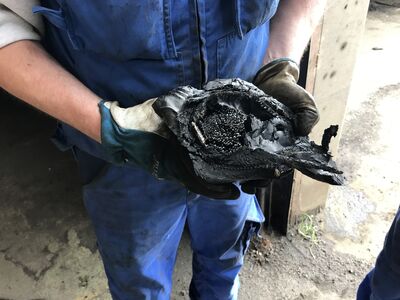
Circularity means more than just recycling – it’s about closing loops and recapturing material value. Tyres contain not only rubber but also high-grade steel, which, if extracted with precision, can generate significant revenue. Eldan’s technology delivers cleaned steel ready for resale at up to USD 300 per tonne, reducing emissions and adding economic value to the recycling stream.
“Cleaner steel not only reduces emissions during processing but also fetches a better market price,” Nielsen says. “Our equipment ensures clients can get the most out of their recycled materials.”
The company’s two-stage recycling process – starting with pre-cutting and moving through advanced separation using raspers, magnets, vibratory screens and air-stream textile removal – ensures high-quality results, even for export-grade specifications.
Tailored solutions for unique problems
Eldan’s strength lies not only in the robustness of its machines but also in its collaborative approach to designing custom recycling lines. “Nearly everything is custom-designed and built in-house,” says Nielsen, pointing to a facility in Western Australia that began operations last November.
That site, which has already produced over 600 kg of rubber granules, was developed to meet strict space and environmental constraints. It can manufacture tyre-derived fuel (TDF), rubber granules and fine powders used in infrastructure projects like road construction.
“We had to optimise the facility layout, reduce the equipment footprint and determine the best tyre storage solutions,” Nielsen notes
Reliability and global support
Advanced recycling systems require more than innovation – they need reliability. Eldan supports its clients with remote monitoring, responsive service and performance-guaranteed contracts. Their machines have operated across Australia for nearly two decades, often through multiple relocations.
“Our machines have operated in Australia for nearly 20 years, even through relocations,” Nielsen shares. “We offer contracts that guarantee performance – covering tonnage, purity and maintenance.”
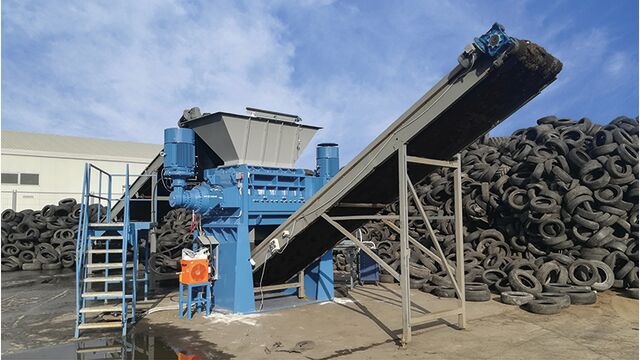
Eldan’s systems, like the Super Chopper, can process everything from passenger car tyres to giant OTR tyres.
- © Eldan RecyclingA circular future made real
Eldan Recycling is leading the way in converting tyre waste from a global burden into a sustainable resource. Through innovation, collaboration and dedication to excellence, the company exemplifies how advanced recycling solutions can drive circularity and redefine waste management.
As industries seek to solve some of their most complex material challenges, Eldan stands as a benchmark for what’s possible – where even the world’s largest tyres find new life through cutting-edge technology.
In cooperation with Eldan Recycling.