The European Bin2Bean project : From biowaste to compost – a difficult path?
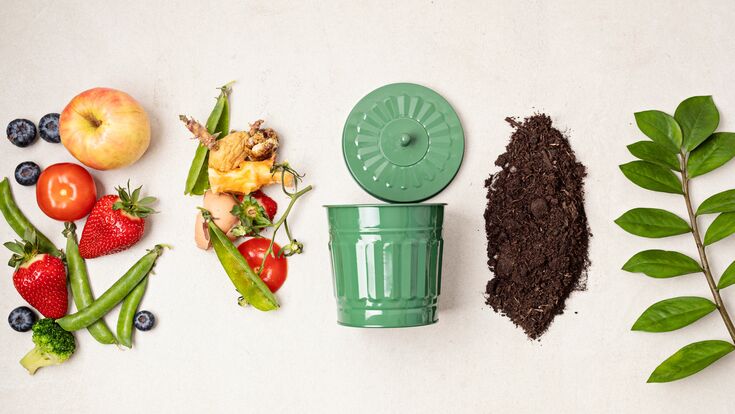
Anyone who has ever composted food waste, garden waste and autumn leaves knows that this is a labour-intensive and time-consuming process. Moreover, you can only get good compost as a soil conditioner if you don't mix in any other waste. These simple insights also apply to the industrial manufacture of products from bio-waste:
- Both aerobic and anaerobic processes require space and time. Microorganisms must find ideal living conditions in order to produce usable compost and – in the case of fermentation – as much methane as possible (as a component of the biogas).
- Unsuitable quality input material makes the biochemical process more difficult, while impurities lead to unusable compost.
Around 71 million tonnes of kitchen and garden waste are currently collected and treated separately in the EU (2017, including the UK)1. In order to achieve a recycling rate of 65% for municipal waste, as prescribed by the EU in the 2018 Waste Framework Directive, around an additional 40 million tonnes would have to be separated by waste producers and processed aerobically or additionally anaerobically2. The Bin2Bean project3 is therefore addressing a number of challenges that lie ahead in achieving this target:

- The necessary bins for separate collection of bio-waste are often difficult to place in densely populated residential areas and need to be emptied frequently in hot weather to avoid hygiene problems.
- People need to be motivated to collect organic and green waste separately – they spend time on pre-sorting and walk extra distances to the organic waste bin.
- The proportion of impurities, especially plastic waste, in organic waste containers is sometimes very high and hampers or prevents the subsequent application of the product.
- Compost from bio-waste is met with reservations even if it is of very good quality; its marketability as a ‘soil improver’4 is only possible if numerous quality characteristics and limit values are met.
>>> Biowaste collection and valorisation: Problems and solutions
Achieving the target would not only result in more waste being sensibly utilised. Soils in the EU are highly endangered by erosion or are over-fertilised; their humus content is often insufficient. According to the Agri-Soil Mission Board, an advisory body to the EU Commission on soil protection issues, around 75% of all soils in the EU fail at least one quality criterion for healthy soil5. Soil improvers such as bio-waste composts are therefore intended to help achieve further agricultural and climate policy goals:
- Due to their humus content, composts strengthen the resilience of soils against erosion and increase their ability to store rainwater.
- Composts increase the available nutrient content to improve harvests.
- In the case of anaerobic treatment, biogas is also produced, which, after purification, can be used to power vehicles as a substitute for natural gas or for district heating.
- The incorporation of compost stores carbon in the soil. This carbon sequestration currently binds around 1.2 million tonnes of CO2 in soil per year1 in the EU.
Objectives of the Bin2Bean project
Bin2Bean aims to help cities in the EU achieve the targets for healthy soils through their regeneration. It therefore makes sense to promote the utilisation of bio-waste as a soil improver through innovative and economically interesting value chains2. The project is not about groundbreaking new findings, but about optimising several steps in the value chain (see Figure 1) in the respective region:
- Maintaining or increasing the quality of collected organic waste in the long term while increasing collection volumes.
- Raising public awareness of the need to separate bio-waste and the importance of healthy soils.
- Utilisation of compost produced from organic waste through suitable business models.
Creation of an assessment scheme for the entire value chain as a tool for local decision-makers to set up or optimise their system from bio- and green waste to a suitable compost-based soil improver.
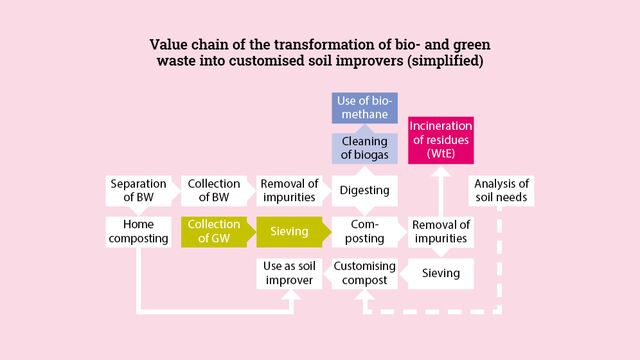
Figure 1: Value chain of the transformation of bio- and green waste into customised soil-improvers (simplified)
- © Henning FriegeEleven partners from seven EU countries have joined forces to investigate these complex issues. (Table 1).
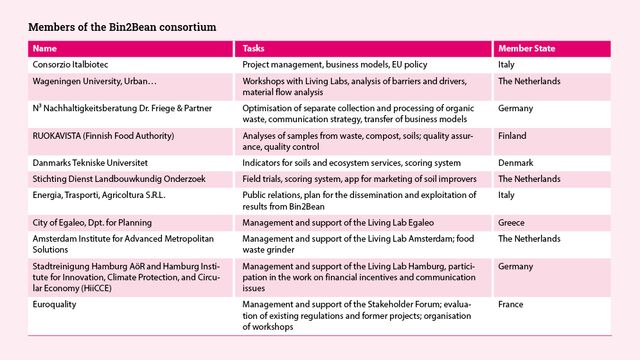
Table 1: Members of the Bin2Bean consortium
- © Henning FriegeTasks in the Living Labs
In order to realise these goals with a view to their practical feasibility, the project established three Living Labs in the cities of Hamburg, Amsterdam and Egaleo near Athens. In a Living Lab, the development and application of new products, services and system solutions are co-designed in real environments with users and relevant stakeholders. All three cities are characterised by a very high population density. The Living Labs (LLs) are supervised by local partners, e.g. Stadtreinigung Hamburg, and consist of local stakeholders along the value chain, i.e. interested private and commercial waste producers, teachers, environmental initiatives, representatives of agriculture or horticulture, scientists from regional institutions and, of course, experts from the waste management sector and bio-waste processing plants6. The Bin2Bean team prepares material flow analyses (MFA) for the LLs, among other things. The system boundary is the respective city. The material flow begins with the supply and consumption of food and ends with the products made from unavoidable leftovers, whereby the nutrient content is recorded as far as possible.
LL Amsterdam: Innovative research into food waste grinders starts
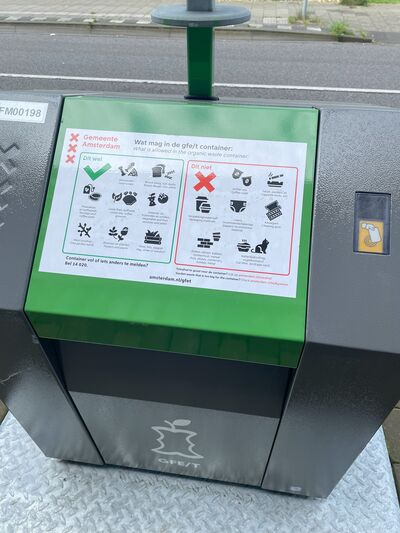
Commissioned by the municipalities of Rotterdam, Amsterdam, Utrecht, The Hague, Haarlem and Rijkswaterstaat, the AMS Institute in Amsterdam is conducting research into the use of food waste grinders for new construction. On 11 December 2024, a test setup was put into use to answer various research questions focused on the practical application of food waste grinders in construction projects and their use.
With a food waste grinder, food waste can be separated from residual waste by a disposal system underneath the sink. This makes separating vegetable, fruit and food waste a lot easier than with a regular collection container in public spaces. This technique has been used in many countries for years, usually discharging it into the sewer. Because good separation of organic waste can make a major contribution to the goals for waste separation and recycling, the AMS Institute is investigating how a grinder system can work in European cities. The ground food waste is collected via pipes and can then be fermented for biogas, processed into compost/soil improver or processed as a chemical feedstock.
Furthermore, the project team analyses the respective status of bio-waste recycling and discusses possible optimisations in collection systems, fee structures, communication and process technology with the LLs.
One sub-project is dedicated to the question of whether the grinding of kitchen waste and its removal in a separate collection system (food waste grinder) could be an ecologically sensitive alternative to organic waste bins for the collection of organic waste in high-rise buildings.
LL Egaleo: Extensive educational programmes
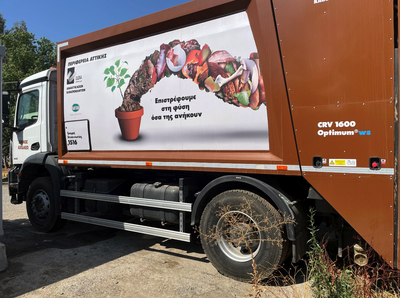
The City of Egaleo is part of the metropolitan area of Athens – a very densely populated area with 65,000 inhabitants in an area covering 6.5 square kilometres. A first attempt to install a city-wide organic waste collection in 2019/2020 failed due to massively spoiled bio-waste in the bins. The COVID-19 lockdowns made necessary communication considerably more difficult. The new approach started in 2025 as part of the Bin2Bean project covers restaurants and supermarkets as well as an increasing number of households (400 bins distributed by the end of April) that are interested in waste separation. The collection of organic waste – four times per week – is to be rolled out gradually throughout the city.
A school composting educational programme called “Bio-waste, a treasure for the earth” was launched in April 2025. The campaign aims to increase public awareness for the new collection system. Children are expected to bring kitchen waste to school and return with the message of how organic waste is made usable. Twelve local schools will participate. The educational material is provided by the City’s Department of Green and Public Spaces together with the Department of Planning and Development. Students as well as teaching staff were educated in the concept of bio-waste and its recycling process including the correct use of bio bins. The schools participating in the programme have already been provided with a composting device that will be assembled together with students and teaching staff in the yard of each school. The three schools that produce the best compost based on specific testing procedures will receive a reward.
There are still some reservations regarding the use of soil improvers made from waste in agriculture. High quality and quality control systems are therefore a top priority in order to ensure the marketability of composts. To prevent plastic waste from being carried over to the soil via bio-waste, the EU has set strict limits for the finished compost. Germany is currently introducing additional limits for the contamination of the bio-waste itself, which will be checked at the entrance to the plants from now on.
Furthermore, the project aims to create new opportunities: Adapting the products to regional requirements could open up business models for compost as a soil improver, e.g. in the area of growing media or as a peat substitute. To this end, the team includes microbiologists, biochemists and agricultural scientists who deal with the processing methods and their influence on the composts, as well as economists who look at potential business models. Fortunately, numerous composts from bio-waste have already achieved certification for use in organic farming7.
LL Hamburg: Improving the quality of bio-waste in underground containers
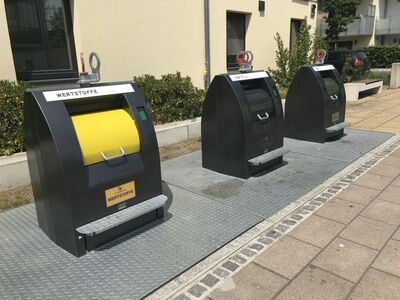
The City of Hamburg introduced the separate collection of organic waste back in 1994. Since 2011, separation of bio-waste is mandatory. At present, almost 158,000 bio bins including around 200 underground bins. are used for the collection of organic waste, covering 71% of all private households. The organic waste is transported to the Bützberg facility (owned and operated by Stadtreinigung Hamburg - SRH), which combines anaerobic and aerobic processing steps. The compost meets the requirements for organic farming and is sold to farmers, public entities and private gardeners.
Therefore, ensuring the high quality of the organic waste used as input material is SRH’s top priority. The extension of the bio-waste collection into high-rise areas leads to increasing impurities: Due to the anonymity of users, there is a lack of perceived behavioural control. Therefore, people are less careful about separating their waste.
The LL focuses on two collection routes covering around 80 bio-waste underground bins. The aim is to improve the quality of collected bio-waste to achieve a suitable input material for the anaerobic and aerobic process. Furthermore, the compost is to be returned to residential areas to increase local urban gardening. The LL started its work in November 2023. To get janitors on board and to address all tenants, the owners of residential complexes, i.e. large housing companies, are involved. SRH organised surveys among the stakeholders (which will in future also include tenants) to agree on targeted approaches to logistics and communication. Flyers and stickers as well as small bins for pre-collection in the kitchen were distributed at the same time. The LL will review three potential options. The aim is to introduce social norms to improve waste separation at source that have a lasting effect. Moreover, there will be more convenient technical equipment, such as organic bag dispensers that are attached to the containers.
Status at the halfway point
The project started in September 2023 and will be completed at the end of August 2026. The results will be published, and partial outcomes such as the small handbook ‘From Bio-Waste to Soil’ can already be downloaded from the project website3.
All stages of the value chain in the three LLs have already been recorded and documented; initial proposals for optimisation have been developed in the continuous dialogue between the experts and the LLs. Improvements in communication about the role of bio-waste for soil and climate protection are currently under discussion. A decision matrix (scoring) is being developed from the experience gained with the LLs to help cities organise their systems from the collection of organic waste to its use as a soil improver. Some findings are already emerging at the halfway point:
- Quality is key along the entire value chain.
- In terms of quality, the allocation of separately collected bio-waste to one or a few households is the best option because anonymity increases contamination. In large housing estates, households should only be able to use the bio-waste containers with individual chip cards or similar in order to avoid major contamination. Support from the owners (housing association) or their employees (caretakers, etc.) is useful and necessary.
- The communication strategy for separate bio-waste collection must take into account extrinsic and intrinsic motivations as well as questions of the manageability of the system for the individual. The satisfaction of waste producers with already established collection systems plays a major role in the acceptance of bio bins.
- Paying more attention to the needs of soils will improve understanding for the separation of the organic fraction and also increase acceptance of composts.
- Sorting of bio-waste should be incentivised by financial instruments. The Waste Framework Directive stipulates that waste producers bear the costs of waste management. Flat-rate charges or financing the collection and treatment of municipal waste from taxes are unfortunately still widespread in Europe. Switching to charges that honour the success of separation of food and green waste requires far more political support by city councils.
- Information on soil health – such as the lack of nutrients and humus as well as existing pollution – is now available for the entire EU via the European Soil Observatory8. This is an opportunity to set the course for ‘customised’ soil improvers from compost at an early stage.
- The separation of pollutants and interfering materials from bio-waste through suitable pre-treatment and post-treatment of the compost is quite efficient in technically advanced plants and can be transferred to other installations. Nevertheless, impurities of more than a few per cent cannot be completely removed.
- The scoring system for the best possible utilisation of the compost is currently being developed. It will take into account the qualities and properties of the waste and compost in order to be able to use compost in a targeted manner to improve soil properties (e.g. nutrient and humus content) and develop business models based on this.
The EU regulations for bio-waste, fertilisers, composts and soil improvers as well as the respective national frameworks in the three LLs will be examined at the end of the project in order to identify any problems arising from the legal framework.
Bibliography
[1] EEA (2020): Bio-waste in Europe – turning challenges into opportunities, EEA Report 04/2020; ISBN 978-92-9480-223-1
[2] ECN (2023): ECN Status Report 2022; https://www.compostnetwork.info/wordpress/wp-content/uploads/ECN-rapport-2022.pdf
[3] BIN2BEAN – Boosting the market deployment of safe, effective and sustainable innovations for soil improvement from bio-waste, towards regenerative soil systems; Horizon-MISS-2022-SOIL-01-10; https://www.bin2bean.eu/
[4] EU Fertilising Products Regulation 2019/1009 (FPR). Soil improvers are defined under PFC 3 in the Annex.
[5] Veerman, C., Pinto Correia, T., Bastioli, C., et al. (2020): Caring for soil is caring for life. (Ed.: EU Publications Office); https://data.europa.eu/doi/10.2777/821504
[6] Living Labs Tool Box, see https://www.bin2bean.eu/wp-content/uploads/2024/10/BIN2BEAN-Living-Lab-Toolbox.pdf
[7] N. Zöller, R. Gottschall, C. Bruns, M. Kanzler, T. von der Saal (2024): Qualität, Eignung und Mengenpotentiale von Biogut- und Grüngutkomposten für den Ökolandbau, DLG Feldtage, 12./13.06.2024;
https://noek-hessen.de/wp-content/uploads/ProBio-DLG_24_Vortrag-NZ_NZHK-end_11.06.2024.pdf
[8] European Soil Data Center, EU Soil Observatory; https://esdac.jrc.ec.europa.eu/euso