
Riverine pollution : Turning pollution into the solution
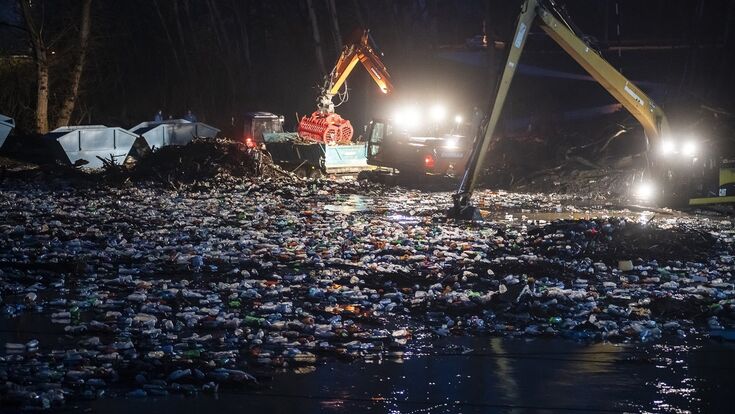
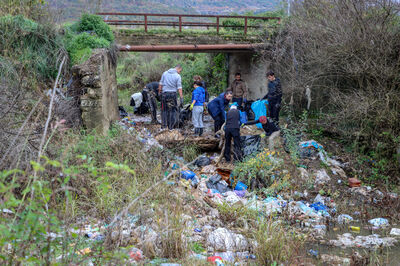
Until the morning of 7 February, 2021, water management staff removed a total of 1200 cubic meters of floatage, including 120 cubic meters of inorganic matter (plastic, tyres, communal waste).
- © MTI/Attila BalázsAs global waste generation accelerates, recycling systems are increasingly struggling to keep pace with both material complexity and sheer volume, while our natural resources are being degraded. Despite the UN Plastic Treaty addressing this issue, no significant progress has been made; plastic waste generation is increasing worldwide, and current recycling systems are insufficient to handle the growing volume. The mismanagement of plastic waste has led to severe environmental consequences, including marine plastic pollution and microplastic contamination in food and water supplies. Over 80% of marine litter originates from land-based sources, including mismanaged waste, stormwater runoff and improper disposal.
We risk compromising natural habitats and their biodiversity, as well as water quality, because plastic-associated invasive or pathogenic species can be transported to protected areas on their surfaces. When waste enters natural water bodies, most (70%) sinks to the bottom, while the remainder either washes ashore (15%) or drifts in the water column. This suggests that clean-up operations around the world are only “scratching the surface of a melting iceberg”.
All of this is often perceived as a distant problem, documented in widely circulated images from Asia or Africa, but it is now emerging with comparable intensity in Central-Eastern and South-Eastern Europe. Rivers, floodplains and high-value natural areas across the region are receiving significant volumes of mismanaged communal waste, exposing structural gaps in collection systems, extended producer responsibility (EPR) performance and cross-border governance. Without systemic intervention, environmental leakage will continue to scale with consumption patterns, turning riverine waste from a local operational issue into a basin-level material-flow challenge with economic, regulatory and reputational consequences for the waste management sector.
An international task
The Danube River Basin, Europe’s most international river system, connects 19 countries and transports significant volumes of land-based plastic leakage towards the Black Sea. The blue ribbon of Europe carries an estimated 1,500 tonnes of plastic waste annually. The Tisza, the Danube's longest tributary, carries a heavy load of riverine waste, the exact tonnage being hard to estimate. According to basin-level policy guidance and citizen science data, more than 3,500 plastic-polluted sites have been identified along Tisza's floodplain and approximately 1,665 tonnes of riverine litter have accumulated in the Tisza basin, shared by five countries. The main upstream countries are Ukraine (8% of the basin territory) and Romania (46% of the basin territory). These regions face distinct waste management challenges, including inadequate waste collection, leakage from informal treatment and disposal, and open burning at dumpsites. In Ukraine’s Zakarpattia region, waste collection and transport are non-existent in about 196 municipalities, amounting to at least 10,000 tonnes of untreated waste per year. As a result, during flood events, significant volumes of accumulated plastic and other waste float across the borders and pollute Natura 2000-protected areas on the floodplains. Historically, downstream countries, such as Hungary in this case, have borne the operational burden of removal. The Russian invasion of Ukraine has made an already dire situation worse in the region. Waste management companies are struggling more than ever due to electricity blackouts, a shortage of workers and unstable waste markets.
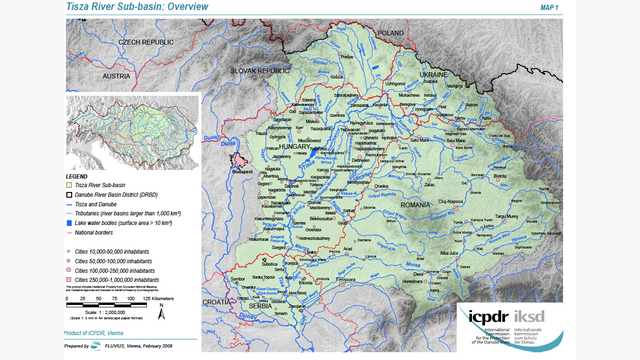
Tisza river sub-basin overview
- © www.icpdr.orgCross-sectoral symbiosis: Pirates of the roundtable
In this case, we are not pointing fingers; rather, we are inviting everyone to help solve this complex issue. Ministries, authorities, municipalities, NGOs, researchers, water and waste operators across borders are joining forces. It all started with the Tisza roundtables a decade ago, followed by co-creation workshops in several countries. One of the main advances is the symbiotic cooperation that has developed between Hungarian water management and Plastic Cup Society, which is rare in the region. Thanks to this co-creation, basin-wide monitoring, joint data-collection and research activities establish shared baselines, while clean-up actions and environmental education are raising awareness in the region. In geopolitically sensitive contexts, environmental cooperation also serves as stabilising diplomacy, ensuring continuity of operational collaboration and providing niche information to river management plans and key stakeholders, such as ICPDR and UNEP.
Plastic Cup Society
Plastic Cup Society recognised the issue 13 years ago, and since then, this small NGO in Hungary has come up with an experimental idea and turned volunteers into so-called plastic pirates across the Tisza and the Danube basins. As the most international river basin, it has made cross-border cooperation its “signature move”. From trash-boat races and roundtable discussions to co-creation policy workshops, they managed to invite all stakeholders to the same table. 465,000 kilograms of riverine waste have been collected, and 50% has been kept in the circular loop – thanks to water and waste management actors.
There is no roundtable without the Holy Grail
After 13 years of fighting against river pollution, every milestone, every key finding pointed in the same direction. If we can educate individuals about the importance of rivers in their lives and the effects of human activity on these vital resources, we can prevent further pollution. Globally, more people live near rivers than by the ocean. Furthermore, believe it or not, the length of the riverbanks (~15 million km) exceeds that of marine coastlines (356,000 km), so adapting the ocean literacy principles into river literacy principles seemed to be a game-changer. The primary goal of each principle is to encourage people to develop an interest in rivers, spend more time outdoors – particularly near waterways, connect with their local rivers, and enhance their understanding of water-related issues. To meet these goals, we adopted the well-known Ocean Literacy principles into the River Literacy educational framework. The River Literacy framework consists of seven guiding principles:
- Everything that happens to the river affects the ocean.
- The lives of rivers and people are closely connected.
- Every river is vulnerable and deserves protection.
- The river gives life, but it can also take it away.
- The river is a shared heritage, not a commodity.
- The river and life in the river shape the landscape, the weather and the climate.
- The river and its creatures are largely unexplored.
Discover the concept paper behind the River Literacy concept in detail.
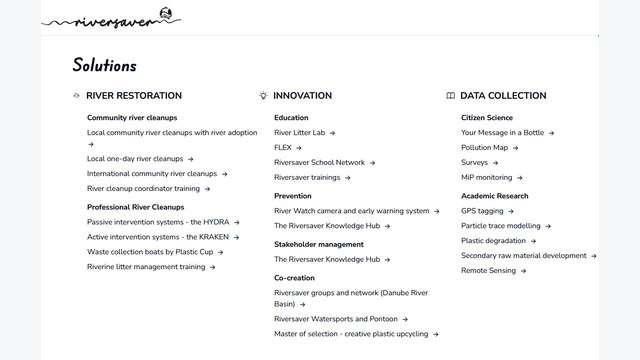
Alongside the dissemination of the principles, we turn the existing pollution into a solution: Plastic Cup Society and its Europe-wide network established the Riversaver Platform to collect and share best practices and useful guidance. The Riversaver contributes to river restoration through large-scale clean-ups and waste-removal initiatives, where volunteers, scientists and local communities work together to collect and analyse plastic pollution from rivers. Data collection and research are a crucial component of the platform, combining citizen science and academic research to document and analyse river pollution. And if that's not enough, we can top it all up with educational methodologies, such as the Riversaver School Network, or with preventive innovations like the “River Watch Camera and early-warning system”.
Action upstream – a preventive solution downstream
Infrastructure improvements and awareness-raising at upstream collection points reduce leakage before flood mobilisation. Preventing leakage reduces downstream clean-up expenditure, protects natural treasures, hydropower and navigation infrastructure, and strengthens transboundary cooperation. To enhance this upstream action, our Aquatic Plastic project’s experts have developed an Action Plan for Authorities to prevent infiltration into rivers from high-risk waste-leakage points. Following this guidance, decision-makers who are tackling waste management challenges can take effective steps to improve infrastructure and law enforcement, use early warning systems and risk mapping, and ensure data collection on polluted sites and leakage points. The Action Plan also includes proposals for mobilising resources (financial and human) for prevention and enforcement.
The Call-Action Project
The Call-Action project, funded by Diageo, has aimed to support separate waste collection and improve waste management in Transcarpathia, Ukraine, since 2022. This initiative, managed by Plastic Cup, seeks to improve the conditions of at least 120,000 people living along the Tisza by bringing tonnes of valuable sorted waste back into the recycling loop and creating employment opportunities in the region. The project partners have collected more than 2,200 tonnes of waste and improved their infrastructure with forklifts, garbage trucks, baling machines and large-size carriers. The initiative has increased waste collection capacity in Uzhhorod and Berehove and established remote collection points in the surrounding region. Education, monitoring and clean-up actions are also implemented by the project: https://callaction.com.ua/en

From pollution to certified secondary raw material
River clean-up projects and initiatives often struggle with the economic sustainability and technical difficulties of joining to the circular economy. The Aquatic Plastic project addresses this by developing strict on-site sorting protocols and forming downstream recycling pathways. Recovered fractions are separated into PET, PE, PP, metal and glass (depending on the demands of recyclers), enabling reintegration into industrial recycling streams where quality allows. A particularly promising current initiative is making steps towards getting Ocean Bound Plastic Certification on the collected plastic waste, providing proof of origin. For brands and converters facing increasing scrutiny over green claims, certified riverine plastic offers a good solution, backed by documented collection and processing data. For NGOs, building up similar management systems can also serve as an evidence-based proof of origin.
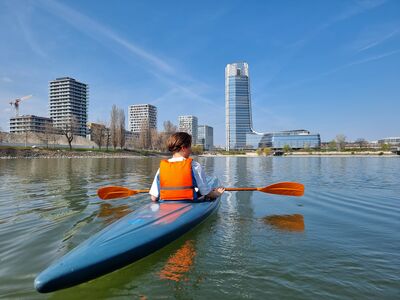
The production of a recycled plastic kayak from riverine waste by Plastic Cup Society serves as a symbolic but technically credible and tangible demonstration. It illustrates that even highly dispersed pollution can be transformed (although with considerable work demand) into durable, high-value products if the traceability, quality control and stakeholder cooperation are in place.
The tide is turning
Riverine waste management (or rather sustainable river basin management) requires alignment between regulators, operators, producers and civil society. The Plastic Cup Society framework operationalises a Quadruple Helix cooperation model in which public authorities define regulatory conditions, academia provides monitoring expertise, civil society mobilises awareness and industry ensures processing capacity. And these actors meet on a yearly basis to share experience and ideas in person.
The tide is turning. There are clear signs that the mindset is shifting at the highest levels as well. Hungary’s recent shift from the “drain fast” to the “Water to the Landscape” concept breaks with nearly 200 years of tradition and practice, showing a promising climate‑adaptive mindset. This builds evidence that water retention reduces drought risk and heat stress while protecting ecological status. We need this mindset shift in waste management as well!
The aim is to replicate the Transcarpathian upstream-downstream cooperation model and the Riversaver solutions in other river systems as well.
Would you like to join?
Sign the Danube Declaration or meet us at our events:
- Danube Declaration:
- Aquatic Plastic Summit: 28 May 2026; Budapest, Hungary
- Plastic Cup trash-boat races on Tisza and Bodrog rivers
- ENVIRONTEC powered ÖKOINDUSTRIA Trade Exhibition: 7–9 October 2026; Budapest, Hungary
- Landfill conference: 8 October 2026; side event of the ENVIRONTEC powered by ÖKOINDUSTRIA Trade Exhibition
Support to save rivers