
Energy from Waste : Bahia's Coastal Revolution—Closing Open Dumps for Renewable Energy Plants
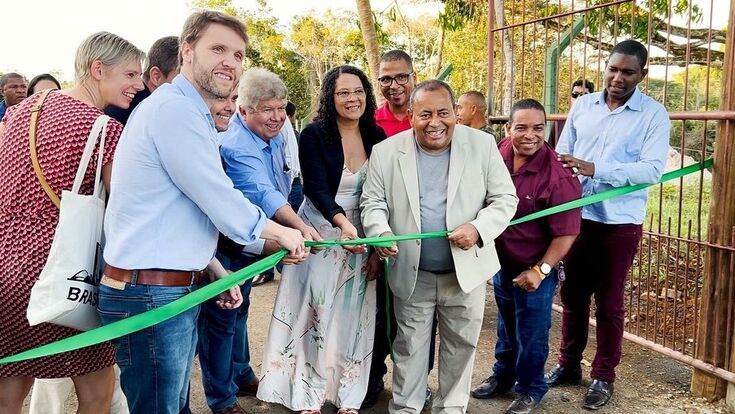
In Bahia, a groundbreaking initiative under the ISWA (International Solid Waste Association) global program, led by ABREMA (Brazilian Waste and Environment Association, Brazil ISWA national member) is transforming waste management by shutting down coastal dumps and replacing them with modern landfills that produce biomethane
- © ABREMABrazil's coastline is a treasure of biodiversity and economic activity, yet it is also home to some of the country's most problematic open dumps. In Bahia, a groundbreaking initiative under the ISWA (International Solid Waste Association) global program, led by ABREMA (Brazilian Waste and Environment Association, Brazil ISWA national member) is transforming waste management by shutting down coastal dumps and replacing them with modern landfills that produce biomethane—a clean, renewable energy source. This shift not only protects fragile ecosystems but also turns waste into a valuable resource, driving economic growth and sustainability.
The dual crisis
Coastal communities face mounting challenges from traditional waste disposal. Open dumps release harmful methane emissions while allowing plastic waste to infiltrate marine ecosystems. This combination threatens public health, damages tourism economies, and endangers marine biodiversity. The concentration of plastic waste in coastal areas creates a particularly urgent need for intervention
The coastal waste crisis: Why Bahia must act
Bahia's coastline, with its bustling cities and tourism hubs, generates massive amounts of waste. However, much of it ends up in open dumps, where uncontrolled decomposition releases methane (CH₄), a greenhouse gas 28 times more harmful than CO₂. These dumps also leach toxic chemicals into the soil and water, threatening marine life and public health.
Key challenges in coastal regions:
✔ Tourism impact — Dumps near beaches degrade scenic beauty and deter visitors.
✔ Marine pollution — Rainwater carries contaminants from dumps into the ocean.
✔ Public health risks — Open burning and pests spread diseases in nearby communities.
The program is targeting these coastal dumps first, prioritizing high-impact zones where waste mismanagement poses the greatest threat.
The solution: Modern landfills and biomethane production
In a radius of 100 km, the program aims to utilize existing engineered landfills that are capable of:
- Capturing biogas — Methane is extracted using drainage pipes.
- Purifying into biomethane — Biogas is upgraded to renewable natural gas (RNG), usable in vehicles, industries, and power plants.
- Generating electricity — Biogas can also fuel turbines, feeding clean energy into the grid.
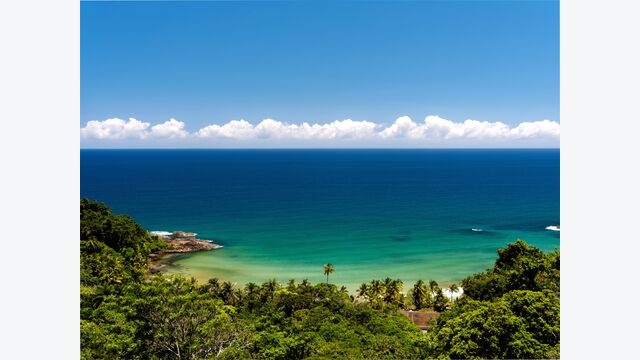
The municipality of Itacaré in Bahia successfully closed it open dump.
- © Getty Images/iStockphotoBahia's first coastal case—Itacaré
The municipality of Itacaré in Bahia successfully closed its open dump, which had received 30 tons of untreated waste daily for over 20 years. Key steps included technical support, situational awareness, community engagement, and the construction of a Sorting and Eco-Business Center to integrate waste pickers. The initiative also featured a Waste Transfer Station, selective collection implementation, and environmental education programs. Notably, 25 houses were built for waste pickers' families, funded by the Bahia state government. This project, concluded in 2022, exemplifies how it is possible to implement a program of this nature, which promotes social inclusion, environmental restoration, and sustainable waste management, transitioning from dumping to structured waste recovery.
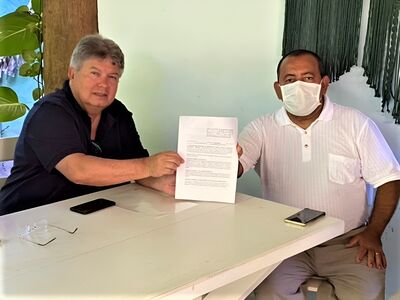
Legislative support: The Combustível do Futuro Law
A critical enabler for Bahia's waste-to-energy revolution is Brazil's Combustível do Futuro (Future Fuel) Law, sanctioned in 2023. This legislation establishes a national framework to incentivize the production and use of renewable fuels, including biomethane derived from waste. Key provisions include:
- Mandatory blending targets: The law sets gradual targets for biomethane adoption, starting at 1% in 2026 and potentially reaching 10% in the coming years. This creates a stable market for biogas producers and encourages investment in waste-to-energy infrastructure.
- Certification mechanisms: The law introduces a Certificado de Garantia de Origem de Biometano (CGOB), a tradable certificate that validates the renewable origin of biomethane. This allows producers to monetize environmental benefits while keeping costs competitive for consumers.
- Economic incentives: By integrating biomethane into the national energy matrix, the law reduces dependence on fossil fuels and aligns with Brazil's climate commitments under the Paris Agreement.
For Bahia, this legislation provides a policy backbone to scale projects like the Itacaré initiative. It ensures long-term viability for biomethane plants by creating demand and fostering public-private partnerships. It is estimated that the law could unlock investments of up to US$ 10 billion and generate 260,000 jobs by tapping into the country's vast waste-to-energy potential.
Benefits: From environmental protection to energy independence
- Climate Action — Converting waste from a pollution problem to a renewable energy solution.
- Economic Growth — New jobs in waste management, biogas plants, and clean energy.
- Energy Security — Reduces Bahia's dependence on fossil fuel gas sources.
- Tourism & Health — Cleaner beaches and reduced pollution improve quality of life.
Challenges & next steps
While the plan is ambitious, hurdles remain:
- Mayors' Commitment to a Safe Future — Engagement of city officials to close open dumps.
- Community Engagement — Ensuring waste pickers (catadores) transition to formal jobs.
- Policy Support — Laws like Combustível do Futuro must be effectively implemented to incentivize biomethane adoption.
The road ahead
If successful, Bahia's coastal model could be replicated worldwide in sensitive areas, protecting natural paradises while leading the waste-to-energy innovation revolution.
Conclusion
Bahia's initiative proves that closing open dumps isn't just about waste—it's about unlocking energy, jobs, and a cleaner future. With the backing of the Combustível do Futuro law, the state is setting a powerful example of sustainable development, turning environmental challenges into opportunities for growth and resilience. By starting on the coast, where the stakes are highest, Bahia is lighting the way for a renewable energy transformation rooted in circular economy principles.