
Waste-to-Energy : Bottom Ash Recycling in Europe: Metals, minerals, and climate benefits
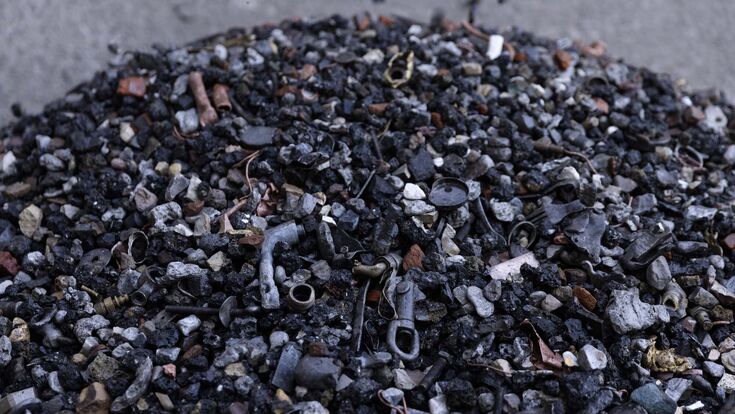
Bottom ash consists of around 80-85% mineral fraction (consisting mainly of sand- and gravel-like minerals) and 10-12% ferrous metals. The non-ferrous metals represent 2-5% of the ash, with aluminium making up about two-thirds of that. Ferrous metals, aluminium, copper and zinc can all be recycled from bottom ash, delivering significant climate and resource benefits.
- © 0477281130 mobilCould you provide an overview of how bottom ash is recycled in Europe today, and how widespread this practice is?
Both the metal and mineral fraction can be recovered from Waste-to-Energy bottom ash; however, the extent of recovery varies depending on treatment methods, local conditions, regulatory framework and established markets.
In 2022, Waste-to-Energy plants in Europe thermally treated about 100 million tonnes of residual waste, which corresponds to an estimated 20 million tonnes of incinerator bottom ash generated that year.
Metal recycling from bottom ash is a standard practice across the EU. It receives special attention at the moment due to the scarcity of metals and the focus on recovery over the extraction of virgin materials. With very effective recovery techniques in place, even metals from the fine fraction of the bottom ashes can be recycled. The economics of metal recycling also shape practice: additional treatment steps for certain non-ferrous or precious metals are only viable when stable markets exist for the recovered output, for example, when metal processors or chemical industries operate nearby.
Recovery and reuse of the mineral fraction differ considerably between Member States. Some national regulations allow the recovered mineral fraction to be used in construction: either in bound applications such as concrete products, or in unbound forms such as road base layers. Elsewhere, the mineral fraction is limited to use on landfill sites, for example, as construction layers or access ramps. In other cases, it is simply landfilled.
In general, the extent to which bottom ash is recycled depends on national legislation, local conditions, and market demands for recycled metals and recovered mineral materials.

Which materials are typically recovered from bottom ash, and what proportion of the ash can be recovered?
Bottom ash consists of around 80-85% mineral fraction (consisting mainly of sand- and gravel-like minerals) and 10-12% ferrous metals. The non-ferrous metals represent 2-5% of the ash, with aluminium making up about two-thirds of that. Ferrous metals, aluminium, copper and zinc can all be recycled from bottom ash, delivering significant climate and resource benefits.
The proportion of bottom ash that can ultimately be recovered varies across Europe. Actual recovery rates depend not only on regulatory conditions and local site characteristics but also on whether the recovered materials have stable markets. Additional treatment steps—particularly those targeting finer fractions or specific non-ferrous metals—are only viable when the expected revenues justify the cost of the equipment and processing.
For the recovered mineral fraction, practical application also requires suitable regulatory conditions and a market for secondary aggregates. Furthermore, because its economic value is low, transport and treatment costs must remain limited for recovery to be viable.
>>> Johan Böni: Why dry bottom ash treatment is the future of waste-to-energy recycling

Which EU policies have the biggest impact on IBA recycling, and how do they shape what facilities can do?
The Critical Raw Materials Act (CRMA) plays a growing role because it promotes the extraction of critical raw materials from secondary sources. Bottom ash is included in the list of waste streams with significant recovery potential, which is intended to guide Member States as they develop national circularity programmes. The Commission plans to adopt this list in 2025. While the CRMA does not impose direct obligations, it reinforces the policy case for improving non-ferrous metal recycling, particularly for aluminium and copper.
EU rules on municipal-waste recycling targets also shape practice. Under Implementing Decision (EU) 2019/1004, only metals recycled from incinerator bottom ash can be counted towards national municipal waste recycling rates. The mineral fraction is excluded, even when it meets technical and environmental criteria for use as an aggregate. Allowing compliant mineral fractions to contribute would create more coherent incentives, support investment in treatment infrastructure and help Member States meet their recycling obligations.
The Circular Economy Act is currently being discussed at the EU level, although the European Commission has not yet tabled a formal proposal. Its expected focus on strengthening secondary material markets and improving resource efficiency would, once proposed, influence the economic conditions for reusing the mineral fraction of bottom ash.
Work on harmonised end-of-waste criteria is progressing for construction and demolition waste, and there is no proposal yet for bottom-ash-derived materials. Still, the methods being developed for those streams could serve as a template if EU-level end-of-waste criteria for recovered bottom-ash fractions are considered in the future.
Are there any policies that are outdated or slowing innovation in recycling methods?
The complex interface between waste and chemicals legislation can slow innovation in the recovery and utilisation of IBA. The chemical legislation provides an essential framework for handling, classification and use of chemicals via a hazard-based approach, but is not tailored to the waste matrix. A more risk-based approach would allow greater flexibility while maintaining environmental and health standards.
Are there common standards for recycled bottom ash products, for example, in construction?
Not at a European level, but possibly at the member state level.
What are the main environmental benefits—and risks—of recycling bottom ash instead of landfilling it?
Recycling bottom ash instead of landfilling improves resource efficiency by recovering metals and minerals that would otherwise be lost, reducing the need for virgin raw materials and the impacts of their extraction. Metal recycling also delivers significant CO₂ savings.
Regarding the mineral fraction, the material must undergo extensive treatment before any use, and application is subject to strict environmental criteria. When these conditions are met, the use of the mineral fraction in construction is considered safe and environmentally sound.
Are there measurable impacts on CO₂ emissions or landfill reduction you can share?
Metal recovery from bottom ash delivers significant CO₂ savings: recycling one tonne of metal avoids around 2,000 kg of CO₂-equivalent emissions, adding up to roughly 3.8 million tonnes of avoided emissions per year in Europe. For the mineral fraction, the benefits are more related to resource circularity and reducing the use of virgin materials like sand and gravel.
Have you seen any exciting new technologies or methods for IBA recycling lately?
With the current focus on circularity for metals, there are some interesting projects on advanced metal recovery from IBA, which provide tailor-made processes in close synergy with other industries to maximise high-value recovery.
For example, the new Mitteldeutsche Schlackenunion (MDSU) facility in Magdeburg, Germany, achieves very high recovery rates and purities for aluminium, copper, brass and zinc.
Where is recycled bottom ash most often used, and are there new markets emerging?
Recycled bottom ash is used mainly in civil-engineering applications. In most countries, the mineral fraction is applied in unbound uses such as road base layers and embankments, and—where regulations allow—in bound products like concrete blocks or paving elements. Local conditions strongly influence what is feasible. In Mallorca, for example, the island’s WtE operator processes the mineral fraction into certified “eco-aggregates” for use in local road and construction projects, showing how stable demand and short transport distances can make recovery viable.
New markets are emerging, though still at pilot scale, including higher-grade aggregates for concrete and specialised mineral fractions for construction materials. Traditional infrastructure applications remain the main outlet, but interest in higher-value uses is growing as treatment technologies improve and regional markets for secondary materials develop. A recent example is Lithuania, where over the past few years in Lithuania, recovered aggregates from around 248,000 tonnes

What’s holding back wider adoption of IBA recycling across Europe?
Some countries remain cautious about allowing treated bottom-ash aggregates in construction, even though their use is already well regulated and subject to strict environmental standards. However, practical factors also play a role. Local market demand for secondary aggregates varies widely, and without a stable outlet, the recovery of the mineral fraction may not be financially feasible. Differences in national legislation, permitting practices and local site conditions further influence the focus of recovery.
How does recycling bottom ash fit into the EU’s broader circular economy goals?
At CEWEP, we believe that bottom ash recovery exemplifies the core component of how WtE contributes to the EU’s circular economy ambitions - not just by generating energy from non-recyclable waste, but by reclaiming valuable metals and minerals and turning them into secondary raw materials. With the right policy support, metal recycling and recovery of minerals from IBA can play an even stronger role in substituting primary raw materials within the circular economy.
Does CEWEP support innovation in this field, like pilot projects or collaborations with developers?
CEWEP is working closely with its members and other stakeholders involved in material recovery from bottom ash. In fact, back in 2024, we organised a Residues Conference “Ash to Resource” aimed specifically at getting all the experts, technology providers and academia together to discuss the trends and innovations in the treatment and utilisation of Waste-to-Energy (WtE) residues. A second CEWEP Residues Conference is planned for autumn 2026.