
Waste to Energy : From waste to worth: Rethinking bottom ash
Waste-to-energy is going strong in Europe. About 500 WtE plants treat approximately 100 million tonnes of residual waste, and one thing all of them have in common (there are also a few other things, but let’s focus on this one) is that they generate bottom ash. About 18 million tonnes of bottom ash, to be precise. More than half of which ends up untreated in landfills. This is especially unfortunate because incinerator bottom ash (IBA) contains a surprisingly high concentration of recoverable materials.
The enormous recycling potential of IBA
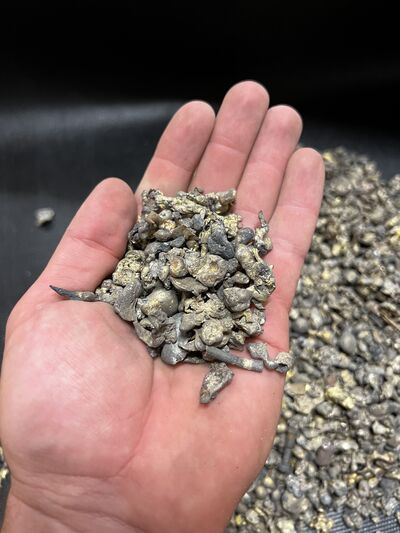
“From 100,000 tonnes of bottom ash, one typically finds around 8,000 to 10,000 tonnes of ferrous metals and up to 5,000 tonnes of non-ferrous metals,” explains Johan Böni, mechanical engineer at Magaldi Power and member of the ESWET (European Suppliers of Waste to Energy Technology) Material Recovery Working Group. These non-ferrous fractions mainly include aluminium, copper, zinc, tin and smaller quantities of precious metals such as silver, gold, palladium and others. The concentration of precious metals, in particular, is noteworthy. “The gold concentration in bottom ash is often comparable to that of an average gold mine – something many people are not aware of,” Böni adds.
Of course, the exact metal content in the ash depends strongly on the composition of the waste being incinerated, which in turn reflects the local waste management system and the plant’s geographical location. “Once the metals are recovered from the 100,000 tonnes of bottom ash, approximately 85,000 tonnes of mineral aggregates remain. When properly treated, this aggregate can be reused in various applications, such as the cement and clinker industry or as a base material for road construction,” says Böni. However, the potential for utilisation depends heavily on the regulatory framework of each country, which defines how bottom ash aggregates may be used. But, as Böni notes, “under the right conditions, bottom ash from WtE plants can be almost fully recycled, closing the material loop and turning what was once considered waste into a valuable resource”.

However, there is no uniform regulation for bottom ash utilisation across Europe or even at EU level, so each country has come up with its own rules with varying material requirements that in turn lead to very different recycling rates. Overall, 51 different parameters for total content and 36 different parameters for leaching behaviour are defined across European countries, with nine different standards for evaluation of leaching behaviour, including batch tests, up-flow percolation tests and one diffusion test for monolithic materials.
So, while in countries like Denmark, Germany and France nearly 100% of the bottom ash is recycled, with the aggregate used primarily in road construction, Belgium landfills about 51%. Non-EU member Switzerland has very strict utilisation limits, meaning it can hardly be used as a construction material regardless of its composition.
Under the right conditions, IBA can be alsmost fully recycled.Johan Böni, ESWET
Reducing carbon footprint and additional revenue
For the last couple of years, the WtE world has been focusing on carbon capture (utilisation and storage – CCUS) to minimise its carbon footprint and be future-ready. Nevertheless, it might be smart to look at its bottom ash as well. According to Leen De Bruycker, Technical & Scientific Officer at CEWEP (Confederation of European Waste-to-Energy Plants), metal recovery from bottom ash delivers significant CO₂ savings: “Recycling one tonne of metal avoids around 2,000 kg of CO₂-equivalent emissions, adding up to roughly 3.8 million tonnes of avoided emissions per year in Europe.”
Unfortunately, until now, the demand for IBA treatment solutions among European WtE facilities remains modest, as Ralf Koralewska, project engineer R&D at Martin GmbH and member of the ESWET Material Recovery Working Group, explains. Because the crux of the matter is that in most countries, WtE operators are not responsible for treating the ash themselves. This process is outsourced, making it “a black box for plant operators”. However, in countries such as Poland, legislation requires WtE facilities to treat their own bottom ash – a positive example of integrating energy recovery with material recovery. “This approach ensures that the entire process – from combustion to material recovery – is optimised, as operators are directly invested in improving bottom ash quality and maximising recovery,” says Koralewska.
Think reduced landfill costs and additional revenue. All the more interesting as both tipping fees and metal prices are rising. It seems a no-brainer that more WtE facilities are now showing interest in investing in bottom ash treatment systems. “The challenge – and opportunity – lies with technology providers to deliver cost-effective and reliable solutions that meet this growing demand,” he adds.

A diverse future
And the innovative minds in the industry are already coming up with new ideas. First of all, artificial intelligence (AI) is now, unsurprisingly, entering the bottom ash treatment sector. Using AI algorithms, robotic systems can identify and sort particles based on visual recognition and automatically direct them into dedicated containers.
“Another exciting innovation is the dynamic crusher installed in Switzerland, designed to reduce ash to smaller sizes and increase metal recovery,” explains Koralewska. If a blockage is caused by large pieces of metal, the jaws of this crusher can be widened to safely allow them to pass through before returning to their original position. This improvement could significantly reduce downtime and operational costs.
Several projects in the wet bottom ash sector are investigating the sustainable use of the mineral fraction. Due to its moisture content, the material matures naturally over time, which can be advantageous for certain applications. In general, wet bottom ash treatment systems “have become more sophisticated and competitive”.
But it’s not only the wet bottom ash that is of interest. Ongoing studies are exploring how dry ash, which hasn't been carbonated and contains no residual moisture, might work raw alternative material for clinker production, one of the most emission-intensive processes worldwide.
Unfortunately, even though the waste-to-energy sector is usually pretty good at working together – WtE facilities team up with research institutions and start-ups all the time to improve processes and roll out new tech – this seems to exclude ash treatment. “Such collaboration remains limited,” Koralewska notes. It's a puzzling gap in an industry that otherwise thrives on partnerships.
The research side faces its own headaches. There's plenty of work being done on using bottom ash's mineral fraction but comparing studies is tough. Different input materials, different testing conditions: it all makes it hard to draw clear conclusions or establish standards.
Things might be changing, though slowly. The push to use more secondary materials has sparked some new joint projects between universities and industry. Koralewska is cautiously optimistic, even if these initiatives are “still relatively rare”. As circular economy policies gain momentum, the incentives to collaborate are growing.
The challenge - and opportunity - lies with technology providers to deliver cost-effective and reliable solutions that meet this growing demand.Ralf Kowalewska, ESWET
EU policies impacting IBA recycling
There are various EU policies that have a direct impact on increasing IBA recycling. The Critical Raw Materials Act (CRMA) promotes the extraction of critical raw materials from secondary sources. “Bottom ash is included in the list of waste streams with significant recovery potential, which is intended to guide Member States as they develop national circularity programmes,” says Leen de Bruycker. Although the CRMA does not impose any direct obligations, it strengthens the argument for improving the recycling of non-ferrous metals, particularly aluminium and copper.
Current EU regulations governing municipal waste recycling targets also influence operational approaches. Implementing Decision (EU) 2019/1004 permits only metals recovered from incinerator bottom ash to count towards national municipal waste recycling quotas. However, the mineral component is disregarded, regardless of whether it meets with technical and environmental standards for aggregate applications. “Allowing compliant mineral fractions to contribute would create more coherent incentives, support investment in treatment infrastructure and help Member States meet their recycling obligations,” de Bruycker notes.
The Circular Economy Act, which is being discussed at EU level right now, though the European Commission hasn't put forward an official proposal yet, is expected to focus on boosting secondary material markets and improving resource efficiency. This in turn would affect the economics of reusing the mineral fraction of bottom ash.
Meanwhile, work is underway on harmonised end-of-waste criteria for construction and demolition waste, but there's nothing yet for bottom-ash-derived materials. That said, the approaches being developed for those waste streams could provide a useful model if the EU decides to create end-of-waste criteria for recovered bottom ash fractions down the line.
Wet or dry – make your choice
As most WtE plants are not directly responsible for ash treatment, they usually focus on optimising combustion and investment costs. Since wet ash discharge systems are the traditional standard, says Koralewska, many facilities are designed around wet bottom ash. Switching from one system to another is simply not done. “Once a WtE plant commits to either a wet or dry ash discharge system, the bottom ash treatment approach becomes more or less fixed,” Koralewska explains. “This means that the chosen discharge method ultimately determines the future ash treatment approach and its recycling potential.” However: “If WtE operators were more accountable for their own bottom ash, they would likely assess treatment options with greater care.” Because dry treatment achieves better recovery rates. Alas, its one big disadvantage has been its higher CAPEX. “The latest generation of dry processes, however, addresses these cost concerns and makes the technology more accessible and economically attractive,” says Koralewska. “Dry bottom ash discharge systems are state-of-the-art nowadays and could be retrofitted into existing WtE plants.”
Recycling one tonne of metal avoids around 2,000 kg of CO2-equivalent emissions.Leen de Bruycker, CEWEP
What’s the difference?
Now let’s take a look at what we mean when we talk about dry bottom ash recycling. The key distinction between wet and dry bottom ash treatment is the manner in which the WtE plant discharges and cools the bottom ash. Traditionally, almost all plants discharge the bottom ash directly into a water bath. The water bath immediately cools the ash and suppresses dust formation. “This simplifies the downstream discharge process. In contrast, dry bottom ash discharge eliminates the water bath entirely. Instead, the hot ash is conveyed on a steel belt and cooled by air,” Böni says.
This change in process really changes the material’s behaviour. When ash is treated wet, it turns into a thick, viscous substance. Chemical reactions like aluminium oxidising and heavy metals leaching kick in. But the upside is that it’s mostly dust-free. Dry bottom ash is a different story: it stays loose and granular, much like regular aggregates. There aren’t any chemical reactions or metal losses, but it does create a lot of dust.
Böni points out that it is also important to distinguish between wet-dry and dry-dry bottom ash. “Since true dry discharge systems are still relatively rare, many people refer to ‘dry ash’ when they actually mean ash that was originally wet-discharged and then dried over several weeks before treatment.” This distinction matters because there are both wet and dry treatment systems for recovering metals. Böni: “In my view, it is therefore more accurate to refer to three different approaches: wet-wet, wet-dry and dry-dry bottom ash treatment systems. We are speaking here about the dry treatment from dry discharged ash, the so-called dry-dry ash treatment.”
Let’s dry-dry ash
As established, one of the reasons WtE operators don’t recycle their own IBA is simply because they don’t have to. Bottom ash is heavy, wet, dusty and odorous. It’s much easier to send it to landfill or to one of the centralised recycling hubs treating bottom ash. Another reason is the quantity of ash produced in a plant: much of the treatment tech is designed for large-scale operations and may not be viable for smaller quantities of ash, typically less than 60,000 tonnes per year.
But as landfill space is becoming increasingly limited and tipping fees are rising – in Switzerland they have reached EUR 250 per tonne of bottom ash – as well as the looming threat of having to offset their carbon emissions, the WtE industry is more open to new solutions. CCUS, the buzzword of the moment, comes with huge investment and operational costs. IBA recycling, on the other hand, provides an additional revenue. A case in point is the dry-dry ash treatment facility ZAV Recycling AG in Zurich, the first of its kind. In 2024, it made turnover of EUR 15.2 million just from selling its recovered metals from roughly 115,000 tonnes of ashes treated in 2024 whereas 80% of the revenue was coming from the fine non-ferrous metal below 15mm. Current market trends suggest that this turnover will be surpassed again in 2025. These metals are recognised as secondary raw materials. “There is a huge economic but also ecological potential in these ashes, which waste-to-energy plants could benefit from,” says Böni enthusiastically. Consequently, by treating their own bottom ash on site and recovering valuable metals, WtE operators can not only reduce disposal costs but also generate a new revenue stream that could partly compensate for other rising costs and contribute to a circular economy with their generated secondary materials.
But Böni, who has worked at the Zurich facility for 4 years, also came to realise an important fact: “What I understood in the last year is that to help the WtE plants, the ash treatment must become simpler and more efficient so that they can easily integrate it into their WtE activities.” And what did he do? Develop the technology to do just that.
A new patented process
Driven by his conviction that WtE plants should recycle their own bottom ash and that dry-dry treatment is the way forward, Johan Böni developed and patented a streamlined, cost-efficient version of the process. “During my years working at the dry IBA treatment plant in Zurich, I saw first-hand how much international interest this technology attracted. Many visitors were impressed by the process and the metal quality they were able to recover from the ash, but they often concluded that it was too complex and costly – investment levels around EUR 50 million were simply too high for most operators,” Böni explains. But the many advantages of the dry-dry process stayed with him.
The advantages of the dry-dry process
- Lower TOC values: With wet discharge, bottom ash is dumped immediately in water, locking in unburnt material. Dry discharge uses air cooling, allowing residual organics to burn out naturally. Zurich achieved TOC values below 0.3% – well under Switzerland’s 2% disposal limit. “I've visited wet discharge plants struggling to stay below 3 per cent,” says Böni. This TOC value is an important parameter for further utilisation of the IBA aggregates.
- Superior metal recovery: Because dry-dry ash is a loose aggregate, metals down to 0.2 mm can easily be recovered, capturing precious metals like gold and silver in the fine fraction and significantly boosting revenue. More importantly, this results in purity levels clean enough to send straight to smelters, not the 40–60% contamination rates typical with wet-dry systems. That extra refinement step? Eliminated.
- Consistent material quality through process control: Dry-dry ash has zero moisture, which is essential for producing consistent output. Wet-dry ash requires outdoor storage and ageing, fighting weather conditions and seasonal variations. Achieving homogeneous material is challenging and labour-intensive. Dry-dry ash eliminates these variables, resulting in a stable, controllable feedstock.
- Fully automated, continuous processing: No moisture means silo storage and continuous processing with full automation. WtE shift workers can monitor everything through automated systems. Wet ash requires outdoor storage and ageing to reach suitable dryness, which is heavily influenced by weather, season and handling practices.
- Extended equipment lifespan: No moisture means no corrosion in the treatment system. Zurich's ten-year-old dry-dry plant still looks practically new, while wet ash facilities of similar age show obvious signs of wear. The long-term operational and maintenance savings speak for themselves.
>>> Johan Böni: Why dry bottom ash treatment is the future of waste-to-energy recycling
Small-scale IBA recycling
Having experienced its benefits in terms of material recovery, process stability and environmental performance, Böni became convinced “that dry-dry bottom ash treatment will be the right path for the industry”. So, he focused on developing a simplified and more cost-efficient version of the process, aiming to make it viable for smaller WtE plants as well.
The idea is simple: the majority of equipment used for ash treatment is oversized. For smaller WtE plants, the daily ash volume is processed in just a few hours by this kind of equipment, leaving the system idle most of the time. “In my concept, certain parts of the system – particularly those responsible for separating non-ferrous metals – run continuously, while other sections operate intermittently,” Böni elaborates. “This approach allows multiple treatment cycles using the same equipment, significantly improving recovery efficiency without adding machinery or cost.”
Consider a typical waste-to-energy facility processing waste anywhere from 100,000 to 350,000 tonnes annually. With the right circulation system in place, operators can now run their bottom ash through a single eddy current separator three, four or even five times, thus increasing non-ferrous metal recovery by roughly 20 to 25 per cent compared to the traditional single-pass approach. The benefits extend beyond boosting the revenue from recovered metals: multiple passes also yield cleaner ash aggregates with significantly lower heavy metal content, making them far more attractive for secondary markets in cement production and construction. Until now, setting up three or four pieces of equipment in serial alignment per fraction has never been done and will be way too expensive. But there is a need to further improve the non-ferrous metal recovery rates to further improve the ash aggregate quality. This new circulation system changes the equation entirely, enabling plants to achieve the same results with just one piece of equipment cycling the material through repeatedly, argues Böni. Factor in the shift to a dry-dry processing approach, where ash treatment happens directly on site at the WtE facility, and operators can cut transportation and disposal costs “by at least 30 per cent compared to the old model of shipping out untreated, wet ash”.
“When combined, all these factors create a compelling new business case for waste-to-energy plants to treat their own ash – unlocking opportunities that were previously not or hardly possible,” Böni is convinced.
He also points out the operational advantages, namely the optimisation across the entire value chain of integrating bottom ash recycling with the WtE process. For example, incineration parameters can be adjusted to produce ash that is easier to treat downstream. “I experienced that lower incineration temperatures could result in smaller ash particles, simplifying ash treatment, while controlling the residual organic content (TOC) ensures higher-quality aggregates,” Böni elaborates. “If not taking care when it comes to the ash treatment downstream, these considerations are most likely not taken into account.”
Proximity also matters. Operators gain direct control and accountability by situating the ash treatment plant on site and employing the same WtE shift workers. Workers who monitor both incineration and ash treatment have a tendency to take better care of the processes, spotting issues early and continuously optimising performance.
Integration also enables better feedback loops for process improvement. Treatment data improves incineration, creating more efficient operations. “In short,” Böni says, “integrating the two processes not only improves recovery rates and material quality but also maximises operational efficiency, reduces costs and ensures better overall control of the plant. Something that is needed if we want to further move towards circular economy.”
His idea, which he presented in his master’s thesis at ETH Zurich, won him an array of awards, most notably the CEWEP Ignis Award this spring. In the meantime, he has further improved the treatment process and patented it. He is now looking for WtE plants or industry partners to collaborate with in order to commercialise and continue developing the patent. But Böni is not done yet.
At his current workplace at Magaldi they developed a mobile test facility for operators to analyse their bottom ash. Because understanding “the true potential of their bottom ash is essential for waste-to-energy operators who want to make strategic decisions.”
Challenges remain
The main challenge of dry bottom ash treatment? Dust. Dry discharged ash requires fully enclosed systems with negative pressure to contain it, adding complexity and capital costs that wet systems face much less. But Böni sees it differently. What many view as a dust problem, he considers a safety advantage: enclosed systems protect workers far better than wet systems, which can't be fully sealed and require frequent manual cleaning.
There's also a perception problem: the Zurich plant is currently the world's only fully dry-dry facility, and because Switzerland's strict regulations require the treated material to be landfilled, a misconception has taken hold that dry ash aggregates can't be reused – discouraging adoption elsewhere. Dry-dry ash offers something wet ash never can: flexibility. It can work as a dry loose aggregate material or it can be moistened to match wet ash properties, while wet ash can never truly become dry again.
Is the future dry(-er)?
For Böni, it will be essential in the future for operators to address the issue of ash. On the one hand, emission reduction will play an important role in EU waste management regulations. So, it might be wise to be ready with high-performance, innovative technology. On the other hand, as coal-fired power plants or the iron-making plants with blast furnace – an important source for alternative raw materials for the clinker production in the cement industry – will shut down, high-quality incinerated bottom ash aggregates can fill part of the gap. To meet climate targets, the cement industry will need to increase its use of alternative raw materials by a factor of ten by 2050. “This creates a significant opportunity for the utilisation of ash aggregates—provided we can supply them in consistently high-quality aggregates,” argues Böni.
He also points out that only one dry bottom ash treatment system has been installed worldwide, but it already outperforms conventional systems. This technology is in its early stages of development, with huge potential, especially for bottom ash aggregate product. Once optimised, this dry-dry IBA treatment approach could redefine the future standard for ash recovery, he is convinced: “I aim to make dry–dry bottom ash discharge and treatment more compact, efficient and economically accessible – helping WtE operators reduce their carbon footprint, strengthen their role in the circular economy and future-proof their operations from an environmental standpoint.”
It might turn out that the future for waste-to-energy lies not in what goes up the chimney, but in what comes out the bottom – transformed, recovered and ready for a second life.