
Incinerator bottom ash : Johan Böni: Why dry bottom ash treatment is the future of waste-to-energy recycling

First, please explain what you mean by dry-dry bottom ash?
It’s important to distinguish between dry-dry and wet-dry bottom ash. Since true dry discharge systems are still relatively rare, many people refer to “dry ash” when they actually mean ash that was originally wet-discharged and then dried over several weeks before treatment. This distinction matters because there are both wet and dry treatment systems for recovering metals.
In my view, it is therefore more accurate to refer to three different approaches: wet-wet, wet-dry, and dry-dry bottom ash treatment systems. We are speaking here about the dry treatment from dry discharged ash, the so-called dry-dry ash treatment.
Many WtE operators do not recycle their bottom ash. Why do you think that is so, and why should they change their mind?
In my view, there are two main reasons why relatively few WtE operators treat their own bottom ash: On the one hand, there are technological limitations. Many ash treatment solutions are designed for large-scale operations and may not be viable for plants producing smaller quantities of ash—typically less than 70,000 tons per year. Most bottom ash treatment facilities function as centralised hubs, accepting ash from multiple Waste-to-Energy plants to operate efficiently at hundreds of thousands of tons annually.
On the other hand, there is a lack of obligation and convenience. Bottom ash is heavy, wet, dusty, and odorous. For many operators, sending it to landfill or giving it away may still seem now easier and less labour-intensive than managing an in-house treatment system.
However, I notice that the situation is changing. Landfill costs are rising steadily—for example, in Switzerland they have reached significant levels of 250 Euro per ton of bottom ash—and landfill capacity is becoming increasingly limited. Additionally, WtE plants might soon face new requirements to offset their carbon emissions and start to explore opportunities in installing carbon capture and storage (CCS) systems, which come along with huge investment and operation costs.
In this context, treating bottom ash becomes an alternative to further reduce their carbon footprint. Metals like copper and nickel are lately considered as critical raw materials in the EU, and precious metal prices have been rising in recent years. This could come along with both economic and ecological benefits, which makes it interesting for Waste-to-Energy plants to investigate it in treating their ash by themselves.
That it can be economically interesting for a Waste-to-Energy plant demonstrates the ZAV Recycling AG in Zurich, the first dry-dry ash treatment facility. In 2024, this facility made a turnover of 15.2 million euros from only selling their recovered metals from roughly 115,000 tons of ashes treated in 2024. Current market trends seem they surpass this turnover in 2025 again. And these metals are not from primary production but recognised as secondary materials. What I want to say is that there is a huge economic but also ecological potential in these ashes, in which Waste-to-Energy plants could benefit from.
So, by treating their own bottom ash on-site and recovering valuable metals, WtE operators can not only reduce disposal costs but also create a new revenue stream that could partly compensate other rising costs and contribute to a circular economy with their generated secondary materials. What I understood in the last year is that to help the WtE plants, the ash treatment must become simpler and more efficient so that they can easily integrate it into their WtE activities.
What are the advantages of dry bottom ash treatment, especially in regard to material recovery and recycling?
From my experience working for five years at the dry bottom ash treatment plant in Zurich, I would highlight five key benefits: reduced unburnt fraction (TOC), higher efficiency of metal separation, enhanced quality consistency, process control and increased lifetime of your treatment system.
Firstly, a reduced unburnt material (TOC) is an advantage for the Waste-to-Energy plant in general. In wet discharge, bottom ash is dumped into water, immediately stopping any ongoing burning or after glowing. This leaves a higher fraction of unburnt material in the ash. In contrast, dry discharge uses air cooling, allowing residual organic matter to burn out during the cooling phase. In Zurich, this approach achieved TOC values below 0.3%, well under Switzerland’s 2% disposal limit. On the contrary, I have been visiting wet discharge plants that were fighting for a TOC below their needed limits of typically around 3%. Dry discharge can significantly help to push the TOC value below 1% without any big efforts. When speaking about ash utilisation, a low TOC is clearly beneficial.
>>> Bottom Ash Recycling in Europe: Metals, minerals, and climate benefits
Probably the biggest benefit is the enhanced recovery efficiency, including their metal quality. As the dry-dry ash is a loose aggregate, metals can be recovered down to 0.2mm. As the precious metals, such as gold or silver, are mostly contained in the very fine fraction, the dry-dry ash allows for the recovery of these precious metals, which improves the turnover significantly. And I am not speaking about a recovery efficiency where 40-60% of impurities are contained in the recovered metals, as you normally see in a wet-dry treatment system. You are able to recover the metal in a purity that allows you to send it directly to smelters. When in wet-dry recovered metals, mostly an additional metal refinement step is needed that is done in an additional facility, the dry-dry ash allows for to elimination of this step.
Thirdly, I am a big believer in the importance of a constant process control to produce reliable and high-quality materials. When you look at dry-dry ash, dry-dry ash always has a uniform moisture content, I mean no moisture —essential for producing consistent materials. Wet ash, on the other hand, requires outdoor storage and ageing to reach suitable dryness, which is highly influenced by weather, season, and handling practices. Achieving homogeneous conditions is challenging and labour-intensive. The dry-dry ash eliminates these variables, providing a stable, controllable feedstock for treatment and recycling.
As there is no moisture at all, the dry discharged ash can be stored in silos and treated continuously, allowing for a fully automated process. This continuous dry-dry processing allows for the reduction of additional labour as the shift worker of the WtE plant can take care of the process control through a fully automated system. In Zurich, this allowed early detection of process issues and optimisation across the treatment process. Wet-dry ash, on the contrary, tends to solidify if stored in silos and therefore requires open-air handling.

Last but not least, but is sometimes forgotten by many, having no moisture also results in no corrosion in the treatment system, which extends the lifespan of the facility and its equipment. The ten-year-old dry-dry bottom ash treatment plant in Zurich still looks new, whereas wet ash facilities of similar age show visible signs of ageing.
What are the challenges of the dry bottom ash method?
The main challenge of dry-dry bottom ash treatment is clearly the dust. Dry discharged ash is dusty, which is why effective control requires a fully enclosed system with slight negative pressure to contain and manage the dust not only in the discharge but also in the treatment of the ash. This adds complexity and cost compared to conventional wet ash systems. Many operators of WtE plants are afraid of the dust, and when they don’t treat their ash by themselves and profit from the downstream metal recovery benefits that come along with it, there are not many reasons why to change from wet to dry, honestly. In Switzerland, WtE plants have changed their discharge system from wet to dry to reduce the ash weight due to the high disposal cost. In many countries, the disposal fee is not as high as in Switzerland, so that the business case development focused only on the ash discharge is less positive than the one’s in Switzerland. That is why there are also only a few dry discharge systems compared to the wet discharge systems in Waste-to-Energy plants.
But as a result of the increased dust, the capital expenditure (CapEx) for dry ash discharge and treatment is higher. However, this is largely offset by less transportation and disposal cost due to the ash’s weight reduction, an increased metal recovery efficiency, the ability to sell high-quality metals directly to smelters and a longer depreciation period for the investment through no corrosion.
What many consider a challenge in dust suppression, I actually see it as an advantage in terms of labour safety. Enclosed systems protect operators from dust exposure. Even wet-dry ash generates dust when partially dried. The only difference is that wet-dry treatment systems cannot be fully enclosed at all because of material caking and build-up on equipment surfaces. These deposits require frequent cleaning, and a closed design would make such maintenance even more labour-intensive.
What many consider a challenge in dust suppression, I actually see it as an advantage in terms of labour safety. Enclosed systems protect operators from dust exposure.
Another challenge lies in the perception and market acceptance of dry aggregates. The Zurich plant remains the first—and so far, the only—fully dry-dry ash treatment facility in the world. Because Switzerland enforces very strict regulations on aggregate reuse, the plant’s treated material is currently landfilled rather than used. This has led to the misconception that dry ash aggregates cannot be reused, discouraging some operators from considering dry treatment as an alternative to wet systems.
That is why it is essential to demonstrate that dry ash aggregates are safe, high-quality, and suitable for industries such as cement production and road construction.
Actually, dry ash offers greater flexibility. It can be used directly as a dry aggregate— ideal for cement applications, as no carbonisation process has occurred and the material does not need additional drying—or moistened afterwards to get identical material properties as wet ash aggregates if required. This flexibility gives WtE operators more options for the utilisation of the aggregates, whereas wet ash can never be converted into truly dry-dry ash. Still, there is uncertainty and caution in the market that needs to be addressed.
At Magaldi Power, where I currently work, we are now the first company to provide an integrated dry-dry ash treatment system, combining both dry discharge and ash treatment. Our goal is to remove these uncertainties by offering comprehensive consultancy and turnkey solutions that help operators adopt dry ash technology with more confidence.
Why did you focus on developing a new dry bottom ash treatment process? How does it differ from previous methods? What advantages do you see in this patented process?
During my years working at the dry IBA treatment plant in Zurich, I saw firsthand how much international interest this technology attracted. Many visitors were impressed by the process and the metal quality they were able to recover from the ash, but they often concluded that it was too complex and costly—investment levels around 50 million euros were simply too high for most operators.
Having experienced its benefits in terms of material recovery, process stability, and environmental performance, I became convinced that dry-dry bottom ash treatment was the right path for the industry. I therefore focused on developing a simplified and more cost-efficient version of the process, aiming to make it viable for smaller Waste-to-Energy plants as well.
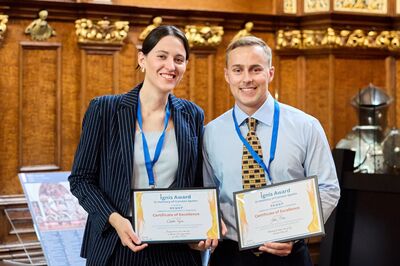
The idea is straightforward: most equipment for ash treatment is oversized. For smaller WtE plants, treating their ash with this kind of equipment processes the daily ash volume in just a few hours, leaving the system idle most of the time. In my concept, certain parts of the system—particularly those responsible for separating non-ferrous metals—run continuously, while other sections operate intermittently. This approach allows multiple treatment cycles using the same equipment, significantly improving recovery efficiency without adding machinery or cost.
For example, a WtE plant processing 100,000–350,000 tons of waste annually could run its bottom ash through the equipment for the recovery of the non-ferrous metal, normally one eddy current separator, up to three, four or five times. In comparison to treating the ash with only one, this can increase non-ferrous metal recovery yearly by approximately 20–25%. This circulation of the ashes not only boosts revenue but also produces cleaner ash aggregates, with fewer heavy metals and better suitability for reuse in the cement or construction industries. So far, no ash treatment plant is processing its ash with 3-4 equipment in a serial alignment, as it is far too expensive. Now with this system, with one equipment and the circulation system, you can treat your ash several times with only one equipment.
In my concept, certain parts of the system—particularly those responsible for separating non-ferrous metals—run continuously, while other sections operate intermittently. This approach allows multiple treatment cycles using the same equipment, significantly improving recovery efficiency without adding machinery or cost.
In addition, converting to the dry-dry approach and integrating the ash treatment process directly at the WtE site reduces transportation and disposal costs of the bottom ash by at least 30% compared to giving away their ash untreated and in a wet state.
When combined, all these factors create a compelling new business case for Waste-to-Energy plants to treat their own ash—unlocking opportunities that were previously not or hardly possible.
How closely does your bottom ash recycling operation integrate with the waste incineration process, and what operational considerations are critical for optimising the entire value chain?
Integrating bottom ash recycling with the WtE process provides operational advantages. When a plant manages both incineration and ash treatment, the system boundaries are extended, allowing optimisation across the entire value chain—from waste input to secondary material production.
For example, incineration parameters can be adjusted to produce ash that is easier to treat downstream. I experienced that lower incineration temperatures could result in smaller ash particles, simplifying ash treatment, while controlling the residual organic content (TOC) ensures higher-quality aggregates. If not taking care of the treatment, these considerations are most likely not considered.
When a plant manages both incineration and ash treatment, the system boundaries are extended, allowing optimisation across the entire value chain—from waste input to secondary material production.
Proximity also matters. By situating the ash treatment plant on-site and employing the same WtE shift workers, operators gain direct control and accountability. Workers who monitor both incineration and ash treatment tend to take better care of the processes, spotting issues early and optimising performance continuously.
This close integration also enables faster feedback loops for process improvement. Data from ash treatment can inform adjustments in the incineration process, creating a more efficient, cohesive operation. In short, integrating the two processes not only improves recovery rates and material quality but also maximises operational efficiency, reduces costs, and ensures better overall control of the plant.
You are also working on a portable analysis unit. Why is it important for operators to analyse their bottom ash?
Understanding the true potential of their bottom ash is essential for Waste-to-Energy operators who want to make strategic decisions. To build a solid, data-driven business case, Waste-to-Energy plants need to know exactly what valuable materials are contained in their ash — particularly the metal content and its recoverability.
However, sending ash samples to external laboratories is often complicated. Because bottom ash is classified as waste, shipping it for testing can involve strict regulations and lengthy administrative procedures.
At Magaldi, we therefore developed a mobile test facility unit that can be brought to the customer’s plant. The portable analysis unit allows on-site evaluation of the material using the same type of equipment used in large-scale treatment plants.
This approach has several advantages. Operators can see and understand their material firsthand, assess recovery potential with realistic process parameters, and gather more representative data over time — for example, by testing continuously over days, weeks or months. If they wish to repeat or extend the analysis, it can be done immediately, without additional logistics or paperwork.
By analysing the ash directly at the plant, we help operators reduce uncertainty, understand the true value of their bottom ash, and generate precise data that enables us to optimize the design and sizing of full-scale facilities—ultimately lowering investment costs. This practical approach turns data into actionable decisions and supports the Waste-to-Energy sector’s transition toward a more circular and resource-efficient future.
Understanding the true potential of their bottom ash is essential for Waste-to-Energy operators who want to make strategic decisions. To build a solid, data-driven business case, Waste-to-Energy plants need to know exactly what valuable materials are contained in their ash — particularly the metal content and its recoverability.
What should WtE plants consider about their bottom ash in a future-oriented scenario?
Waste-to-Energy plants should start becoming more familiar with their bottom ash. For many operators, it remains something of a black box — yet there is significant untapped value hidden within it. Or let me reformulate it, looking at the scarcity of landfills, the bottom ash will incur an increased cost for the WtE plant. But looking ahead, topics like circular economy and CO₂ emission reduction will increasingly shape EU waste management policy and market dynamics. Choosing a technology that focuses on maximising the quality of secondary materials recovered from bottom ash will be a clear long-term advantage. Any future tightening of regulations will not restrict plants that already operate with high-performance, forward-thinking technologies.
In the next 10–20 years, bottom ash aggregates will also become an attractive material for the cement industry, regardless if a raw material or a correction material. As coal-fired power plants shut down, traditional sources of fly ash and synthetic gypsum will decline, and the cement sector will need alternative raw materials. High-quality ash aggregates could fill part of that gap, creating new business opportunities for WtE operators.
Finally, I want to give you one last thought. So far, only one dry bottom ash treatment system has been installed worldwide, compared to thousands of wet treatment plants. Yet this single installation already competes with — or even outperforms — conventional systems in terms of quality, efficiency, and revenue. The technology’s development has only just begun, and the potential for improvement is enormous, especially regarding the bottom ash aggregate product. Imagine where this dry–dry IBA treatment approach will be once several plants are implemented and optimised — it could redefine the future standard for ash recovery.
My goal in the coming years is to accelerate the development and market introduction of this new concept. I aim to make dry–dry bottom ash discharge and treatment more compact, efficient, and economically accessible—helping WtE operators reduce their carbon footprint, strengthen their role in the circular economy, and future-proof their operations from an environmental standpoint. With this patented process, I believe I have found an important solution that enables WtE plants to treat their own ash in a way that is both economically viable and environmentally sustainable.
If you’re interested in finding out whether your WtE plant is suitable for a dry conversion, feel free to contact me on LinkedIn or through any other communication channel.
About: Johan Böni studied mechanical engineering at ETH Zurich and works now at Magaldi Power. He is a member of the ESWET (European Suppliers of Waste to Energy Technology) Material Recovery Working Group.