IFAT 2026 : IFAT Munich: The future is now
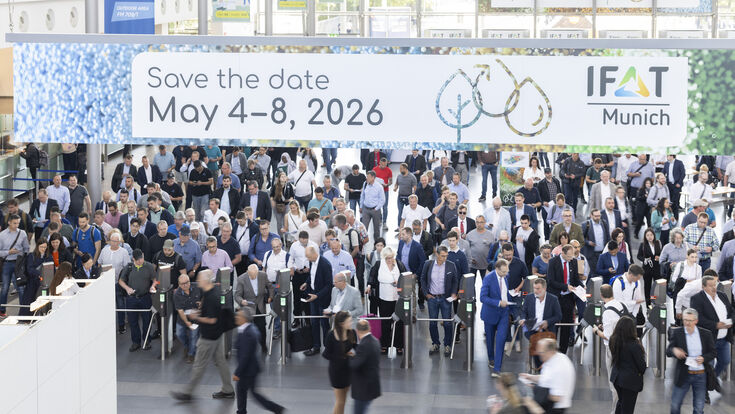
IFAT has come a long way since its first instalment back in 1966, when 1,400 wastewater experts from 43 countries gathered in Munich for the Third International Conference on Water Pollution Research. Nowadays, it is the largest platform for environmental technologies in the fields of water, recycling, and circularity, bringing together tens of thousands of industry representatives from all over the world. IFAT Munich is a solution platform, networking event, and knowledge hub all in one.
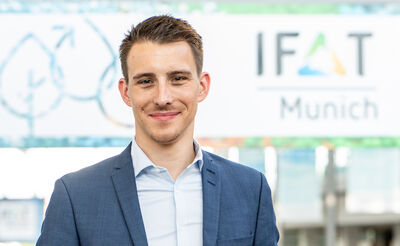
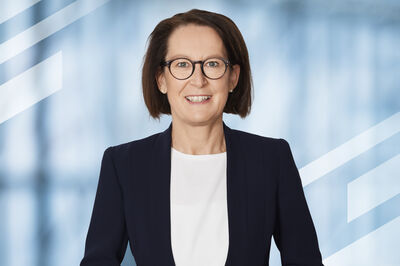
But the Bavarian capital is not the only city hosting an IFAT event. Over the last couple of years, IFAT has expanded immensely and now operates in seven countries. WMW talked with IFAT Munich Exhibition Director Philipp Eisenmann and Katharina Schlegel, Global Industry Lead IFAT & Exhibition Director IFAT trade fairs abroad, about the importance of events like that, the most important circular economy themes and the expansion of IFAT.
IFAT Munich 2024 drew 142,000 visitors from 170 countries. What makes IFAT essential for waste management professionals?
Eisenmann: IFAT Munich is essential because it’s where the entire waste and resource management value chain meets – technology providers, municipal decision-makers, operators, and policy stakeholders – at a truly global scale. With more than 3,200 exhibitors from around 60 countries and regions, the event has become a one-stop platform for solutions for water, recycling and circularity.
IFAT now operates in seven countries. What's driving this international expansion?
Schlegel: The expansion is driven by a clear reality: environmental challenges are global, but solutions must be regional. Our network builds on IFAT Munich as the world’s leading exhibition and complements it with strong events in key growth regions – China, India, Brazil, Saudi Arabia, South Africa, and Turkey – creating a consistent global framework and platform for innovation transfer, while still adapting to local regulation, policies, infrastructure and investment priorities.
Why launch IFAT Saudi Arabia in January 2026, and what makes this market strategically important?
Schlegel: Saudi Arabia is a strategically important country because it is accelerating investment in environmental infrastructure under Vision 2030, particularly in waste management, recycling capacity and water-related technologies. With more than 450 exhibitors, the launch of IFAT Saudi Arabia in January 2026 was the biggest in IFAT's 60-year history. This demonstrates that now is the perfect time to connect international technology leaders with Saudi regulators, public entities, and operators, providing direct market access and concrete project opportunities.
With IFAT Delhi debuting in April 2026, what potential do you see in India's waste management sector?
Schlegel: India’s potential is enormous – because growth, urbanization and industrialisation make modern waste systems and recycling markets a top priority. IFAT Delhi in April 2026 brings the platform closer to North India’s policy and governance ecosystem, but also the business community, creating faster dialogue between municipalities, ministries, and industry. That proximity can accelerate adoption – especially for collection efficiency, sorting, recycling, waste-to-energy and digital operations.
What circular economy themes were most prominent at IFAT 2024, and how are they evolving?
Eisenmann: In 2024, the most visible circular economy themes were resource efficiency, high-quality recycling, and practical pathways to keep materials in use – supported by strong focus areas like Circularity for E-Mobility and real-world municipal applications. We’re seeing the conversation evolve from ‘targets and concepts’ to ‘proof of performance’: measurable circularity, robust material streams, and scalable business models. At every trade fair, we try to shine a spotlight on new and exciting material streams that are being discussed in technological and political circles. The great added value of IFAT Munich is that almost every material stream plays a role and there are solutions for it.
Which technology areas – digitalisation, AI, alternative fuel – are generating the most exhibitor and visitor interest?
Eisenmann: We see three hotspots of interest. First, digitalisation – because operators need transparency across fleets, plants and material streams. Second, AI in operations – for example in recognition, sorting, quality control and safety applications. Third, alternative drives and fuels in municipal technology – particularly electric and hydrogen solutions showcased in live demos and vehicle presentations. These topics are no longer future ideas – they’re becoming procurement and investment decisions.
How do the challenges and solutions differ between IFAT Munich and your events in Asia, the Middle East, and other regions?
Eisenmann: Munich is the global benchmark platform: visitors come to compare best-available technologies side-by-side and to discuss cross-sector system solutions – often at a high level of technical maturity, regulation, and circular economy targets.
Schlegel: In international markets, the priorities can be more ‘infrastructure-building’ and speed-to-implementation: rapid capacity build-up, policy frameworks, and bankable project models. That’s exactly why the IFAT network matters – same ecosystem, different starting points, and region-specific pathways.
Beyond the exhibition floor, how does IFAT facilitate collaboration between technology providers, municipalities, and policymakers?
Eisenmann: IFAT is designed as a knowledge and networking hub: stages, spotlight areas, live demonstrations and structured program formats create direct exchange between industry, municipalities and political stakeholders. The goal is practical collaboration – turning innovation into projects, specifications, partnerships and policy-ready solutions. For example, we have an entire day dedicated solely to the resilience of municipalities and cities.
What shifts are you seeing in who exhibits at IFAT Munich – more startups, different industries, new countries?
Eisenmann: We’re seeing broader participation from adjacent industries – especially chemical, plastics, mobility and digital solution providers – because waste and resource management is increasingly a cross-sector system. We also have a dedicated program on our stages for this, where industry representatives report on their experiences with the circular economy.
Schlegel: Internationally, the exhibitor mix is increasingly shaped by markets with strong infrastructure momentum. We’re welcoming more country pavilions from Asia and the Middle East, as well as technology providers targeting expansion via the global IFAT network.
What can attendees expect from IFAT Munich 2026, and which industry challenges will take centerstage?
Eisenmann: For 2026, attendees can expect an even stronger solution-and-transfer focus: climate-resilient infrastructure, water reuse and resource protection on the one hand – and on the other, circular economy and resource efficiency, material flow management, logistics and municipal technology. The core challenges will be resilience, competitiveness and scaling real circular solutions – supported by a program with over 400 sessions that is clearly structured around these priorities.