
WEEE : Pioneering AI-powered robotics for e-waste recycling
Dr. Ude, could you give a short overview of the ReconCycle project and its main goals?
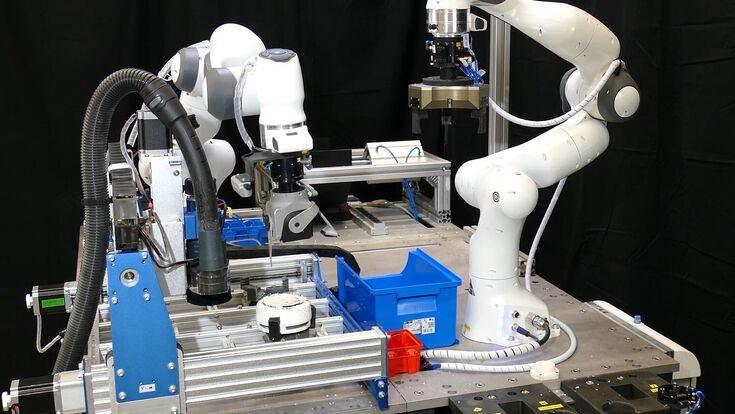
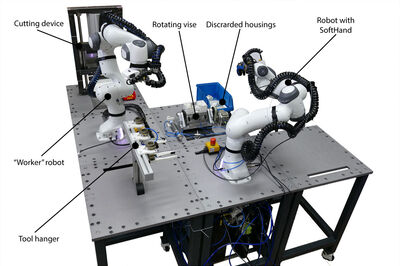
The ReconCycle project developed a self-reconfigurable robotic cell that makes standard “crush-and-separate” recycling methods safer and more efficient by automatically removing hazardous or sensitive components such as batteries before shredding. Its main goal was to enable flexible disassembly across different device types and models, combining modular plug-and-produce hardware, adaptive soft grippers and advanced robot learning and adaptation methodologies. By allowing manual reconfiguration between device types and automatic adaptation within a type, ReconCycle demonstrated how AI-driven robotics can improve the safety, profitability and sustainability of electronic waste recycling.
What motivated the development of an AI-driven robotic system for electronic waste disassembly?
Electronic waste recycling is costly and risky because people must manually remove dangerous parts like batteries before crushing. Devices also vary a lot in design and condition, which makes automation difficult. These challenges motivated the development of an AI-driven robotic system that can adapt to different devices, handle hazardous parts safely and make recycling more efficient and sustainable.
Which technologies were most critical to achieving ReconCycle’s objectives?
ReconCycle relied on a combination of computer vision for device recognition and scene understanding, AI planning and vision-language models for predicting disassembly actions, and soft robotics with variable-stiffness grippers for safely handling delicate or hazardous components. Together with modular plug-and-produce hardware, these technologies enabled flexible, adaptive and safe robotic disassembly across different device types.

In what ways was the project designed with human involvement or interaction in mind?
Although the goal was full automation, operators played an active role in reconfiguring the cell when switching between different device types. They could adjust the set-up through modular plug-and-produce hardware and a user-friendly interface, while the system itself handled automatic adaptation between models of the same type. This way, human expertise supported flexibility where needed, but most disassembly steps were carried out autonomously.
Can you describe how human operators interact with ReconCycle’s e‑waste robotic system?
Human operators in ReconCycle are involved mainly in the design and construction of the reconfigurable cell. They set up and connect the modular components, integrate new tools when needed and configure the system for different device types. After this set-up, the cell takes over and performs most disassembly tasks autonomously, with minimal human intervention.
We believe that ReconCycle showed that AI-driven, reconfigurable robotics can make e-waste recycling safer, more efficient and economically viable.Aleš Ude
What kinds of practical challenges did your team face when moving from lab prototypes to real-world pilot testing?
We recreated realistic recycling conditions in the lab, which brought challenges such as handling devices in different states, safely removing glued parts and integrating many hardware and software modules into a stable workflow. For certain devices like smoke detectors, we added a CNC milling module to handle components that could not be dismantled non-destructively with other tools.
How are operators trained or prepared to work alongside these adaptive robotic systems?
Operators would need skills to set up and reconfigure the modular cell, including mechanical assembly, electrical and pneumatic connections and calibration of sensors and tools. They should also be able to design or adapt components using 3D printing or other rapid prototyping methods, use the coding-free interface to adjust disassembly routines and follow safe handling practices for e-waste and hazardous parts.
>>> Jaipur Robotics' Ermes Zamboni: AI should enhance operators, not replace them
How does the system manage novel or unexpected waste materials in real time?
The system handles novel or unexpected materials through a combination of computer vision, vision-language models and adaptive control. Cameras and sensors detect the current state of the device, while AI models predict suitable disassembly actions or flag uncertainties. If the situation falls outside the learned cases, the robot can adapt parameters on the fly, attempt alternative actions or stop safely and request reconfiguration or human input.
Did the deployment of ReconCycle require changes in standard workflows or facility layouts?
ReconCycle has not yet been deployed in industrial facilities, but we prepared designs showing how the system could be integrated into recycling workflows, including the logistics aspects.
What role did plant workers or technicians play in shaping, testing or adapting the technology?
Plant workers contributed by demonstrating how devices are dismantled manually, giving valuable insight into practical challenges and typical problem points. Recycling engineers complemented this with expertise on safe and efficient processes, helping to shape requirements and guide the design of robotic tools and workflows.
>>> Greyparrot's Gaspard Duthilleul: Why AI in waste management means upskilling, not downsizing
Looking back, what aspects of human behaviour or workplace culture were most important to consider during development?
A key consideration was the hands-on expertise of workers in dismantling devices, since their intuitive strategies informed the design of robotic actions. Equally important was the need for simple, transparent tools that fit into established recycling routines. The workplace culture generally favours practical solutions that reduce risk and effort without adding complexity.
What impact do you hope ReconCycle will have on the broader field of e-waste management?
We believe that ReconCycle showed that AI-driven, reconfigurable robotics can make e-waste recycling safer, more efficient and economically viable. By automating the removal of hazardous components and enabling flexible disassembly across device types, it can reduce reliance on manual labour, lower risks and set the stage for scalable and sustainable recycling practices.
>>> iBot4CRMs: A new project to reduce Europe's dependence on imported raw materials