
Wood Recycling : The digital identity card that could transform Europe's wood waste crisis

Imagine if every piece of furniture or wooden building material came with a detailed digital "passport" – a comprehensive record revealing exactly what it's made of, which chemicals it contains and how it can be safely recycled. It sounds futuristic, but this technology is becoming reality, and it might just be the key to solving one of Europe's most pressing waste management challenges.
The wood waste problem
Here's a sobering reality: Europe is heading towards a wood shortage by 2030, yet we're simultaneously burning or burying millions of tonnes of perfectly recyclable wood waste every year. The contradiction is striking. Construction sites demolish buildings, furniture gets thrown out, and rather than seeing these materials as valuable resources, we often treat them as problematic waste.
The core issue? Nobody really knows what's in that waste wood. Was it treated with hazardous preservatives decades ago? Does it contain formaldehyde-based adhesives? What about heavy metals, flame retardants or other contaminants that could pose problems during recycling? Without this information, waste managers face an impossible choice: either invest heavily in testing and sorting or take the safer (and wasteful) route of incineration.
This is where the EU-funded Wood2Wood project enters the picture, developing a solution that's elegantly simple in concept yet transformative in impact: the Digital Product Passport (DPP) for wood-based products.
Digital Product Passport explained
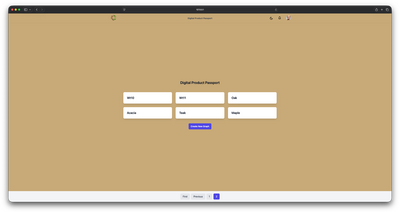
Think of it as a comprehensive digital biography for every wood product. From the moment a piece of furniture or construction material is manufactured, its DPP tracks essential information: wood type, treatments applied, adhesives used, coatings, expected lifespan, and instructions for repair, reuse or recycling.
But here's what makes it truly powerful for waste management: the passport stays with the product throughout its entire lifecycle. That wooden door panel installed in 2025? When it's removed during a renovation in 2045, its DPP will still be accessible, revealing exactly how to handle it for maximum value recovery.
According to research conducted by the Centre for European Policy Studies (CEPS), the passports should prioritise three key data categories: product characteristics (composition, wood type, treatments), sustainability data (origin, environmental impact, lifecycle metrics) and circularity-relevant information (repair instructions, recycling guidelines, end-of-life handling).
How the technology works
The Wood2Wood DPP isn't science fiction. It builds on established technologies with some innovative twists. Products carry physical markers (QR codes, RFID tags or NFC chips) that link to secure digital databases. Scan the marker with a smartphone or industrial scanner, and you instantly access the product's complete history.
What sets Wood2Wood apart is its integration with advanced sensing and sorting technologies. The project combines:
- Automated sensing systems that can detect contaminants in waste wood streams
- Human-robot collaboration using mixed reality to enhance sorting accuracy
- Blockchain technology to ensure data security and prevent fraud
- AI-powered systems that can even provide basic categorisation for older products without passports
This last feature is crucial. The project team recognises that legacy products – everything already in circulation without a passport – can't simply be ignored. They're developing deep learning technologies that can visually recognise product categories and provide approximate handling information based on similar products in the database.
Benefits for waste managers
Let's get practical. For waste management operators, the DPP offers immediate benefits:
Streamlined sorting: Instead of expensive laboratory testing or guesswork, workers can instantly identify which waste streams are suitable for high-value recycling versus energy recovery.
Data-driven decision making: Real-time information enables optimised routing of materials to appropriate facilities, reducing transportation costs and environmental impact.
Market development: With reliable quality data, recycled wood materials become more attractive to manufacturers, creating stronger markets for secondary resources.
Compliance made easier: As EU regulations around waste wood classification and handling become more stringent, having comprehensive product data simplifies regulatory compliance.
Consider a practical scenario: A demolition contractor removing wooden window frames from a 1990s building. Currently, these might be destined for incineration due to uncertainty about treatments. With DPPs, the contractor scans the frames, discovers they contain minimal contaminants, and routes them to a specialised facility that can recover high-quality wood fibres for manufacturing new engineered wood products. The value captured isn't just environmental – it's economic.
Implementation challenges
Of course, implementing DPPs across Europe's wood industry isn't without hurdles. The CEPS research identified several significant challenges:
Data security concerns: Companies worry about sharing sensitive information. Who sees what data, and for what purposes? The solution involves tiered access systems – professional users (producers, transporters, recyclers) can modify data, while consumers get view-only access to relevant information.
The SME gap: Small and medium-sized enterprises, particularly in the furniture industry, often lack digital infrastructure. They'll need significant support, training and phased implementation timelines to come on board.
Integration complexity: The wood supply chain involves diverse stakeholders with non-uniform data systems. Achieving interoperability requires harmonised EU-level standards that balance consistency with flexibility.
Cost considerations: From permanent product markings to database management and worker training, implementation requires investment. However, experts argue that EU-level requirements could level the playing field, and the system offers economic advantages through improved waste valorisation and sustainability credentials.
Legacy product dilemma: Millions of wood products already in use lack passports. While sensing technologies can help, addressing this challenge remains critical for the system's overall effectiveness.
The regulatory framework
The timing for Wood2Wood's development couldn't be better. The EU's Ecodesign for Sustainable Products Regulation (ESPR) is gradually introducing DPP requirements for priority product groups, including furniture. The new Construction Products Regulation (CPR) establishes parallel requirements for building materials.
These legislative frameworks are creating a foundation, but crucial details remain to be finalised through delegated acts and harmonised standards. The CEPS research makes three key policy recommendations:
1. Introduce harmonised DPP requirements inspired by existing initiatives (particularly successful national-level approaches like Sweden's product data templates)
2. Provide robust support and guidance for companies fulfilling DPP obligations, with realistic timelines especially for SMEs
3. Identify and fund solutions for improving the valorisation of legacy products without passports
What operators should do now
The message for waste management professionals is clear: digital product passports are coming, and they'll fundamentally change how we handle wood waste.
Forward-thinking operators should start preparing now:
- Invest in digital infrastructure capable of reading and processing DPP data
- Train staff on new digital tools and workflows
- Develop partnerships with DPP-compatible suppliers and processors
- Explore pilot programs to gain early experience with the technology
- Engage with EU standardisation processes to ensure systems meet operational needs
The opportunity is substantial. Wood2Wood estimates that effective waste wood valorisation could significantly reduce Europe's reliance on virgin materials while cutting CO₂ emissions and diverting waste from landfills. For waste management companies, this represents both a challenge to adapt and an opportunity to position themselves as leaders in the circular economy.
For a circular future
The Wood2Wood project runs through 2028, developing and validating its framework across real-world use cases. The consortium of 25 partners spans research institutes, technology providers, industry associations and end users across Europe, ensuring the solutions developed are practical and scalable.
Early results are promising. The project's innovative combination of advanced sorting technologies, upcycling processes and digital tools is demonstrating that contaminated waste wood – traditionally considered problematic – can be transformed into high-value products with properties matching those made from virgin materials.
But perhaps the most significant aspect is the mindset shift the DPP enables. Instead of viewing wood waste as a disposal problem, we begin to see it as a valuable resource with a documented pedigree. That old wooden door isn't just garbage. It's a precisely characterised material with specific properties and optimal recycling pathways. As the project partners say: "We're not just creating technology; we're creating transparency. And transparency is the foundation of any circular economy."
For Europe's waste management industry, the digital product passport represents a rare convergence: regulatory push, technological readiness and environmental necessity all pointing in the same direction. The question isn't whether DPPs will transform wood waste management. It's how quickly the industry can adapt to capture the opportunities they offer.
The future of waste wood isn't burning or burial: It's circulation. And the digital product passport is the ticket that keeps materials moving through the cycle.