
INC : Time is running out to tackle plastic pollution
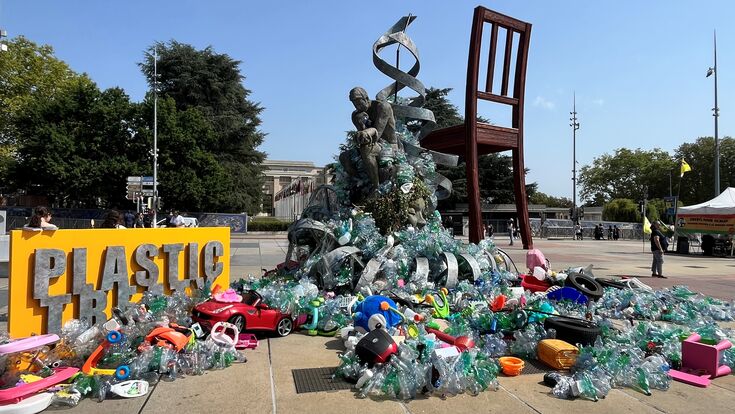
Plastic production and pollution continue to rise, creating urgency for decisive global action. As an accredited non-governmental organisation observing the Intergovernmental Negotiating Committee (INC) on Plastic Pollution, ISWA has actively participated in all INC sessions since the adoption of UNEA Resolution 5/14 in 2022.
Plastic pollution is waste mismanagement and a linear economy consequence
As early as 2017, ISWA stated that the problem of marine litter is directly linked to the lack of sustainable, effective and affordable waste management infrastructure on land, as well as the associated governance challenges. Current data shows that the majority of plastic debris and wider plastic pollution is caused by the absence or inadequacy of waste and resource management systems.
In many regions, there are no systems in place for the collection, recovery and safe disposal of solid waste. Where systems do exist, they are often operated without the basic means to protect the environment and public health. Consequently, plastic pollution is an increasingly visible consequence of inadequate waste management. Most leakage into the environment originates from mismanaged macroplastic waste that fragments into microplastics, which are almost impossible to recover. Nevertheless, waste management alone cannot solve the problem. Plastic pollution is also a symptom of a linear economy in which production and product design are largely disconnected from end-of-life management.
Based on this, ISWA recognised the need for and supported the endeavour to prepare an international agreement on the global monitoring, control, mitigation and elimination of marine litter and other forms of plastic pollution. To support this process, a dedicated Task Force was established.
From Punta del Este to Geneva
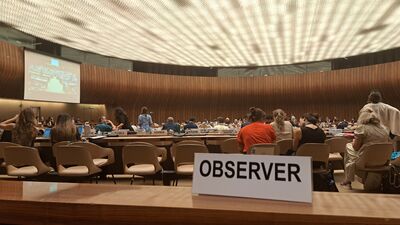
Since the 1st International Conference (INC-1) in Punta del Este, Uruguay, ISWA has been providing scientific, practical and evidence-based insights to support the development of a robust, implementable treaty.
For INC-5.1 in Busan, South Korea, ISWA developed five key messages to address global waste management challenges, focusing on plastic pollution and its impact on the marine environment.
- Reduce plastic waste;
- Ensure collection of all waste, especially plastics;
- Upgrade illegal and open dumpsites and ban open burning of waste;
- Increase the role and accountability of extended producer responsibility (EPR) schemes; and
- Provide waste management solutions adapted to socioeconomic and cultural conditions.
Following INC-5.1, the draft treaty text formed the basis for further negotiations. For INC-5.2, ISWA consulted its global network of waste management experts to develop reflections on the four priority areas:
- Addressing problematic plastics and advancing circular product design;
- Preventing leakage through sound plastic waste collection and containment;
- Strengthening plastic waste management systems;
- Financing the transition to drastically reduce plastic pollution and scale implementation.
These reflections reiterated ISWA’s previous messages, emphasising that the treaty must address the entire plastics lifecycle, from design to disposal. It must include traceability measures, harmonised standards, circular economy principles and eco-modulated financing mechanisms to support both waste prevention and sustainable waste management.
Despite intensive negotiations, INC-5.2 concluded without an agreement being reached.
What’s next?
Time is running out to tackle plastic pollution, and progress towards a circular economy remains slow and limited in both scale and scope. More than ever, urgent, coordinated and ambitious global action is needed.
As Inger Anderson, Executive Director of the United Nations Environment Programme (UNEP), stated after INC-5.2: “People are demanding a treaty, people want a deal! We will not stop, because pollution will not stop.”
To tackle the challenge of plastic pollution, action must be taken across the entire plastics value chain.
- Strengthening downstream measures such as waste management and Extended Producer Responsibility (EPR);
- Advancing upstream efforts in sustainable production, product design and embedding circular economy principles;
- Securing financing mechanisms and other means of implementation to enable effective action for all parties.
ISWA’s commitment
Looking ahead to the next round of negotiations, ISWA is determined to support the parties in agreeing a clear, comprehensive and ambitious treaty on plastic pollution. ISWA will also continue to establish dialogue and collaboration with other stakeholders in the circular economy sector.
Once a treaty has been agreed, it should be seen as a starting point rather than a finish line – the moment when global commitments are transformed into real action against plastic pollution. ISWA therefore considers building the capacity of the parties, decision-makers and its own members to be a key component in bridging the gap between ambition and implementation and turning global commitments into tangible results.