
Pascal Klein, Pyrum Innovations : "We need more and more sustainable, resource-efficient solutions to process the waste tyres that accumulate."

Can you briefly introduce Pyrum Innovations and its core mission?
Pyrum Innovations AG is a recycling company based in Saarland, Germany. Since 2008, we have been developing an innovative pyrolysis technology that allows us to recycle end-of-life tires and plastics with virtually zero emissions. Our process yields high-quality products such as pyrolysis oil and recovered Carbon Black (rCB), which are used by renowned partners like BASF, Continental, and Schwalbe in the production of new goods.
Could you explain how Pyrum’s patented pyrolysis process works, especially in relation to end-of-life tires?
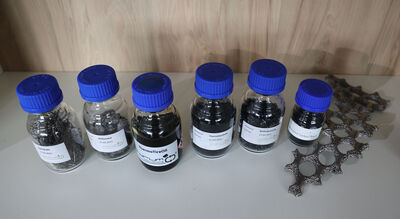
Our pyrolysis technology is designed to recycle various types of plastic. However, we initially focused on end-of-life tires, as they are among the most difficult materials to break down. In the process, shredded rubber granulate—previously separated from steel and textile components—is fed into the reactor. The reactor is then heated to temperatures of up to 650°C, releasing vapors that are subsequently condensed in the next stage. This produces gas and pyrolysis oil. A solid residue remains in the reactor, settling at the bottom and known as coke. This material is then milled and processed into recovered Carbon Black (rCB) pellets.
What are the key products or byproducts of your recycling process?
The thermolysis process produces three main outputs: oil, carbon black, and gas. The recovered oil is supplied to our partner BASF, where it is integrated into their production processes via a mass balance approach. The resulting end products are used in high-quality applications, such as outdoor apparel by VAUDE or door handles in the Mercedes S-Class. The carbon black is currently purchased by Continental and Schwalbe, who use it to manufacture new tires. The gas generated during the process is used on-site to power our facility. We employ two technologies for this purpose: a combined heat and power (CHP) plant and microturbines. Both systems produce enough electricity to operate our reactors independently from the grid. When using microturbines, we additionally utilize the resulting waste heat for drying the rCB pellets.
Is there are market for these products?
A market first had to be established for our products. In 2018, for example, we became the first company in the field of end-of-life tire recycling to receive REACH registration (Registration, Evaluation, Authorisation and Restriction of Chemicals) from the European Chemicals Agency (ECHA) for our thermolysis oil. We subsequently signed a supply agreement with BASF for 300,000 tons of pyrolysis oil per year—more than we are currently able to produce. But so far, we are only operate one plant in Dillingen.
Last year, Continental followed with a framework agreement for the long-term supply of our recovered Carbon Black (rCB) over a period of ten years. This year, we concluded a comparable ten-year contract with Schwalbe for rCB. We are seeing a clear trend toward sustainable raw materials. Several other automotive manufacturers have also approached us with strong interest in entering into similar long-term supply agreements.
A key feature of our process is that once the plant has been started up using external energy, it generates enough energy from the produced gas to operate independently. In fact, more energy is generated than is needed.
What kind of challenges did you face in developing and scaling your pyrolysis process?
Back in the 1980s, Klaus Peter Schulz believed that a pyrolysis plant should be self-sufficient in terms of electricity. However, he was unable to implement it. But he passed his ideas on to me, and together with three friends, I decided to develop them further. This led to the founding of Pyrum in 2008 and the successful development of our patented process. A key feature now is that, once the plant has been started up using external energy, it generates enough energy from the produced gas to operate independently. In fact, more energy is generated than is needed. Of course, we were also lucky to find investors who believed in us and our idea. Nevertheless, as I already mentioned, we also had to create a market for our products first. It was a long road, but I think we came at the right time. Since 2020, we have been able to produce on an industrial scale.
What is the environmental footprint of Pyrum’s pyrolysis system compared to traditional disposal or incineration methods?
In 2022, Fraunhofer UMSICHT conducted a Life Cycle Assessment (LCA) of our pyrolysis process. The analysis showed that our process saves 72% more CO₂ compared to conventional mixed recycling methods. Specifically, this translates to a reduction of 965 kg of CO₂ equivalents per ton of end-of-life tires. Compared to the use of tires in cement plants, the CO₂ savings are as high as 244%.
How do you ensure compliance with European and international environmental standards?
We have our own department that handles certification management. We hold ISO 14001 certification for environmental management systems, as well as International Sustainability and Carbon Certification (ISCC) and an EcoVadis ESG rating.
Do you collaborate with any environmental agencies, governments, or NGOs on sustainability initiatives?
Over the years, we have participated in several important initiatives. One notable example is the EU-funded research project BlackCycle, in which Pyrum was recognized as a Key Innovator. The project aimed to recycle end-of-life tires and reuse the recovered raw materials in the production of new, sustainable car tires.
In addition, our employees are actively involved in various standards committees of the German Institute for Standardization (DIN). They contribute their expertise particularly in the fields of sustainability and product development. Through their involvement in shaping new standards, we are helping to drive the transition toward a more sustainable and future-oriented economy.
>>> How advanced innovation is driving circularity in the waste industry
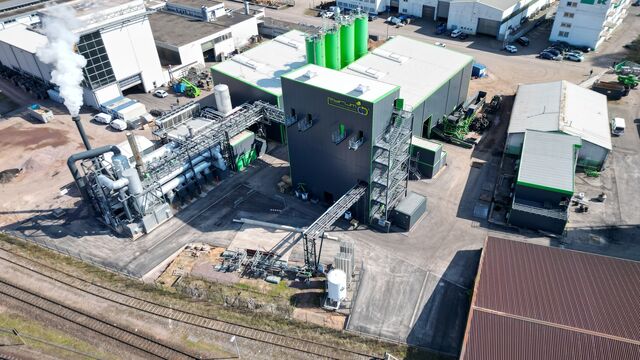
The Pyrum plant in Dillingen, Germany. The company aims to open more facilities in the near future.
- © PyrumWho are your primary clients or partners—governments, tire manufacturers, or waste management firms?
Throughout the entire development process—from the construction of our facilities to the distribution of the finished products—we collaborate with a wide range of partners. We maintain close relationships with political decision-makers, suppliers, and our customers. Building new plants requires cooperation with numerous authorities to ensure a smooth and efficient approval process. Particularly important to us, especially regarding the value chain, are the suppliers of our input material—used tires. Here, we work together with various workshops, logistics providers, and automotive companies such as Remondis, Michelin, BMW, and Mercedes. Our key customers BASF, Continental, and Schwalbe are not only buyers of our products but also long-term key investors firmly integrated into the company, making them central partners of Pyrum.
How do you see the demand for tire pyrolysis and advanced recycling technologies evolving in the next 5–10 years?
There will always be more than enough EoL tires to recycle. The tires on electric cars wear out even faster. In addition, EU regulations limit exports of EoL tires. So we need more and more sustainable, resource-efficient solutions to process the waste tyres that accumulate. This of course is the perfect opportunity for technologies like our thermolysis to step in.
Pyrum has partnerships with industry giants like Continental—can you elaborate on the nature and scope of these collaborations?
Continental is an important partner for us—both as a customer and as a development partner. The company has supported us since our IPO in Oslo in 2021 and is currently the main purchaser of our recovered Carbon Black (rCB). Together, we are working under a Joint Development Agreement (JDA) to integrate rCB into new tires. Since June 2023, our rCB has already been used in the production of Super Elastic solid tires for forklifts in Homburg. Last year, we secured a framework agreement for the long-term purchase of rCB with a term of ten years. In this context, Continental is considered a pioneer in the industry, as purchase agreements with such long durations are still uncommon in the automotive sector
There's a saying: 'Everyone said it was impossible until someone came along and did it.' You must never give up. That is what I believe in.
How do you envision the future of pyrolysis technology in waste management over the next decade?
Our work won't stop at recycling waste tyres. We are already applying our process to plastics to enable their complete recycling. A patent application is pending.
What role do you see Pyrum playing in job creation and local economic development?
We see ourselves as a major job creator. This begins with the construction of a plant, which naturally requires a large workforce, and continues with the operation of the plant and the use of external suppliers for shredders and other machinery.
How do you educate or engage local communities about the benefits of your recycling technology?
Seeing is believing. When building new facilities, we actively invite local residents to visit our plants and address their questions in person. Through our website and press releases, we provide comprehensive information about our process and technology to interested parties and strive to respond to inquiries promptly via email or in personal meetings.
From your perspective, what is the most rewarding aspect of working in the circular economy and recycling space?
We turn waste into something new, thereby solving many environmental problems.
What advice would you give to startups or entrepreneurs looking to innovate in the green tech or waste management sector?
There's a saying: 'Everyone said it was impossible until someone came along and did it.' You must never give up. That is what I believe in.