
Jean-Michel Douarre, Michelin : "The pyrolysis technology is a key technology to transform end-of-life tyres into recovered carbon black and tyre pyrolysis oils"
What made you join the BlackCycle project?
Michelin was at the origin and was the coordinator of the project BlackCycle co-funded by Europe (Horizon 2020 program). That project is one of our initiatives to reach our 2050 ambition to replace 100% of fossil materials in the tyres with sustainable materials (renewable or recycled).
In 2020, despite 3.5 million tons of materials yearly generated from End-of-life tyres in Europe, there was almost no material coming for the recycling of those tyres back in new tyres. The reason, the tyre is a highly technical product that demands high-quality raw materials. Although Michelin was already involved in the recycling of tyres (founding member of Aliapur collector of ELT, acquisition of Lehigh company based in the UsA that produces Rubber Micronized Powder), we believed that to change the game, we needed to put around the table the key actors of a full value chain to go from ELT collect to High Quality Raw materials production and their reincorporation in new tyres. This is why we launched that project by gathering 12 other partners coming from 5 European countries
What are the key outcomes of the project?
After 4 years of intensive work with our 12 partners in the project, the result is simply amazing.
In order to get high-quality raw materials, it involves a whole series of mechanical and chemical transformation steps. The core technology of that chain is the pyrolysis (thermal treatment without oxygen). The BlackCycle project not only improved the pyrolysis process, it also introduced new transformation steps like tyre deconstruction machines, distillation, polymerisation…Thanks to that new value chain, new raw materials for ELT were created: Sustainable CB (s-CB), sustainable plasticising resin (as good as their virgin version), and also Micronized Powder made of 100% of inner liner compound. All those brand-new materials were validated in tyres.
The project, with all the partners and their skills, has taken a systemic approach, taking into account the technical, economic, and environmental aspects of the value chain simultaneously.
Moreover, this project has contributed to the evolution of the ecosystem around the tyre circular economy in Europe. It was the first one that addressed the feasibility of the ecosystem. For example, a joint venture Infiniteria between Antin, Enviro, and Michelin has been established to deploy several plants in Europe by 2030 with the goal of processing at least 1 million tons of ELT. We also support REGOM that has developed IA automated tire sorting at the beginning of the value chain to enhance the quality and efficiency of ELT feedstocks. Additionally, another European project is underway to support the DPP, or digital product passport, to improve value chain traceability. Within Michelin, a new operational division has been formed to manage the circularity transformation based on insights gained from this project. It even inspired the creation of a similar project in Korea.
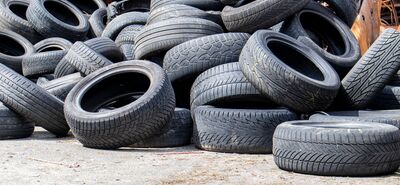
The BlackCycle project has contributed to the evolution of the ecosystem around the tyre circular economy in Europe. It was the first one that addressed the feasibility of the ecosystem.
Will the findings be deployed on an industrial level? What are the next steps?
Most of the new processes reached a TRL from 6 to 9 (high level of maturity). Several tons of high-quality Raw materials were produced. The project also delivered, in addition to the associated know-how, the techno-economic environmental studies with recommendations to manage the installation of the new equipment, especially on the Hygiene/safety/environment aspect. The project even made recommendations on regulations and incentives that could be put in place by the European Commission to facilitate the deployment.
Today, the ecosystem is ready to deploy, and some investments have already been completed. However, this is just the beginning, and Michelin is participating in its development.
Michelin has emphasised its commitment to sustainability—how does this partnership contribute to your goal of 100% sustainable materials in tyres by 2050?
100% sustainable is achievable if renewable and recycled materials are available. The BlackCycle results are completely aligned with that goal as they will allow a significant quantity of recycled raw materials to be reintroduced into new tyres. The pyrolysis technology is a key technology to transform end-of-life tires into recovered carbon black and tyre pyrolysis oils. While the recovered carbon black could be partly incorporated into tires, the tyre pyrolysis oils could be transformed into various products that could be easily incorporated into tyres, like sustainable carbon blacks, resins, but also oils or butadiene. BlackCycle has opened the journey of various value chains that we are actually exploring several different partners with the help of the new operational directions.
Pyrolysis-based recycling has been around for a while, but faced scalability and purity issues. What makes Enviro’s technology different or more promising in Michelin’s view?
We know much more about pyrolysis today than before, and that is contributing to the quality of the output. No single technology stands out; success depends on the drive to utilise all material outputs, not just oils or rCB. Those collaborating closely with tyre manufacturers and considering all by-products are likely to succeed. Moreover, in BlackCycle, we defined clear recommendations in terms of industrial deployment and also social acceptance.
The pyrolysis technology is a key technology to transform end-of-life tires into recovered carbon black and tyre pyrolysis oils.
The project plans to roll out several recycling plants across Europe. What criteria are being used to select the first sites, and how will these facilities integrate with Michelin’s existing supply chain?
We estimate that between 50% and 88% of end-of-life tires are collected worldwide, a vast resource yet still insufficiently recovered. For many materials, large-scale recycling solutions remain to be invented.
To accelerate the transformation, alongside our own research efforts, we collaborate with a broad network of industrial, academic, and technological partners for greater impact. Together, we are building robust and long-lasting circular value chains. Several concrete initiatives exemplify our determination to drive sustainable progress, like Infiniteria, our joint venture dedicated to recycling used tires into carbon black and pyrolysis oil. The first factory will come to life in Sweden. Our ambition is to accelerate the deployment across Europe. The choices of the different sites depend on several criteria, the access to the ELT feedstocks, the energy footprint, the life cycle analysis of the value chains …
What volume of used tires does Michelin aim to process annually through this joint venture, and what percentage of your total raw material needs could this cover?
Infiniteria has the ambition to process 1 million tons of end-of-life tyres by 2030. This will help to achieve our 40% of renewable and recycled materials by 2040. Today we are at 31%.
Why partner specifically with Antin and Enviro for this project? What unique capabilities do they bring to the table?
Swedish start-up founded in 2001, Enviro has developed an innovative pyrolysis technology for recycling end-of-life tyres. This technology transforms used tyres into high-quality raw materials such as regenerated carbon black, pyrolysis oil, steel and gas, while minimising energy consumption. In partnership with Michelin and Antin, Enviro has launched several projects, including the construction of several recycling plants. The collaboration between Enviro, Antin and Michelin, which aims to industrialise pyrolysis technology on a large scale, thus contributes to a circular economy and to reducing the environmental impact of tyres.
We estimate that between 50% and 88% of end-of-life tires are collected worldwide, a vast resource yet still insufficiently recovered. For many materials, large-scale recycling solutions remain to be invented.
How do you see the economics of pyrolysis evolving in the next decade, and can this technology become cost-competitive with virgin material production at scale?
The question of economics is a key question indeed, not only for pyrolysis but for the whole chain of ELT recycling. There is a strong competition with the fossil raw material chain that benefits from relatively low-cost crude and already amortised investment, while the new chain will need investment. In addition, there is significant interest from the sustainable fuels sector in tyre pyrolysis oils, which is expected to result in strong competition between fuel production and the use of recycled materials. This competition may lead to higher prices, especially as fuels often receive more subsidies compared to recycled materials. The chain can be economically viable, but we believe that help from Europe is needed, especially in the early stage of the deployment.
Do you anticipate regulatory support—such as carbon credits or green incentives—playing a role in the success of this recycling model?
Legislation has a significant impact on facilitating deployment. In situations where renewable and recycled materials are three to four times more expensive than fossil-based alternatives, and customer willingness to pay is limited, coordinated action is necessary to support this transition. The most important factor for Michelin is to anticipate through innovation in order to be ready when the laws come into force.