
A milestone in Ukrainian waste management : Swedish waste bins, local solutions, and a shared future
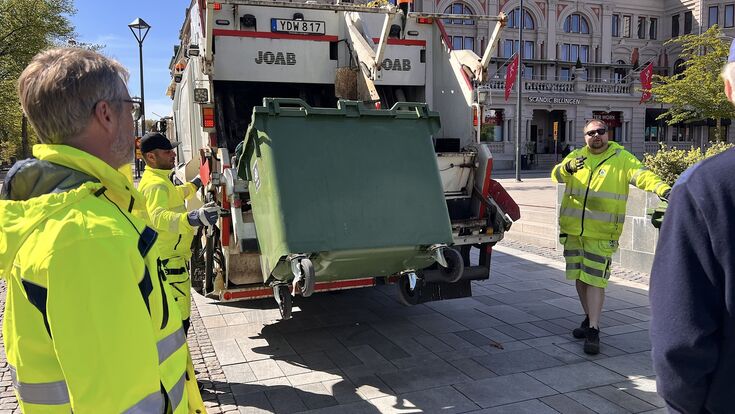
WM4U is a long-term initiative to support waste management reform in Ukraine and align it with EU standards. The focus is on technical upgrades, strategic regional and local planning, and Swedish-Ukrainian municipal partnerships.
- © WM4UThe arrival of Swedish waste bins in Kremenchuk marked more than just a delivery. They signalled progress, cooperation and a deepening commitment to sustainability between Sweden and Ukraine. On 28 May, 240 waste containers arrived in the city of Kremenchuk, in the Poltava region, from Nordvästra Skånes Renhållnings AB in Helsingborg – surplus bins from Sweden’s shift to improved sorting methods. A few weeks earlier, 190 containers were donated to Lozova, in the Kharkiv region, from Uppsala. These gestures, seemingly modest, resonate with transformative impact: it is part of the broader “Waste Management for Ukraine” (WM4U) programme, reshaping how Ukrainian communities handle waste in wartime and beyond.
Waste management in crisis: Ukraine’s challenges
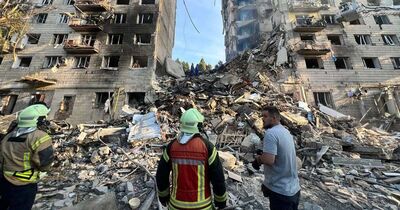
Ukraine’s waste management sector is under immense pressure. Pre-war, over 90% of municipal solid waste went to landfills, with less than 7% recycled – among the lowest rates in Europe. Of over 6,000 official landfills, nearly all fall short of EU environmental standards. Now, war has only compounded the problem: debris from destroyed buildings, chemicals from damaged facilities and overburdened services have led to widespread illegal dumping and public health risks.
According to the PwC report “Waste Management Report on Ukraine 2020”, in rural areas, up to 20% of residents lack regular waste collection. Climate considerations are still marginal in local strategies, and regional plans often exist on paper only. The 2023–2024 Waste Management Law – Ukraine’s first comprehensive reform in this area – offers a roadmap, but implementation is slow and fragmented. This is the environment WM4U enters: complex, urgent and in need of structural support.
>>> Rags to Riches? The Urban Waste Management in India Saga
WM4U Programme: Practical support, strategic vision
Funded by Sida, the Swedish International Development Cooperation Agency, and implemented by Avfall Sverige – Swedish Waste Management– and SALAR International, WM4U is a long-term initiative (2024–2027) to support waste management reform and align it with EU standards. Its focus? Technical upgrades, strategic regional and local planning, and Swedish-Ukrainian municipal partnerships.
WM4U is a comprehensive and ambitious programme comprising six components at national level and four at local level, spanning from supporting reform of the tariff system, guidelines for waste management planning, landfill gas control and tax to technical assistance and knowledge exchange, infrastructure development and donations. The programme structure was designed in the most appropriate way to address local needs, following a thorough preliminary study with all stakeholders, including the respective ministries.
After reviewing over 80 applicants, WM4U selected four pilot municipal clusters in Ukraine with centres in Ivano-Frankivsk, Vinnytsia, Lozova (Kharkiv region) and Kremenchuk (Poltava region). Each is now twinned with a Swedish cluster: Sysav, Stockholm Vatten och Avfall, Gästrike Återvinnare and Avfall Skaraborg respectively. These partnerships are at the heart of the programme’s success.
Key achievements to date include:
- Over 430 containers delivered to Lozova and Kremenchuk.
- Ongoing preparations for the delivery of Swedish refuse trucks.
- New tariff model development has started.
- Tender on reviewing regional waste management plans in the pilot regions is in progress.
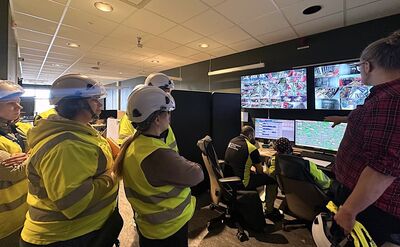
- A May 2025 study visit to Sweden by 17 municipal representatives from Ukraine.
- Hands-on learning at Swedish recycling centres, incineration plants and biogas facilities.
- Ukrainian adaptation of Swedish inter-municipal cooperation models.
Local perspectives: What it means for Ukrainian municipalities
The May visits of the Ukrainian municipal leaders to Swedish waste management facilities revealed both inspiration and realism: Sweden’s decentralised yet integrated model contrasts with Ukraine’s fragmented systems. But participants returned empowered – ready to plan better, budget smarter and engage citizens.
For Ukrainian leaders, the study tour wasn’t just informative – it was transformative.
“My perception of waste management has changed dramatically,” said Yurii Kushnir, Secretary of the Lozova City Council. “In Gävle, we saw the full lifecycle of waste. Even small communities can succeed if they unite.”
“We now understand how challenging the path will be to implement the national strategy,” added Sergii Oleinykov, Director of Ecology in Poltava. “We’ll begin by updating our Regional Waste Management Plan based on actual data.”
“What impressed me most,” said Volodymyr Pelypenko, Deputy Mayor of Kremenchuk, “was how seriously people take sorting – it’s embedded in culture and education. That’s what we must work towards.”
Andrii Nereta from Kharkiv Region’s Environmental Protection Department agreed: “Sweden gives us a model. Our first step must be to collect accurate local data on waste volume and morphology.”
A Swedish perspective: Sharing systems, building trust
Swedish municipalities, too, are invested. “When we extend a helping hand across borders, we build bridges of hope,” said Klas Svensson, WM4U’s donation coordinator. “These donations represent a commitment to a more sustainable Ukraine – and a more sustainable Europe.”
Tony Clark, CEO of Avfall Sverige, framed it in geopolitical terms: “Waste management is key to the green transition. For Sweden, this is a chance to support Ukraine’s recovery while advancing circular economy goals. It’s a win-win.”
Strategic planning and the road ahead
The study visit to Sweden was only the beginning. In June 2025, Swedish partners visited their Ukrainian counterparts for a deeper understanding of Ukrainian realities and to work on a common baseline study of waste management system in pilot areas. Training and capacity-building activities will ramp up in late 2025, tailored to local needs but designed with EU benchmarks in mind.
The broader goals of the programme
- Align Ukrainian practices with Chapter 27 of EU accession rules.
- Support the Ministry for Communities, Territories, and Infrastructure Development and Ministry of Environmental Protection and Natural Resources of Ukraine through embedded experts.
- Improve regional and local planning, from data collection to legislative proposals.
- Implement light infrastructure investments, including trucks and bins by early 2026, in coordination with the Nordic Green Bank (Nefco).
The WM4U team meets regularly with Nefco, Swedfund, Sida and others to ensure future financial alignment and avoid duplication.
Beyond the pilots: A national model
While focused on four clusters, WM4U’s ambitions are national. Each pilot will serve as a model for national scale-up, demonstrating:
- How decentralised waste systems can work.
- The power of intermunicipal cooperation.
- The importance of aligning local action with national strategy.
These examples will inform future regional waste management plans and set a precedent for EU-aligned reform. Public awareness, behavioural change and citizen engagement will be vital components.
Already, 15 Swedish municipalities are preparing to donate over 5,000 containers and refuse trucks – a testament to the programme’s momentum and shared vision.
WM4U as a blueprint for resilience
In a time of war, WM4U is helping Ukraine build peace – through sustainable systems, empowered communities and European cooperation. Every bin delivered, every truck deployed and every policy revised move Ukraine closer to EU standards and a circular economy future.
“As President of ISWA, I am proud to highlight Ukraine’s strong reform efforts in solid waste management during and after the war,” states James Law. “With vital support from Avfall Sverige (ISWA’s national member), Ukraine is receiving key technical assistance, planning tools, and building partnerships between Swedish and Ukrainian municipalities. Four pilot regions are now working closely with Swedish counterparts to modernise their waste systems and align with EU standards. This initiative boosts environmental sustainability, international cooperation and knowledge exchange”.
It is more than waste management. It is recovery. It is a partnership. It is a promise – from Sweden to Ukraine – to build back better, greener and together.