
Fredrik Emilson, Enviro : "Our pyrolysis technology creates economic value from waste while reducing environmental impact"
How did the idea for Enviro Systems come about—and what sparked the focus on tyre recycling?
The fundamentals of our technology were developed by our founder, Bengt-Sture Ershag, who started the company over 30 years ago. Initially, his focus was on the technology itself, pyrolysis, and it wasn't immediately clear which materials were best suited for its application. After various tests and extensive market research, the company concluded that end-of-life tyres (ELT) were a very interesting area for several reasons. ELT contained many valuable and significant raw materials, primarily carbon black and oil, of a type that already served as input materials in the production within several industries, including the tyre and rubber industry (a recycled vehicle tyre using Enviros pyrolysis technology renders about 50% recycled oil (TPO Tyre pyrolysis Oil), 30% recovered carbon black,15% steel and 5% gas). Recovered carbon black, rCB, of the right quality could thus be sold directly to OEMs for circular reuse without further processing, and the same applies to the oil. Such circular reuse could drastically reduce the negative environmental impact from the new production of tyres and rubber, but also of various fuels, specialty oils, and chemicals. For example, replacing virgin, fossil-based carbon black with an equivalent amount of recycled carbon black from Enviro would reduce carbon dioxide emissions by approximately 90%.
In addition, ELT posed a significant environmental problem as the limited recycling that existed involved either burning them to recover the energy from the oil or grinding them into granulate for use in, for example, road work. Both methods are associated with negative environmental impacts and, of course, are far from circular. The environmental problems with ELT also prompted lawmakers in various countries and the EU to consider regulations that would force tyre manufacturers to take responsibility for handling ELT, the so-called producer responsibility. Thus, there was another very good argument for our technology – it could also help solve the industry's problem with the large amounts of ELT generated each year.
Could you explain how your pyrolysis process works?
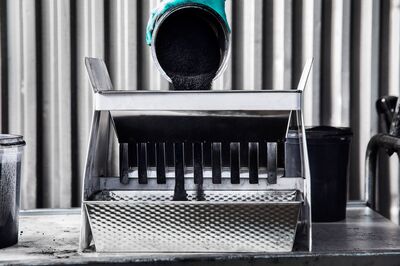
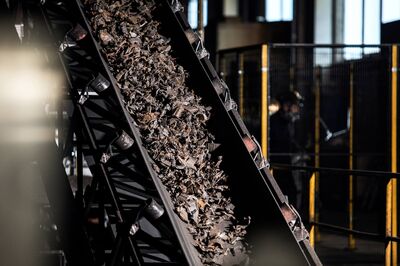
Pyrolysis involves heating tyre material in an oxygen-poor environment, causing it to decompose into oil, carbon black, and steel. This is done in our reactors and Enviros technology is based on a batch system, allowing us to control the pyrolysis process in a way that allows us to produce high-end grade for both oil and carbon black. Additionally, gas is produced, which is used as energy in the process itself. Thus, almost 100 per cent of the materials in the tyres are recovered.
What are the main outputs of your process—and is there growing demand for them?
Demand is very high. Almost all of the world's major tyre manufacturers have communicated very ambitious sustainability goals for their products going forward. For example, Michelin and Bridgestone aim to have 100 percent circular or renewable materials in their tyres by 2050. Several other major tyre manufacturers have set similar goals. Enviro has an ambition to build 1 million ton recycling capacity in Europe, which would generate equal to ca 5% of the global yearly demand for carbon black.
The transition within the tyre industry alone entails a great need for recovered carbon black (rCB), and Michelin and Bridgestone already estimated in 2022 that the annual need for rCB in 2030 would amount to 1 million tons per year. To produce that volume, recycling of 3 million tons of ELT per year is required.
What misconceptions do people often have about pyrolysis and its environmental impact?
How much of a tyre can be recovered. Enviros technology allows for a 97% recovery of a tyre, close to 100%.
Can you talk about any key collaborations—with governments, industries, or NGOs?
Our main collaborations are with customers, to continue to innovate. We are also seeking government grants to allow for further innovation and the establishment of the technology. With government / EU, the main focus for collaboration today is to find good ways to achieve product life cycle loops in the form of product passport, to safeguard that the collection is done properly and tyres becomes part of a recycling system.
Who are your main clients, and what are they looking for from your solutions?
The main customers for the valuable raw materials that we recycle are major leading manufacturers in the tyre, rubber, and oil industries. Among the customers who have already signed supply agreements for rCB and pyrolysis oil from the upcoming first full-scale facility in Uddevalla (note that the facility is based on Enviro's technology and that Enviro is building it, but that the joint venture Infiniteria is financing the construction and will own and operate the facility when it is complete. Infinitera is owned by Enviro together with Antin Infrastructure Partners and is supported by Michelin) are several leading manufacturers in the tyre, rubber, and oil industries as well as the chemical industries, such as Michelin, Preem, Nokian Tyres, and H&R Group. These customers have signed delivery agreements for recovered materials that at a total value of approx MEUR 200 over a period of 5-10 years.
What’s the biggest obstacle holding back large-scale adoption of circular recycling technologies?
If you have proven the functionality of the technology, then it is mainly about capital and time. To be able to scale technology requires vast amount of capital and if you add speed to market i.e. rapid deployment of production capacity, it increases even further. It is also vital to erect a so-called reference plant to demonstrate the technology and to allow for industrialization of the plant to take place to allow for efficient operations of the plant.
Are there any policies or regulations you think need to change to accelerate green innovation?
If there is a proven circularity technology in the market, a ban on open loop solutions such as landfills and incineration should apply. Equally should various sourcing directives apply and make producers gravitate towards the more sustainable alternatives.
How do you handle the economic side—are pyrolysis and recycling financially viable without subsidies?
Absolutely! With our technology, creating high economic value goes hand in hand with enabling major, positive environmental impact. One of the strongest arguments for our technology is its ability to generate high and stable returns as well as good profitability without any subsidies. We have clearly outlined where we believe the profitability of a full-scale facility will be, and nothing we have seen so far indicates that this calculation is wrong – we are talking about a very high yield financial case.
What kind of talent does a company like Enviro need to thrive—engineers, scientists, communicators?
As a clean tech company, based on innovation, we require the best and the brightest engineers, and as a scale-up company, we need to make sure that not only our company becomes well known in the market but also communicates the benefits of the technology to decision makers and legislative bodies.
How do you communicate your environmental benefits to sceptics or the public?
In our case, the benefits are so obvious – it's enough to show one of those pictures of the enormous piles of ELT for people to realise they need to be taken care of somehow. When you then add that what they are looking at contains large amounts of very valuable raw materials that can be recycled and sold at good profitability to established industries to greatly facilitate their sustainability transition, well, then it’s a no-brainer. Add to that the large reduction in CO2 emissions that we enable, and people really get it.
Our technology, of course, contributes to environmental sustainability, but thanks to the value of what it can recycle, it also clearly contributes to economic sustainability. You can be sceptical about the environmental argument if you want (which we find absurd given what’s at stake), but you cannot deny the financial point of what we do.
What excites you most about where circular economy tech is heading—and Enviro’s role in it?
What it can do and the impact it can have! To see various industries evolve and adapt to circular solutions, where more and more is self-propelled and not enforced by legislation, gives an encouraging momentum that a potential global transition towards a sustainable world is possible. Enviro do not talk about sustainability; we actually produce it. We are a living example that recycling works, without making tradeoffs between consumer demand, climate impact and financial upside. We hope to inspire other market and legislative actors to see the potential of solutions with the potential to have a major positive environmental impact alongside strong financial sentiments, creating a win-win situation, rendering major societal and shareholder value.