
Ecomondo's Alessandra Astolfi : “Digitalisation and AI are radically transforming the environment sector”

Can you tell us about Ecomondo's mission and how the event has evolved since its inception to become Europe's leading green technology expo?
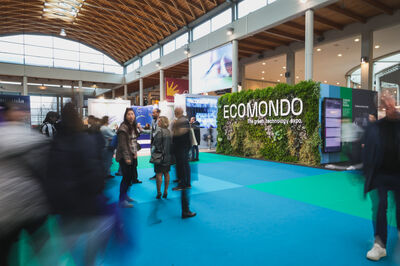
Ecomondo was created with the aim of providing a meeting point for industry, research and institutions operating in the environment and ecological transition field. Over the years, the event has steadily expanded its thematic and geographical scope to become the leading European platform for the green, blue and circular economy. The 2025 edition, the 28th, scheduled to take place in Rimini, Italy, from 4 to 7 November, will occupy 30 halls covering 166,000 square metres of exhibition space, welcoming official delegations from all over the world in collaboration with 80 international industry associations. These numbers reflect Ecomondo's position as a leading event on regenerative industrial models.
What are the key themes and priorities for this year's Ecomondo event across all sustainability sectors?
Ecomondo 2025 will be divided into seven macro-exhibition areas: Waste as Resource, Sites & Soil Restoration, Circular & Regenerative Bio-Economy, Bioenergy & Agriculture, Water Cycle & Blue Economy, Environmental Monitoring & Control, Textile & Circular Economy. The priority areas range from the recovery of urban and industrial waste to water management and the reclamation of contaminated sites, including production cycle decarbonisation, biotechnology, bio-based materials and environmental process digitalisation. The thematic districts and an interdisciplinary Technical Scientific Committee ensure that the event is in line with European regulatory and industrial priorities. The show foresees a full programme of conferences, workshops and meetings that address the circular economy from every possible aspect.
Which countries or regions are leading in green technology development, based on the exhibitors and presentations at Ecomondo?
Ecomondo sees considerably high participation from European and Mediterranean countries, as well as a significant growth in interest and attendance from Asian delegations and the MENA area, in particular Tunisia and Morocco. The data confirms it: the last edition hosted 650 international buyers and delegates and visitors from over 120 nations. The event reflects a global scenario in which the Mediterranean acts as a bridge between innovation and cooperation.
What are the most exciting green technologies or innovations being showcased at Ecomondo this year?
The most relevant technologies at Ecomondo 2025 will include those dedicated to environmental monitoring and resource management process digitalisation, such as systems based on intelligent sensors and satellites for tracking water flows and air quality. Particular attention will also be paid to industrial product eco-design with solutions to improve repairability and recyclability as early as the design phase.
What role do digitalisation and AI play in advancing environmental technologies, and which companies are leading these innovations at the expo?
Digitalisation and AI are radically transforming the environment sector, enabling predictive models for waste flow management, water resource surveillance and climate risk prevention. Ecomondo will feature companies that develop software for monitoring emissions in real time, predictive maintenance solutions for treatment plants and platforms that integrate satellite data into public decision-making systems. Machine learning applications are now operational in several supply chains, including water and materials.
What developments are you seeing in sustainable materials and bio-based solutions?
The sustainable and bio-based materials sector is rapidly expanding, driven by industrial demand and European policies. Ecomondo will have an area for solutions based on residual biomass, organic waste and industrial by-products for developing alternative materials to traditional plastic. The Circular & Regenerative Bio-Economy will be one of the most dynamic areas, with supply chains capable of generating added value from renewable resources while respecting the principles of the circular bioeconomy. The textile sector is also looking carefully at these solutions with experiments on yarns obtained from recycled cellulose and plant materials.
Digitalisation and AI are radically transforming the environment sector, enabling predictive models for waste flow management, water resource surveillance and climate risk prevention.
How is Ecomondo supporting the transition to a circular economy across different industries?
Ecomondo promotes the circular transition as a systemic process supported by technological innovation, regenerative business models and regulatory updates. The event hosts technical panels, international forums and collaborations with research institutions to accelerate the transition from a linear to a regenerative logic in key sectors such as fashion, chemistry, energy and urban management.
What are the most significant recycling innovations being showcased this year, particularly for challenging waste streams like electric vehicle batteries, solar panels, textiles and contaminated materials?
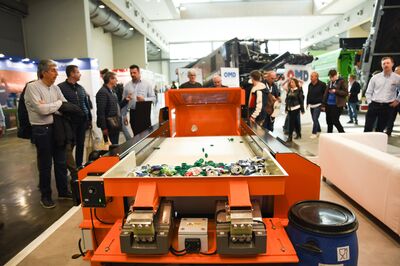
The 2025 edition will pay much attention to technological waste treatment with pilot systems and patented technologies for the advanced separation of rare materials from spent batteries and end-of-life photovoltaic panels. The textile sector is also undergoing transformation: technologies for depolymerising synthetic fibres and optical selection processes for reusing mixed fabrics will be presented. Contaminated site reclamation benefits from combined phytodepuration, advanced oxidation and thermochemical recovery systems.
How is the industry evolving in its approach to plastic waste, especially with regard to chemical versus mechanical recycling technologies?
Plastic management will be central to Ecomondo's agenda. In addition to consolidated mechanical recycling, chemical recycling solutions that can treat heterogeneous and non-selectable fractions, such as multilayers, are also emerging. The challenge is to combine economic efficiency, environmental compatibility and the quality of the regenerated material. It is an area in which Italy is also investing on the design front: new packaging is being engineered to reduce combined polymers and increase recyclability right from the design phase.
How is the waste-to-energy sector evolving, and what new technologies are being presented in this area?
In our Waste as Resource sector, waste-to-energy will be the complementary element to recycling strategies, especially for non-recoverable fractions. Ecomondo 2025 will feature technologies that aim to increase the energy efficiency of plants and reduce emissions through advanced filtration and heat recovery systems. Modular plants for anaerobic digestion, which allow the organic fraction to be treated in small territorial contexts, producing biogas and quality soil improvers, will also be exhibited. The combination of thermal treatment and energy recovery will be the focus of the debate on decarbonisation strategies for urban and special waste, in line with European directives and climate neutrality objectives.
Beyond waste management, what other major environmental challenges are companies addressing at Ecomondo – such as water treatment, air quality or carbon capture?
The water cycle is a strategic priority, particularly in the Water Cycle & Blue Economy sector. The technologies on display will address the reduction of water network losses, PFAS and microplastic purification and the reuse of industrial wastewater. As regards air quality and carbon capture, solutions for the selective abatement of pollutants and the capture of CO₂ in industrial processes, including hard-to-abate sectors, will be exhibited.
What impact are EU environmental regulations and the Green Deal having on the innovations displayed at the event?
European policies, starting with the Green Deal and the Circular Economy Package, are decisively directing innovation. At Ecomondo, companies will be presenting solutions designed to meet the requirements of the new EU legislation on packaging, electronic waste, ESG standards and environmental taxonomy. The event's conference programme will also offer regulatory updates and direct discussions with public decision-makers.
What are the biggest challenges facing the environmental technology sector today, and how are companies at the expo addressing these issues?
The main challenges include access to critical raw materials, technology scalability, coherence between innovation and regulation and the availability of investments for scale-up. The companies in attendance at Ecomondo are working on resilient, modular and replicable industrial models, which can be adapted to different territorial and production contexts, also through forms of public-private partnership.
At Ecomondo, companies will be presenting solutions designed to meet the requirements of the new EU legislation on packaging, electronic waste, ESG standards and environmental taxonomy.
Based on what you're seeing at Ecomondo, what trends do you predict will shape the green technology sector over the next 5-10 years?
In the coming years we will see an expansion of circular districts at a local level, the hybridisation between biotechnology and digitalisation, and considerable integration between energy, waste and regenerative agriculture. Supply chain traceability will be increasingly enabled by digital technologies and will be fundamental for monitoring market impact and competitiveness.
Are you seeing increased investment in green tech start-ups and innovative environmental solutions at this year's event, and which sectors are attracting the most attention?
Absolutely! The Innovation District is the beating heart of emerging entrepreneurship. It will host start-ups operating in water purification, industrial waste treatment, biomaterials and energy storage. The Lorenzo Cagnoni Award promotes ideas with the greatest application potential, creating connections with investors and large industrial players. It is a concrete sign of the growing attention towards an environmental innovation ecosystem.