
A shift toward local processing infrastructure : NYC composting report challenges current organics strategy
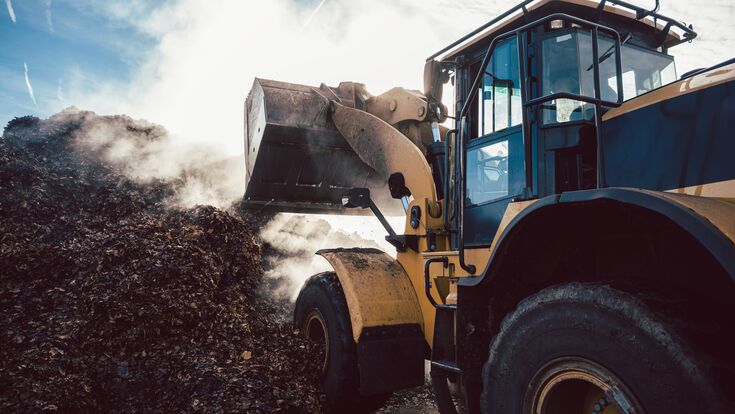
A comprehensive report released in September 2025 by Brooklyn Borough President Antonio Reynoso's office is reigniting debate over how New York City should process its massive organic waste stream, coming at a critical juncture as the city develops its next 10-year Solid Waste Management Plan (SWMP).
The scale of NYC's biowaste challenge
New York City generates approximately 2.2 to 2.4 million tons of biowaste annually—representing roughly one-third of the city's total waste stream. Of this massive volume, an estimated 800,000 tons currently ends up in landfills mixed with regular refuse. With the city's mandatory curbside organics collection program now fully rolled out across all boroughs as of October 2024, the question of how to process this material has become increasingly urgent.
The report, titled "Expanding Composting in New York City: The Case for Passing and Implementing Intro-0696-2024," makes a strong case for shifting away from the city's current emphasis on anaerobic co-digestion toward a more balanced approach that prioritises local composting infrastructure.
>>> The European Bin2Bean project: From biowaste to compost – a difficult path?
Current processing capacity for NYC organic waste
According to the city's draft SWMP attachment, New York currently has nearly 400,000 tons of existing organics processing capacity, including both composting and anaerobic digestion facilities. The largest operations include:
- Newtown Creek Wastewater Recovery Facility (Brooklyn): 180,000 tons/year co-digestion capacity
- Staten Island Compost Facility: 108,000 tons/year composting capacity (recently expanded 2,000% by changing composting methods)
- Community composting sites: Approximately 40,000-50,000 tons/year for food scraps
However, with the New York City Sanitation Department (DSNY) projecting over 400,000 tons of source-separated organics annually by 2050, significant gaps remain in processing capacity.
What does Intro-696 propose for NYC composting?
Introduction 696-2024, sponsored by Council Member Sandy Nurse and backed by 24 City Council members, would require DSNY to ensure a minimum cumulative annual aerobic processing capacity of 180,000 tons of organics in each borough—totalling 900,000 tons citywide. This capacity would be sufficient to handle upwards of 90% of NYC's residential organics at full capture rates.
The legislation has garnered significant support from environmental advocates and solid waste advisory boards but faces opposition from DSNY. The report directly addresses several of the department's concerns, particularly around land requirements.
Why does DSNY oppose the composting expansion bill?
The Department of Sanitation has consistently opposed Intro-696, citing substantial practical and financial challenges. In City Council testimony, DSNY argued that the bill's goals would necessitate creating hundreds of facilities and questioned the aggressive timeline requiring capacity identification in Queens and Staten Island by 2026.
"We share the same goals around waste equity and beneficial use, but cannot support this bill due to the cost, timeline, and the constraints of the physical environment of the five boroughs," DSNY stated in testimony.
The department has estimated that implementing Intro-696 would require "90 acres in each borough" for composting—a figure the Reynoso report challenges as overstated. The report notes that DSNY recently increased its Staten Island facility's capacity by 2,000% simply by changing composting methods and cites examples of other cities achieving 100,000-ton capacity in just six acres.
>>> 10 questions about odour emissions control at composting plants
Composting vs. co-digestion: The technical debate
The report provides a detailed comparison of aerobic composting versus anaerobic co-digestion, highlighting environmental and operational considerations for both approaches:
Anaerobic Co-Digestion at WRRFs:
- Can boost biogas yields by up to 75%
- Produces both renewable natural gas and biosolids requiring disposal
- Faces challenges with contamination, including PFAS levels averaging 133 ppb in municipal biosolids
- Contributes to 5-8% of global anthropogenic methane emissions from wastewater treatment
- At Newtown Creek, operational challenges persist—though 2024 performance improved to 87% uptime, reducing flaring by 83%
Aerobic Composting:
- Produces stable compost as soil amendment with immediate beneficial use
- Significantly lower PFAS contamination (averaging 23 ppb vs. 133 ppb for biosolids)
- Enables long-term carbon sequestration—single applications can increase soil carbon storage by 25-70% over decades
- Requires careful management of greenhouse gas emissions and leachate
- Faces logistical challenges around carbon-rich material supply and space constraints
Economic costs and environmental justice impacts of composting
The report identifies significant fiscal implications. DSNY is projected to spend approximately $500 million annually on mixed solid waste export, with an estimated $215 million implicitly spent on disposing of organics within that stream. In contrast, the department's explicit organics program budget is approximately $21 million.
"Shifting SSO processing to facilities within the five boroughs would keep allocated funds circulating locally, supporting jobs, community-scale composting operations, and the production of high-quality compost," the report argues.
Environmental justice concerns also feature prominently. The concentration of organics processing at facilities like Newtown Creek in North Brooklyn potentially undermines Local Law 152 (the Waste Equity Law), which sought to reduce truck traffic in overburdened districts. The report notes that full-capacity operations at Newtown Creek could add an estimated 40 daily truck trips to North Brooklyn, partially reversing equity gains.
How researchers identified potential composting sites in NYC
Perhaps most significantly, the report includes a comprehensive methodology for identifying potential composting sites across the city. Using weighted criteria including zoning compliance, proximity to utilities and trucking routes, and environmental justice considerations, researchers mapped feasible locations in each borough.
The methodology incorporates:
- New York State DEC requirements (6 CRR-NY 361-3.2)
- NYC zoning regulations
- Proximity to residences, surface water, and wetlands
- Infrastructure access (sewer, power, stormwater systems)
- Site vacancy and ground surface conditions
- Compatibility with the 2006 SWMP goals
Specific sites are highlighted for each borough, ranging from underutilised waterfront industrial properties to vacant lots near existing waste infrastructure.
How does this fit into NYC's solid waste management plan?
The report's release coincides with New York City's development of its next SWMP, with the draft released in October 2024 and public comment periods extending through mid-2025. Borough President Reynoso has advocated for incorporating Intro-696's goals into the final plan.
"This could be an alternative or parallel path," Reynoso stated, emphasising that composting should be taken seriously as a solution for the city's growing source-separated biowaste stream.
NYC's current organic waste diversion rates
Early results from the mandatory curbside program show modest capture rates. Analysis indicates that the citywide capture rate for organics was 3.7% in fiscal year 2024, with yard trimmings achieving 16.2% but food scraps only 1.2%. From fiscal year 2022 to 2024, however, the amount of organic material diverted rose 65%, and DSNY expects continued increases as residents become familiar with the program.
Enforcement of the mandatory separation began in April 2025, though after pushback, the city modified its approach to focus initially only on "persistent violators"—buildings with more than 30 units found non-compliant more than four times.
What's next for NYC composting infrastructure?
As New York City finalises its next decade of solid waste planning, the tension between centralised co-digestion and distributed composting infrastructure reflects broader questions facing the waste management industry: How should cities balance technological efficiency with community resilience? What is the optimal mix of processing technologies for urban organics? And how can municipalities maximise both environmental and economic benefits from their organic waste streams?
The Reynoso report makes clear that these questions have no simple answers, but argues forcefully that local composting infrastructure deserves a more prominent role in New York City's organics management strategy than current plans envision.